WHAT IS A BIOTOPE TANK?

The Core Concept: Defining the Biotope Aquarium
In the simplest terms, a biotope aquarium is an ecosystem where the fish, plants, substrate, and water chemistry all originate from the same geographic location. While a standard aquarium focuses on "what looks good," a biotope focuses on "what belongs together." This means you wouldn't place a South American Neon Tetra with an African Cichlid, as these species would never encounter one another in the wild. A true biotope enthusiast treats their tank as a window into a specific GPS coordinate. This level of precision requires a shift in mindset; you are no longer a decorator, but a curator of a miniature wilderness.
There are three primary components that define a true biotope:
- Geographic Accuracy: Every living and non-living element must come from the same specific area, such as the Rio Negro or the Ganges River. This includes the specific species of plants and even the types of leaves or seed pods found on the riverbed.
- Environmental Parameters: The water temperature, pH, hardness, and flow rate must match the natural conditions of that site. For example, a hillstream biotope requires high oxygen and high flow, while a peat swamp requires nearly still, acidic water.
- Aesthetic Realism: The "hardscape"—the rocks, wood, and sand—should mimic the physical layout of the natural habitat. If the real river has rounded river stones and fine silt, your tank should not feature jagged lava rocks and coarse gravel.
For beginners, it is helpful to start with a "regional" biotope, which covers a broader area like "Southeast Asian Streams," before narrowing it down to a "specific" biotope, like a "Peat Swamp in Sarawak." By focusing on a specific niche, you create a more stable environment where the inhabitants are naturally adapted to the same water conditions. This internal consistency makes the hobby more predictable and manageable.
Why Choose a Biotope? Benefits for Fish and Hobbyist
The transition from a general community tank to a biotope offers several advantages that go beyond mere aesthetics. When fish are kept in an environment that mimics their natural home, their stress levels drop significantly. In a standard community tank, a fish might be stressed by water that is slightly too hard, a current that is too strong, or tank mates that display aggressive behaviors foreign to their natural social structures. In a biotope, these stressors are minimized. This often results in more vibrant coloration and the display of complex social behaviors—such as intricate spawning rituals or hierarchical schooling—that you might never see in a mismatched community setting.
From a maintenance perspective, biotopes can often be easier to manage in the long run. Because every inhabitant requires the same water parameters, you aren't forced to find a "middle ground" pH or temperature that barely satisfies a variety of species. Instead, you can dial in the perfect settings for that specific group. This consistency is a cornerstone of properly maintaining your freshwater aquarium, ensuring your biological filter and inhabitants remain in peak condition. When the fish are in their "ideal" range, their immune systems are stronger, meaning fewer outbreaks of Ich or velvet.
Furthermore, biotopes serve as incredible educational tools. They allow you to study the relationship between current, light, and life. For example, a "Blackwater" biotope uses tannins from leaf litter to create tea-colored water, which naturally inhibits certain bacteria and provides a sanctuary for shy species. Seeing these natural processes unfold in your living room is one of the most rewarding aspects of the hobby. You begin to see your aquarium not just as a pet enclosure, but as a living laboratory.
Popular Biotope Examples and Species Suggestions
Deciding which biotope to replicate can be the most exciting part of the process. The world is full of diverse aquatic habitats, each offering a unique set of challenges and rewards. Here are three popular choices that range from beginner-friendly to intermediate, along with the species that make them iconic:
1. The Amazonian Blackwater Stream (Igapó)
This is perhaps the most iconic biotope. It features dim lighting, heavy driftwood (to simulate fallen trees), and a "carpet" of dried leaves like Indian Almond or Oak leaves. The water is soft, acidic, and stained a deep amber color by tannins. This environment is perfect for fish that evolved in the flooded forests of Brazil and Colombia.
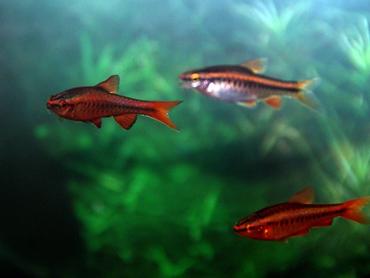
- Fish: Cardinal Tetras (Paracheirodon axelrodi), Rummy Nose Tetras, Apistogramma cichlids, and Corydoras catfish. For larger tanks, Angelfish (Pterophyllum scalare) are a classic choice.
- Plants: Amazon Swords (Echinodorus) and Floating Frogbit. Interestingly, many true blackwater habitats have little submerged vegetation due to the dark water, so you can focus more on wood and leaves.
- Substrate: Fine white or tan sand to mimic the bleached sands of the Rio Negro.
2. The African Rift Lake (Lake Malawi or Tanganyika)
Perfect for those who prefer "hard" water with a high pH and plenty of activity. These tanks are characterized by massive piles of rocks, high oxygenation, and very little driftwood, as wood can lower the pH. These lakes are famous for their colorful and highly intelligent cichlids.
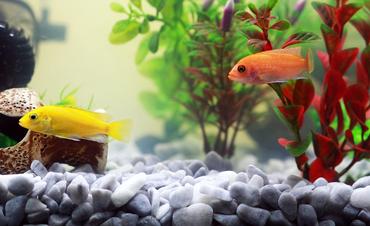
- Fish: Lake Malawi Mbuna (like Yellow Labs), or Lake Tanganyika Shell Dwellers (Neolamprologus multifasciatus) which live in empty snail shells on the lake floor.
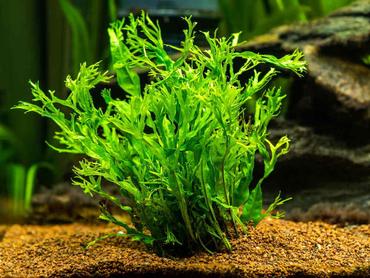
- Plants: Generally none, or very hardy species like Anubias and Java Fern tucked into rock crevices where the cichlids can't dig them up.
- Substrate: Crushed coral or aragonite sand to help buffer the pH and maintain the necessary hardness.
3. The Southeast Asian Rice Paddy and Marsh
This biotope focuses on slow-moving or stagnant water with dense vegetation and "tangled" roots. It is an excellent choice for smaller tanks (nano tanks) and those who enjoy heavily planted setups. These areas are often characterized by fluctuating water levels and warm temperatures.
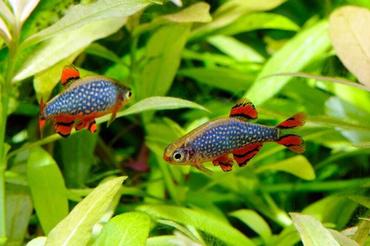
- Fish: Wild-type Bettas (like Betta imbellis), Sparkling Gouramis, Harlequin Rasboras, and Kuhli Loaches.
- Plants: Cryptocoryne species, Java Moss, and Water Sprite. These plants thrive in the lower light conditions caused by surface-covering vegetation.
- Substrate: Dark, nutrient-rich soil or fine gravel to support heavy plant growth.
Compatibility and Care Considerations in Biotope Systems
A common misconception is that because all the fish come from the same river, they will naturally get along. This is a dangerous assumption. Even within a biotope, you must account for the food chain. A large Pike Cichlid and a small Neon Tetra may both live in the same stretch of the Amazon, but one is the predator and the other is the prey. Compatibility remains a vital factor in biotope design. You must still consider the adult size, temperament, and feeding habits of your chosen species.
When planning your biotope, research the "vertical zones" of the water column. Aim for a balance of species to ensure the tank looks full and natural without being overcrowded in one area:
- Bottom Dwellers: Loaches, Catfish, or Goby species that forage in the substrate.
- Mid-Water Schoolers: Tetras, Barbs, or Rainbowfish that provide constant movement in the center.
- Top Dwellers: Hatchetfish, Gouramis, or Halfbeaks that hang near the surface to catch falling insects.
Care considerations also extend to water chemistry. Replicating a biotope often requires specific equipment. If you are doing a high-flow hillstream biotope from China, you will need powerful powerheads or "manifold" systems to simulate a rushing current. Conversely, if you are doing a soft-water Amazonian tank and your local tap water is very hard, you may need an RO/DI (Reverse Osmosis) system to strip minerals from your water. This allows you to start with a "blank slate" and add only the minerals your specific biotope needs. Always check your local water parameters before choosing a biotope; it is much easier to work with your tap water's natural chemistry than to fight against it constantly.
Additionally, nutrition should be biotope-specific. Many hobbyists make the mistake of feeding a generic flake food to all fish. However, a Lake Malawi cichlid (mostly herbivorous) has vastly different digestive needs than a South American Oscar (carnivorous). Feeding the wrong diet can lead to health issues like "Malawi Bloat." Research the natural diet of your fish and try to provide frozen or live foods that mimic what they would find in their home waters, such as bloodworms, daphnia, or spirulina algae.
Common Beginner Mistakes in Biotope Design
The road to a perfect biotope is often paved with good intentions but common pitfalls. One of the most frequent errors beginners make is "biotope drifting." This happens when a hobbyist starts with a specific region in mind but slowly adds "just one" fish or plant that doesn't belong because it looks pretty. While a stray plant from a different continent won't kill your fish, it breaks the ecological integrity of the tank and turns it back into a standard community aquarium. To avoid this, keep a strict "white list" of approved species for your specific site and stick to it religiously.
Another mistake is neglecting the importance of "detritus" and natural clutter. In nature, riverbeds aren't perfectly vacuumed. They are covered in twigs, seed pods, and decaying leaves. While you must maintain water quality through filtration and changes, a "too clean" biotope can look sterile and unnatural. Using botanicals (dried plant materials) can help, but you must introduce them slowly. Adding too many leaves at once can cause a "bacterial bloom" or a sudden drop in oxygen as the leaves decompose. Patience is key when building up the natural organic matter in your tank.
Finally, don't overlook the lighting. Many beginners use lights that are far too bright for forest-canopy biotopes. In many tropical streams, the water is shaded by dense jungle, and very little direct sunlight reaches the fish. High-intensity lighting can stress shade-dwelling fish and lead to massive algae outbreaks. Matching your light intensity to the natural habitat is just as important as matching the water temperature. If you find yourself struggling with unwanted growth, see our tips on how to control and prevent algae to get your biotope back on track. Sometimes, the solution is as simple as adding floating plants or reducing the photoperiod to match the "dimmer" reality of a tropical river.
Advanced Techniques: Creating the "Hardscape" and "Softscape"
To truly elevate a biotope, you must look at the layout of the environment. In the aquarium world, we call the non-living elements (rocks and wood) the "hardscape" and the living elements (plants) the "softscape." In a biotope, these should be arranged to tell a story. Is this a portion of a riverbank where the current has carved out a hollow under a tree root? Or is it a shallow puddle left behind after the rainy season?
For a riverbank biotope, you might lean your driftwood at an angle, suggesting the direction of the water flow. You would place larger stones at the upstream end and smaller pebbles and sand at the downstream end, just as a real river would sort them. For a flooded forest biotope, you might have vertical branches coming down from the top of the tank to simulate trees that are partially submerged. This adds a sense of depth and realism that horizontal layouts often lack.
The "softscape" should also follow natural patterns. In the wild, plants rarely grow in neat rows. They grow in clusters where the light is strongest or where the sediment has settled. Some biotopes, like those of the Central American springs, are incredibly lush with plants, while others, like the Rio Xingu, are mostly rocks and fast-moving water. Researching the "plant density" of your chosen location is vital. If you are replicating a rocky habitat, perhaps the only "plants" you should have are the algae growing on the stones, which provides a vital food source for grazing fish like the Tropheus cichlid.
Practical Steps to Starting Your First Biotope
Ready to dive in? Transitioning to a biotope requires more planning than a standard tank, but the results are well worth the effort. Follow these actionable steps to ensure your biotope project is a success:
- Pick Your Location: Start with a region you are passionate about. Do you love the bright colors of Cichlids or the intricate patterns of Tetras? Use online databases and biotope contests (like the BAP) for inspiration.
- Research the "Type Locality": Find photos or videos of the actual underwater environment. Look for the color of the substrate—is it red clay, white sand, or dark mud? Are the rocks smooth or jagged?
- Source Authentic Hardscape: Avoid neon-colored gravel or plastic ornaments. Use natural materials like Manzanita wood, Bogwood, or local stones that match your research. Be sure to boil or clean any items found in nature to avoid introducing parasites.
- Cycle the Tank for Target Parameters: If your biotope requires a pH of 6.0, make sure your nitrogen cycle is stable at that level. Remember that beneficial bacteria can behave differently in very acidic water.
- Introduce Inhabitants Slowly: Start with the hardiest species (usually the schoolers) first to allow the biological filter to adjust. Add the more sensitive "centerpiece" fish only after the tank has matured for several months.
Remember that a biotope is a work in progress. As plants grow, wood leaches tannins, and fish establish their territories, the tank will evolve. This natural progression is part of the charm and mirrors the seasonal changes found in the wild. Don't be afraid to let a little bit of "natural mess" occur; it often makes the tank look more authentic.
Final Takeaway: Embracing the Natural Way
Building a biotope aquarium is more than just a decorating choice; it is a commitment to understanding the natural world and providing your fish with the most authentic life possible. By narrowing your focus to a specific geographic niche, you create a healthier environment for your aquatic pets and a more sophisticated, educational display for yourself. This approach challenges you to grow as a hobbyist, requiring you to learn about global ecology, water chemistry, and the subtle nuances of fish behavior. Whether you choose the rocky depths of an African lake, the tea-colored streams of the Amazon, or the lush marshes of Southeast Asia, the result will be a unique and captivating slice of nature that stands out from any standard aquarium.
The biotope movement is growing, with more resources and specialized suppliers available than ever before. It encourages us to look past the glass and see the interconnectedness of our world's waters. Are you ready to transform your aquarium into a true-to-life ecosystem? Start by exploring our extensive library of species profiles and equipment reviews to find the perfect match for your next project. Your fish will thank you, and your guests will be mesmerized by the authentic beauty of your natural display. Happy fishkeeping!


MOST RECENT ARTICLES