12 AQUARIUM PLANTS THAT DON’T NEED SUBSTRATE (PERFECT FOR BEGINNERS)
The Science and Benefits of Substrate-Free Aquascaping
In the natural world, many aquatic plants have evolved to survive in environments where the "floor" is nothing more than solid rock or fast-moving riverbeds. These plants, known as epiphytes, have developed specialized structures called rhizomes and holdfast roots. Unlike traditional roots that seek out nutrients in the soil, these structures are designed primarily for anchorage. They grip onto porous surfaces like lava rock or driftwood, allowing the plant to remain stationary in a current while its leaves do the heavy lifting of nutrient absorption.
Moving away from traditional rooted plants offers several distinct advantages, particularly for those just starting out. When you eliminate the need for substrate, you also eliminate the mess associated with "dirted" tanks or the expense of specialized plant clays. This approach is highly practical for keeping the aquarium floor clean, as debris and detritus can be easily siphoned away without disturbing plant roots. This is why many professional breeders prefer these plants; they provide the biological benefits of live greenery without the hygiene challenges of deep gravel beds.
- Versatility in Aquascaping: These plants can be attached to driftwood, lava rocks, or even ceramic ornaments using fishing line or aquarium-safe super glue. You can literally move your "garden" around like furniture.
- Ease of Maintenance: If you need to catch a fish or deep-clean the tank, you can simply lift the entire piece of wood or rock out with the plant attached. No more cloudy water from uprooted plants.
- Improved Water Quality: Many of these species, particularly the floating varieties, are fast growers that act as natural filters, absorbing nitrates and phosphates directly from the water.
- Perfect for Bare-Bottom Tanks: They are ideal for Discus or Goldfish tanks where a substrate-free floor is often preferred for ease of cleaning.
Before diving into specific species, it is important to understand how to properly set up a freshwater aquarium to ensure your water parameters are stable enough to support live greenery.
Top 6 Epiphytes for Rocks and Driftwood
The core of any substrate-free tank lies in its "attachment" plants. These species are the backbone of the aquascape, providing structure and height. Here are the top performers for beginners:
1. Anubias Barteri (and its many varieties)
Perhaps the most indestructible plant in the hobby, Anubias features thick, waxy green leaves that can withstand the nibbling of even the most curious fish. It thrives in low light and must be attached to hardscape; burying its thick horizontal stem (the rhizome) in substrate will cause it to rot and die within weeks. It is an incredibly slow grower, which means you won't have to prune it often, but it also means it can be prone to green spot algae if left under light that is too intense.
2. Java Fern (Microsorum pteropus)
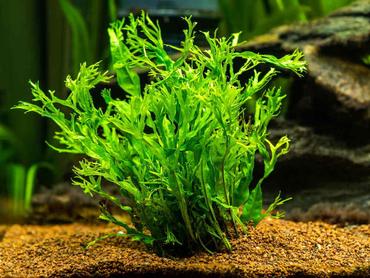
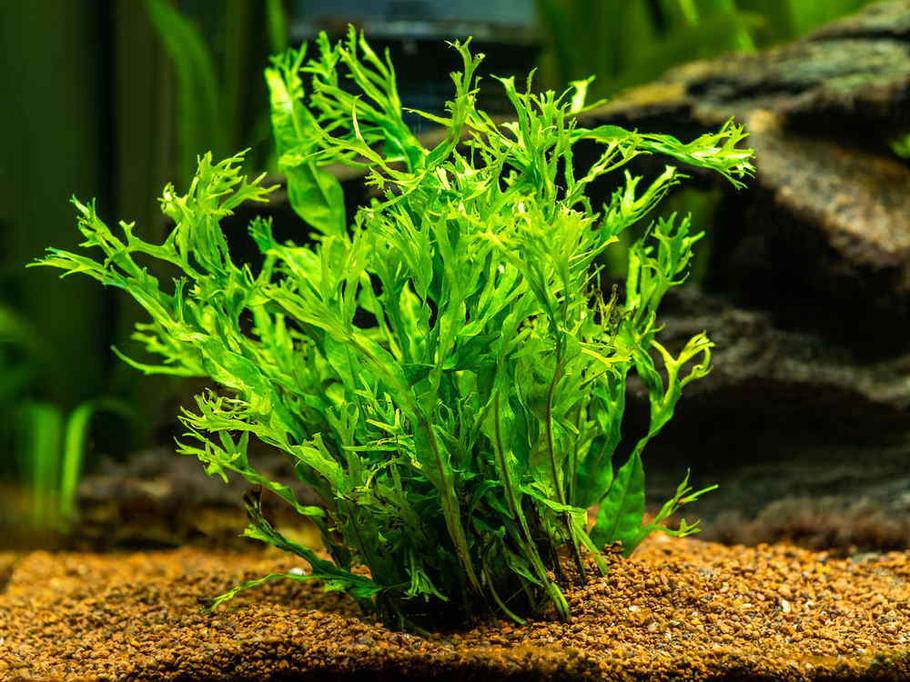
A staple in the hobby for decades, Java Fern produces long, hardy fronds that can grow quite large over time. It is highly compatible with herbivorous fish like Cichlids or Goldfish because its leaves are tough and reportedly bitter-tasting. Java Fern reproduces in a fascinating way: it grows "baby" plants directly on the tips of its older leaves. Once these plantlets have a few leaves and a small root system, you can simply pluck them off and glue them to a new rock.
3. Bolbitis (African Water Fern)
Bolbitis offers a more textured, translucent green look than the Java Fern. It loves water flow and looks spectacular when attached near a filter output. It is a slightly more demanding plant than Anubias, preferring slightly softer water, but it creates a deep, jungle-like atmosphere that is hard to replicate with other species. Its feathery leaves provide excellent texture contrast against the broad leaves of Anubias.
4. Bucephalandra
Commonly referred to as "Buce," these plants are the jewels of the aquarium. They are generally smaller than Anubias and come in a staggering variety of leaf shapes and colors—ranging from deep forest green to metallic purples and blues. They often have tiny silvery spots on their leaves (stomata) that shimmer under aquarium lights. Buce is perfect for "detailing" an aquascape, filling in small gaps between rocks or at the base of driftwood branches.
5. Christmas Moss (Vesicularia montagnei)
While many people are familiar with Java Moss, Christmas Moss is often preferred for its more organized growth pattern. It grows in a triangular, overlapping fashion that resembles the branches of a fir tree. It is an essential plant for anyone interested in breeding shrimp or small fish, as its dense network of tiny leaves provides safety for fry and a surface for biofilm—the primary food source for baby shrimp—to grow.
6. Willow Moss (Fontinalis antipyretica)
Willow Moss is a larger, more flowing moss that looks beautiful in "river style" aquascapes. It has a tendency to grow downward and trail with the current, creating a very natural, aged look for your driftwood. Because it grows relatively quickly compared to Anubias, it is excellent at soaking up excess nutrients and helping to prevent algae blooms in the early stages of a tank's life.
Floating Plants for Natural Nitrate Export
Floating plants are the powerhouses of nutrient absorption. Because they have access to atmospheric CO2 (which is much more abundant than CO2 dissolved in water), they grow at a much faster rate than submerged plants. This makes them incredible allies in the fight against algae, as they effectively "starve" the algae of nitrate and phosphate.
7. Amazon Frogbit (Limnobium laevigatum)
Amazon Frogbit is a favorite among beginners because of its manageable size and beautiful trailing roots. The leaves are round, fleshy, and light green, resembling tiny lily pads. The roots can grow several inches long, creating a "hanging garden" effect that provides an incredible natural nursery for Guppies, Mollies, and Platies. If the roots get too long, you can simply trim them with scissors without harming the plant.
8. Dwarf Water Lettuce (Pistia stratiotes)
This plant has unique, fuzzy, ribbed leaves that are designed to repel water. From above, it looks like a small head of lettuce floating on the surface. It is a fantastic choice for open-top tanks where you can appreciate the architectural beauty of the rosettes. Be warned, however, that it does not like its top surface to be constantly splashed by a filter, as this can cause the leaves to rot.
9. Red Root Floater (Phyllanthus fluitans)
For those wanting a splash of color, Red Root Floaters are the gold standard. Under medium to high light, the leaves turn a deep beet-red, and the roots themselves are a vibrant crimson. They are slightly more sensitive to surface agitation than Frogbit, so they do best in tanks with a gentle flow. They also produce tiny white flowers when they are particularly happy.
10. Salvinia Minima (Water Spangles)
Salvinia is a small, hardy floater with leaves covered in tiny, stiff hairs that trap air and keep the plant buoyant. It grows very quickly and can cover the surface of a small tank in just a few weeks. It is particularly useful for keeping the water surface calm, which is essential for "bubble-nesting" fish like Betta splendens and Gouramis.
11. Hornwort (Ceratophyllum demersum)
Hornwort is a unique species because it lacks true roots entirely. In the wild, it can be found floating in massive mats or loosely anchored to the bottom by modified leaves. In the aquarium, you can let it float at the top or tuck the end of a stem behind a rock to create a tall, needle-like background plant. It is widely considered one of the best "oxygenating" plants and is a top-tier choice for new tanks undergoing the nitrogen cycle.
12. Guppy Grass (Najas guadalupensis)
As the name suggests, this plant is a favorite of guppy breeders. It forms a dense, tangled thicket of thin green leaves. It can be left to float in a large mass, providing the ultimate hiding spot for newborn fish. It is nearly impossible to kill and thrives in a wide range of water temperatures and hardness levels, making it the perfect "safety net" plant for any beginner.
Compatibility: Fish and Invertebrate Pairings
Choosing substrate-free plants allows you to keep species that might otherwise destroy a traditional planted aquarium. Many fish are "redecorators" by nature; they dig in the sand to build nests or search for food, which leads to rooted plants being constantly dislodged. By using epiphytes attached firmly to heavy rocks or wood, you can maintain a green aesthetic even with boisterous inhabitants.
-
Goldfish and Large Cichlids: These fish are notorious for uprooting plants. However, a large piece of driftwood with Anubias or Java Fern securely tied or glued to it is virtually "fish-proof." The plants stay put regardless of how much sand the fish moves around. If you are interested in more specific inhabitants, check out our guide on the best freshwater aquarium fish for beginners to find the perfect match for your new greenery.
-
Bettas and Gouramis: These labyrinth fish breathe air from the surface and love to rest near the top of the tank. Floating plants like Salvinia or Frogbit provide the perfect resting "hammocks" for them. Furthermore, the shade provided by floating plants reduces stress, making these fish feel more secure and less prone to glass surfing.
-
Shrimp and Nano Fish: For small creatures, the surface area is everything. A clump of moss or the trailing roots of floating plants provides a massive area for biofilm to develop. This biofilm is the primary food source for many dwarf shrimp. Additionally, the complex structures of Hornwort and Guppy Grass provide essential "line-of-sight" breaks that prevent aggression in small, territorial fish like Sparkling Gouramis.
Care, Maintenance, and Avoiding Common Mistakes
While these plants are beginner-friendly, they aren't "set it and forget it" decorations. To keep them thriving for years, you must pay attention to their specific biological needs. The most common mistake beginners make—which leads to the "Anubias Death"—is burying the rhizome. The rhizome is the thick, green horizontal part of the plant from which both the leaves and the roots grow. If this is buried in sand or gravel, the lack of oxygen will cause it to rot, and the plant will fall apart within a month.
Attachment Methods
To secure epiphytes, you have three main options. You can use a small amount of cyanoacrylate-based super glue (gel is easiest) to dot the rhizome and press it to a rock. Alternatively, you can use dark-colored sewing thread or fishing line to tie the plant down; the thread will eventually rot away or be covered by the plant's own roots. Lastly, you can simply wedge the plant into a tight crevice in a rock or piece of wood.
Lighting and Algae
Most substrate-free plants are "low light" species. This means they can survive in standard room light or with basic LED hoods. If you use a high-powered light designed for "high-tech" plants, you will likely struggle with algae. Slow-growing plants like Anubias are particularly vulnerable to green spot algae. If you notice algae forming on the leaves, consider adding floating plants to dim the light naturally or reduce your "lights-on" time to 6–8 hours per day.
Water Column Fertilization
Since these plants are not getting nutrients from the soil, they must get them from the water. A weekly dose of a "comprehensive" liquid fertilizer is usually all that is required. If the leaves of your Java Fern start to turn yellow or transparent, it is likely a potassium deficiency—a common issue in substrate-free setups that is easily fixed with a specialized supplement.
For more advanced tips on maintaining the balance of your ecosystem, you might find our article on controlling algae growth in the freshwater aquarium helpful, as managing light and nutrients is the key to a crystal-clear display.
Conclusion: Building Your Low-Maintenance Underwater Forest
Embracing aquarium plants that don't need substrate is one of the most effective ways to ensure success in your first year of fishkeeping. These plants are resilient, adaptable, and provide immediate visual impact without the technical hurdles or mess of traditional planted tanks. By focusing on epiphytes and floaters, you create a dynamic environment that is easy to clean, simple to rearrange, and highly beneficial for the health of your fish.
Whether you are looking to breed shrimp in a moss-filled nano tank or want to add some hardy Java Fern to a boisterous Cichlid aquarium, the twelve plants listed above offer the perfect starting point for any hobbyist. Remember to start slow, ensure your rhizomes are never buried, and provide consistent liquid nutrients. As your plants grow and fill in, you'll find that a "low-tech" tank can be just as breathtaking as the most expensive professional aquascapes.
Do you have a favorite substrate-free plant we missed? Or perhaps you've found a creative way to attach your Anubias? Share your experiences with our community and continue exploring the wonderful world of aquatic life!


MOST RECENT ARTICLES