Product Reviews (Freshwater)

Why Canister Filters Outperform Standard Systems
The primary advantage of a canister filter lies in its sealed, pressurized design. Unlike hang-on-back (HOB) filters that rely on a small reservoir and gravity, a canister filter sits underneath the aquarium in the cabinet, utilizing a large airtight drum filled with various media. This allows for a much higher "dwell time," meaning the water spends more time in contact with beneficial bacteria and chemical resins. This is particularly vital for sensitive species like Discus or German Blue Rams, which require pristine water conditions to thrive and display their best colors.
Furthermore, canister filters offer unparalleled versatility in terms of flow control. Most modern units come with adjustable valves and a variety of return options, such as spray bars or lily pipes. A spray bar is an excellent choice for a community tank featuring smaller, schooling fish like Neon Tetras or Rummy Nose Tetras, as it distributes the flow evenly across the surface, increasing oxygenation without creating a turbulent current that might exhaust the fish. This level of customization ensures that you can match the filter's output to the specific swimming abilities of your inhabitants.
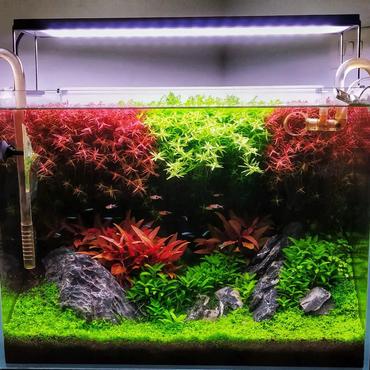
Another often overlooked benefit is the aesthetic appeal. By moving the filtration hardware out of the tank and into the cabinet, you reduce the amount of visual clutter in your display. For aquascapers who focus on the "Nature Aquarium" style, having only a glass intake and return pipe visible makes the underwater landscape look far more natural. This aesthetic shift is...
Why Lighting Matters More in Small Aquariums
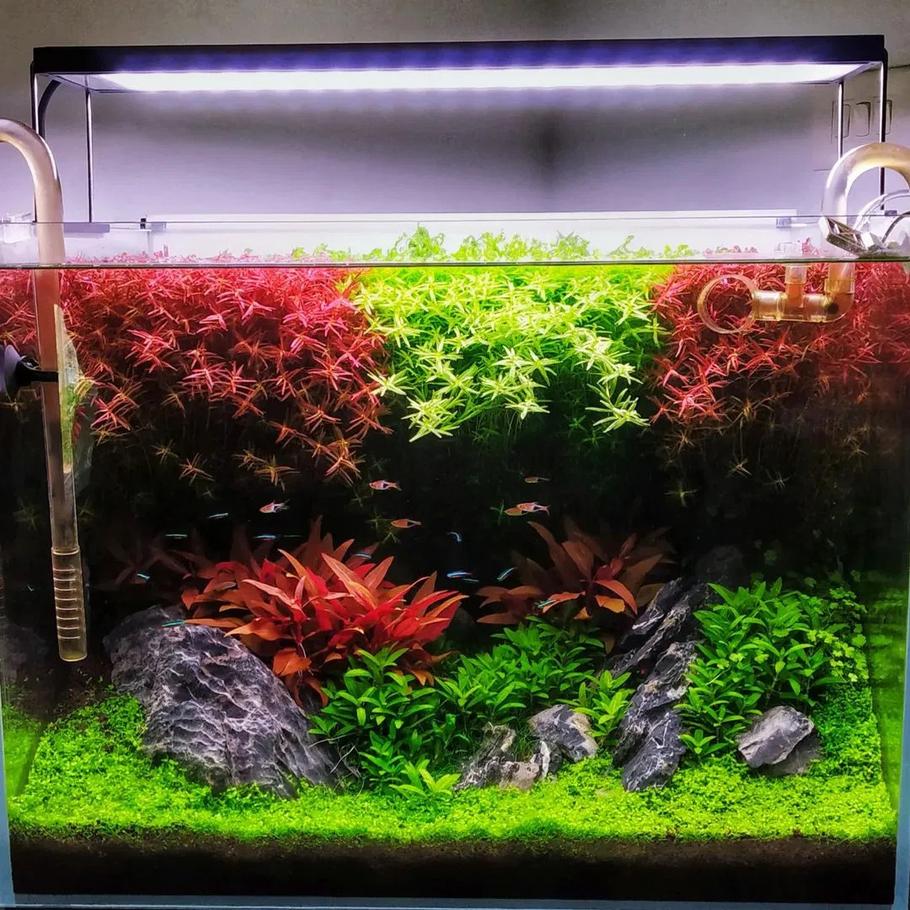
In small tanks, everything happens faster—including problems. Excess light can trigger algae blooms in days, while insufficient light can leave plants struggling and fish colors dull. Unlike larger aquariums, where mistakes are diluted by higher water volume, nano tanks magnify lighting issues quickly.
Lighting influences three core areas in a small aquarium: fish behavior, plant health, and biological balance. Fish rely on consistent light cycles to regulate stress and feeding patterns. Plants depend on appropriate intensity and spectrum to photosynthesize. Beneficial bacteria, which help process waste, are indirectly affected when algae outcompetes them under poor lighting conditions.
A common real-world example is a five-gallon betta tank placed near a window. The aquarist adds a bright LED strip and leaves it on all day, thinking more light equals better visibility. Within a week, green algae coats the glass, and the betta becomes lethargic due to constant brightness and fluctuating temperatures.
Understanding that small tanks require precision—not power—sets the foundation for choosing the right lighting solution.
Types of Lighting Solutions for Small Tanks
Not all aquarium lights are created equal, and small tanks benefit most from compact, efficient lighting options. The goal is even coverage without excessive intensity.
Clip-on LED lights
- Among the most popular choices for nano aquariums.
- Affordable, adjustable, and designed for tanks under 10 gallons.
- Many models allow you to angle the light, which helps reduce glare and hotspots.
Integrated hood lights
- Another common solution, especially for beginner kits.
- Built into the tank lid, reducing evaporation and preventing fish from jumping.
- Often lack adjustability and...

The Engineering and Core Technology of Visi-Therm Heaters
To fully appreciate why the Visi-Therm series has remained a staple on store shelves for decades, it helps to understand the underlying mechanical and structural engineering that drives these devices. Originally designed to eliminate the maddening trial-and-error guesswork associated with early generations of uncalibrated glass heater sticks, the modern Visi-Therm heater features a precision water-calibrated internal thermostat. Every unit is factory-certified to ensure that the setting you choose on the mechanical dial closely mirrors the actual temperature achieved in the water column. This direct-set dial, located conveniently at the top of the heater, allows the hobbyist to simply click or rotate the knob to a specific numerical value (such as 78°F or 26°C), establishing an instant baseline target for the system.
Beneath the surface of the impact-resistant glass housing lies a series of advanced heating elements and safety components designed to function seamlessly in a harsh aquatic environment. Visi-Therm heaters utilize an advanced bimetallic or electronic switching mechanism that expands or contracts based on the ambient temperature of the surrounding water. When the temperature falls even a fraction of a degree below the target setting, the internal contact points close, completing the electrical circuit and directing current into the heavy-duty heating coils. To ensure this heat is distributed evenly out of the tube without creating dangerous hot spots on the glass exterior, the coils are wrapped around premium ceramic cores. This design maximizes thermal conduction while minimizing localized stress on the outer glass...
MOST RECENT ARTICLES