WHAT TO DO ABOUT AQUARIUM SNAIL INFESTATIONS

Identifying Common Pest Snails in the Freshwater Aquarium
Before you can effectively manage an outbreak, you need to identify exactly which species of snail has established a colony in your aquarium. Different species exhibit distinct behaviors, reproduction habits, and diets, which means your approach to controlling them should be tailored to the specific invertebrate in question. The three most prevalent pest species encountered by freshwater hobbyists are Bladder Snails, Ramshorn Snails, and Malaysian Trumpet Snails.
Bladder Snails (Physella acuta) are easily recognized by their thin, translucent shells that swirl to the left when viewed with the tip pointing up. They possess long, thin tentacles and are extraordinarily fast movers for invertebrates. These opportunistic scavengers frequently enter tanks as microscopic eggs attached to live plants or decorative wood. Bladder snails are hermaphroditic, meaning every individual possesses both male and female reproductive organs, allowing a single snail to self-fertilize and launch a population boom when food is abundant.
Ramshorn Snails (Planorbidae family) sport a distinctive coiled shell resembling a coiled rope or a ram's horn. They range in color from dull brown and translucent red to striking blue or pink varieties. While some aquarists intentionally keep colorful Ramshorn strains, wild-type brown Ramshorns can multiply rapidly. Like Bladder Snails, they feed primarily on uneaten fish food, soft algae, and decaying plant leaves, making them exceptionally resilient in nutrient-rich environments.
Malaysian Trumpet Snails (Melanoides tuberculata), often abbreviated as MTS, feature elongated, spiral-shaped shells that resemble tiny ice cream cones. Unlike Bladder and Ramshorn snails, MTS reproduce through parthenogenesis, a process where females give birth to live clones of themselves without needing a mate. Malaysian Trumpet Snails spend most of their daylight hours buried in the substrate, aerating the gravel and consuming trapped organic waste. While beneficial in small numbers, their populations can quietly explode beneath the surface, surfacing en masse at night or during light outages.
Root Causes: Why Do Snail Populations Explode?
It is a common misconception among beginner hobbyists that pest snails intentionally ruin aquariums. In reality, pest snails are nature's cleanup crew, responding dynamically to the resources available within an ecosystem. A sudden snail population explosion is almost always triggered by two primary factors: excess food availability and decaying organic debris.
Overfeeding is the single largest contributor to snail infestations. When fish food, flakes, pellets, or wafers are provided in quantities greater than your livestock can consume within two to three minutes, the excess settles into the substrate and filter media. Snail hatchlings thrive on this steady supply of high-protein nutrients, drastically increasing their survival rates and accelerating their maturity cycles. If your fish tank has an abundance of excess food, snail eggs will hatch in huge numbers and survive to reproduce.
In addition to overfeeding, poor tank maintenance fosters ideal breeding conditions. Accumulations of detritus, rotting aquatic leaves, and heavy algae blooms provide an unlimited buffet for scavenging snails. If live plants are melting due to inadequate lighting or nutrient deficiencies, snails will congregate on the dying tissue to break it down. Addressing these core water quality and husbandry issues is vital. Regular maintenance routines and accurate testing using a comprehensive water testing guide will help you identify excess nitrates and organics before they lead to runaway pest populations.
Natural Biological Control: Fish Species That Eat Snails
Introducing natural predators into your community tank can be an effective and rewarding way to manage unwanted snail populations. However, selecting the right species requires careful research regarding adult size, temperament, and water parameter requirements. Adding a fish solely to solve a temporary pest problem without considering its long-term care needs is a common mistake that often leads to compatibility issues later on.
Loaches are widely regarded as the premier snail-eating fish in the freshwater hobby. The Yoyo Loach (Botia almorhae) and the Dwarf Chain Loach (Ambastaia sphaerocarpa) are outstanding choices for medium-to-large aquariums. These inquisitive bottom-dwellers use their narrow snouts and specialized pharyngeal teeth to extract snails directly from their shells. Yoyo Loaches grow to approximately 5 inches and thrive when kept in small groups, while Dwarf Chain Loaches remain compact at roughly 2 to 2.5 inches, making them far better suited for smaller community setups.
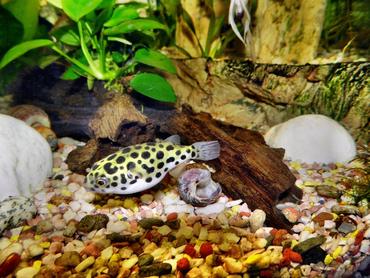
Another popular option is the Pea Puffer (Carinotetraodon travancoricus), also known as the Dwarf Puffer. Reaching a maximum size of just one inch, these charismatic micro-predators hunt snails naturally in the wild. A single Pea Puffer can decimate a colony of small Bladder or Ramshorn snails in a matter of days. However, Pea Puffers are strictly carnivorous, possess sharp beaks, and can be notoriously nippy toward slow-moving fish with long fins, such as Guppies or Angelfish.
For smaller community tanks where adding larger or aggressive fish is impossible, the Assassin Snail (Anentome helena) serves as an ideal biological control agent. Featuring an attractive yellow and dark brown striped shell, the Assassin Snail actively burrows through the substrate, hunting down other snail species using a specialized proboscis. They do not reproduce at rapid rates, will not harm healthy fish or shrimp, and gracefully transition to scavenging leftover protein foods once the pest snail population has been eradicated.
Compatibility and Care Considerations for Snail Predators
Before adding any biological control species to your setup, it is essential to evaluate whether your current aquarium conditions and tankmates can comfortably support them. Introducing specialized predators without proper planning can result in severe stress, fin-nipping, or water parameter imbalances.
Large loaches, such as the famous Clown Loach (Chromobotia macracanthus), are frequently marketed as quick fixes for snail problems. While they are exceptional snail hunters, Clown Loaches can grow to over 10 inches in length and require massive tanks of 100 gallons or more, along with social groups of 5 or more individuals. Purchasing a Clown Loach for a standard 20-gallon tank is a classic beginner mistake that leads to stunted growth and elevated stress levels for the fish.
When incorporating specialized predators, consider the following key housing and compatibility guidelines:
- Ensure your aquarium volume meets the minimum swimming space requirements for active schooling loaches.
- Avoid housing fin-nipping species like Pea Puffers alongside slow-moving or long-finned tankmates.
- Provide smooth sand or fine gravel substrate to protect the delicate barbels of bottom-dwelling loaches.
- Remember that snail-eating fish and Assassin Snails will not discriminate between pest snails and prized ornamental species such as Nerite or Mystery Snails.
- Prepare alternative food sources, such as frozen bloodworms or sinking carnivorous pellets, for when the pest snail population is completely consumed.
Maintaining stable water chemistry and biological filtration is equally critical during snail eradication efforts. Dying snails decay quickly, which can cause sudden spikes in ammonia and nitrites. If you are establishing a new tank or adding new fish to handle a pest surge, following an established tank cycling guide ensures your biological filter is robust enough to handle changes in bioload.
Manual Removal and Environmental Control Techniques
If your aquarium is too small for natural predator fish or if you prefer a chemical-free, non-invasive approach, manual removal techniques offer high success rates when applied consistently. Combining manual removal with strict feeding discipline strikes at both the existing population and the underlying food source.
The "blanched vegetable trap" is one of the most effective manual control tactics available. Blanch a thick slice of zucchini, cucumber, or a piece of crisp lettuce by boiling it for two minutes and then submerging it in ice water. Weigh the vegetable down at the bottom of your tank shortly before turning off the aquarium lights. Overnight, pest snails will gather on the vegetable to feed. First thing in the morning, carefully retrieve the vegetable along with dozens of clinging snails and dispose of them humanely. Repeating this process for several consecutive nights will dramatically cut down the snail population.
Simultaneously, perform thorough gravel vacuuming during your weekly water changes. Siphon deep into the substrate to remove trapped fish waste, unconsumed food, and hidden snail eggs. Pay special attention to the bases of plants, behind sponge filters, and beneath rockwork where detritus collects. Reducing overall nutrient levels forces remaining snails to compete for scarce food, naturally slowing their reproduction rates.
Avoid resorting to harsh chemical treatments or copper-based algicides whenever possible. Chemical snail removers often cause widespread snail die-offs overnight, resulting in catastrophic ammonia spikes that can wipe out your entire bio-filter and kill your fish. Furthermore, residual copper settles into the substrate and silicone seals, making the tank permanently toxic to desirable invertebrates like Cherry Shrimp or Nerite Snails in the future.
Preventing Future Outbreaks: Quarantine and Dip Procedures
Once you have brought your snail population under control, taking proactive measures will prevent new pests from hitchhiking into your aquarium. The primary entry point for pest snails and their jelly-like egg clutches is new live aquatic plants purchased from local stores or online breeders.
Inspecting new plants thoroughly under bright light before planting them is your first line of defense. Snail egg masses appear as small, clear or yellowish gelatinous blobs attached to the undersides of leaves and stems. Scraping these off manually removes potential invaders before they ever touch your tank water.
To ensure complete removal of hidden eggs and microscopic hitchhikers, perform a plant dip prior to introduction. Popular, plant-safe dip solutions include:
- Alum Dip: Dissolve 3 tablespoons of powdered alum per gallon of water and soak plants for 24 to 48 hours to eliminate snails and eggs safely.
- Hydrogen Peroxide Dip: Mix 2 to 3 teaspoons of 3% hydrogen peroxide per gallon of water and submerge plants for 5 minutes before rinsing thoroughly in conditioned water.
- Reverse Osmosis / Salt Dip: Dip sturdy plants in a mild aquarium salt bath for 15-30 seconds to dislodge adult invertebrates quickly.
After dipping, quarantine new plants in a dedicated container filled with conditioned water for a few days to monitor for any surviving pests. Integrating healthy, well-nourished flora into your display using advice from a dedicated live plants guide ensures your greenery grows vigorously, outcompeting algae and leaving fewer nutrients for unwanted pests.
Key Takeaways and Final Steps
Aquarium snail infestations can certainly be frustrating, but they are entirely manageable when approached with patience and understanding. By viewing pest snails as an indicator of your tank's nutrient levels rather than an invincible enemy, you can make targeted adjustments to your feeding habits and maintenance routines that produce lasting results.
To successfully resolve a snail infestation in your aquarium, keep these core principles in mind:
- Identify the specific snail species to understand its breeding habits and environmental preferences.
- Reduce daily feeding quantities and eliminate unconsumed food to starve out growing hatchlings.
- Utilize manual removal methods like vegetable traps and substrate siphoning for immediate population reduction.
- Introduce suitable biological controls, such as Assassin Snails or small loaches, only after confirming tankmate and tank size compatibility.
- Dip and quarantine all incoming live plants to prevent future pest hitchhikers from entering your ecosystem.
Rebalancing an aquarium ecosystem takes time, but consistent maintenance and smart feeding practices will yield a clean, beautiful tank. Explore our extensive library of aquarium care guides and species profiles here at RateMyFishTank.com to keep your underwater world thriving and pest-free!


MOST RECENT ARTICLES