UNDERSTANDING THE LIGHTING SPECTRUM

The Physics of Light Underwater: Wavelengths and Kelvin
To master aquarium lighting, you first need to understand how light travels through water and how it is measured. Visible light consists of a spectrum of colors, each corresponding to a specific wavelength measured in nanometers (nm), roughly spanning from 400 nm (violet) to 700 nm (red).
When light enters your aquarium, different wavelengths penetrate the water column at varying depths:
- Red Light (600–700 nm): Absorbed very quickly in the upper inches of water. It is heavily utilized by freshwater plants for photosynthesis but contributes to nuisance algae if overused in deep tanks.
- Green and Yellow Light (500–600 nm): Penetrates moderate depths and is largely reflected by plants, which is why plants appear green to our eyes. It mostly serves to brighten the tank for human viewing.
- Blue Light (400–500 nm): Penetrates the deepest into the water column. Blue light is essential for marine corals and deep-water freshwater setups because it mimics the natural spectrum found at depth.
You will also see aquarium lights rated by Color Temperature, measured in Kelvin (K). A light with a low Kelvin rating (3,000K–6,500K) produces a warm, yellowish output that closely mimics sunlight, ideal for freshwater planted tanks. Higher Kelvin ratings (10,000K–20,000K) yield a crisp white to intense blue hue, which is necessary for saltwater marine environments where deep-penetrating spectrums are required.
When setting up an aquarium, understanding this physics prevents poor purchasing decisions. In deep tanks exceeding 24 inches in depth, low-energy red wavelengths fail to reach the substrate effectively. This is why tall aquariums often suffer from dying carpet plants at the bottom despite looking bright at the surface. Blue spectrum light carries higher energy per photon and travels further down the water column, making it indispensable for deeper setups regardless of whether you are keeping freshwater or marine species.
Freshwater Plant Spectrum Needs: Photosynthesis and PAR
Freshwater planted aquariums rely heavily on two specific peaks within the light spectrum to drive photosynthesis: red light (around 660 nm) and blue light (around 430 nm). Chlorophyll A and Chlorophyll B—the primary pigments in aquatic plants—absorb light energy predominantly within these blue and red bands.
Red light is particularly effective at promoting stem elongation, leaf expansion, and dense growth in popular freshwater species such as Hygrophila polysperma, Ludwigia repens, and Anubias barteri. Meanwhile, blue light encourages strong root development and prevents plants from growing overly leggy or sparse. If you are aiming to grow vibrant stem plants like Rotala indica, a light fixture balanced in both red and blue spectra is indispensable. To explore beginner-friendly species that thrive across various lighting conditions, check out our guide on aquarium plants that don't need substrate.
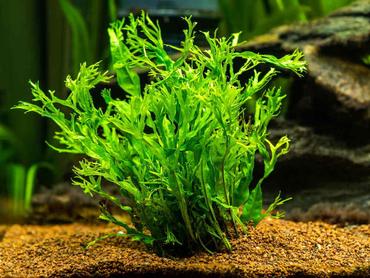
When shopping for planted tank lighting, look beyond basic wattage and pay attention to PAR (Photosynthetically Active Radiation). PAR measures the amount of light available for photosynthesis at specific depths in your tank. Low-light plants like Java Fern and Cryptocoryne wendtii thrive at a PAR of 20–30 at the substrate, while demanding carpet plants like Dwarf Baby Tears require a high PAR of 80 or more alongside a tailored red-heavy spectrum.
In addition to PAR, PUR (Photosynthetically Usable Radiation) is a crucial metric for intermediate hobbyists. While PAR measures all light between 400 and 700 nm, PUR measures only the exact wavelengths that your specific plant species can absorb. High-end LED fixtures allow you to dim useless yellow and green spectra while maxing out red and blue channels, maximizing plant growth while drastically limiting wasted energy that would otherwise fuel unwanted algae growth.
Saltwater and Coral Spectrum Needs: Coral Fluorescence and Growth
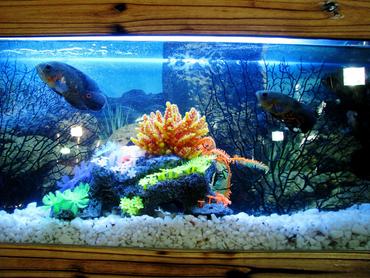
Saltwater reef aquariums have vastly different spectral requirements than freshwater setups. Shallow-water corals receive full-spectrum sunlight in nature, but as you go deeper onto the reef, red and orange light filter out, leaving an environment dominated by blue and actinic light (420–460 nm).
Photosynthetic corals, such as Acropora, Montipora, and soft corals like Zoanthids, host microscopic algae called zooxanthellae within their tissues. These photosynthetic algae rely almost entirely on blue light to produce energy for the coral host. Providing a spectrum rich in 420 nm actinic light not only supports optimal coral growth and tissue health but also activates the fluorescent proteins within corals, making their greens, pinks, and oranges pop vividly under nighttime viewing modes.
If you are managing a marine fish-only setup with species like the Ocellaris Clownfish or Yellow Tang, precise spectrum control is less biologically critical than it is for corals. However, providing a balanced 10,000K to 14,000K spectrum will ensure your fish display their natural colors without encouraging excessive green film algae on your live rock. If you want to explore nighttime viewing and coral visual pop, read our overview of adding LED moonlights to the aquarium.
The blue spectrum also plays a vital role in coral coloration beyond basic growth. Corals produce green, red, and purple fluorescent proteins (FPs) as a form of natural sunscreen to protect their delicate internal zooxanthellae from ultraviolet radiation damage. When exposed to strong blue light in the 400 to 450 nm range, these proteins fluoresce brilliantly. Achieving those vibrant, glowing coral colors seen in high-end reef aquariums requires high intensity concentrated in the violet and blue wavelengths rather than bright white light.
Common Beginner Lighting Mistakes and Spectrum Pitfalls
It is very common for aquarists to encounter setbacks when adjusting their lighting systems. Identifying these common mistakes early will save you time, money, and frustration.
One frequent error is using standard household LEDs or shop lights for high-demand aquariums. While these lights may illuminate the tank adequately for human eyes, they usually lack the specific red and blue peaks needed for plant growth or coral health. Consequently, hobbyists often notice their plants melting or turning yellow despite having bright room lighting.
Another major mistake is running full-spectrum lights for excessively long photoperiods. Keeping your lights on for 12 to 14 hours a day will not make your plants grow twice as fast; instead, it creates an imbalance that invites stubborn algae like black brush algae or green hair algae to take over your tank. Most aquariums perform best with a controlled photoperiod of 6 to 8 hours daily.
Finally, hobbyists often forget that light intensity must match nutrient availability. Increasing light strength without balancing carbon dioxide (CO2) and fertilizers in a planted tank—or nitrate and phosphate levels in a reef tank—will almost always result in an algae bloom rather than healthy growth. For actionable strategies on managing light-induced nuisance growth, explore our guide on choosing the right algae-eater by algae type.
Abrupt lighting changes are another subtle trap for beginner aquarists. Upgrading from a low-powered stock hood to a high-output LED fixture and immediately running it at 100% capacity will shock both plants and corals. Corals can experience photo-inhibition and expel their zooxanthellae (coral bleaching), while plants may suffer leaf burn. When introducing a new light fixture, utilize a "acclimation mode" or manually start at 40% to 50% intensity, ramping up by 5% each week to allow your ecosystem time to adjust safely.
Compatibility and Care Considerations for Aquatic Livestock
Light spectrum and intensity directly influence animal behavior, stress levels, and overall health. Not all fish or invertebrates enjoy bright, high-intensity spectrums, and failing to account for species-specific needs can lead to chronic stress.
Shy or nocturnal freshwater species, such as Cardinal Tetras, Kuhli Loaches, and Glass Catfish, naturally originate from dim, blackwater environments shaded by dense canopy leaves. Exposing these species to intense, full-spectrum overhead lighting without cover can cause extreme shy behavior and weakened immune systems. To accommodate them, consider using floating plants like Frogbit to create shaded pockets, or choose a dimmable LED fixture that allows you to simulate natural sunrise and sunset transitions.
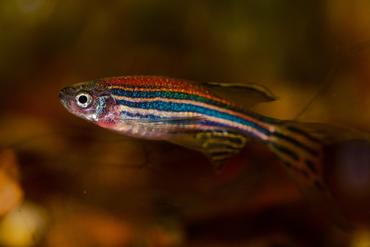
In contrast, active surface dwellers like Danio rerio (Zebrafish) or active saltwater species like the Blue Green Chromis thrive under brighter light conditions. When keeping a community tank with mixed lighting preferences, create natural topography using tall driftwood, rocks, and tall background plants to offer shaded retreat zones for sensitive fish. For more insights on equipment selection for compact setups, check our guide on lighting solutions for small tanks.
Proper maintenance of your lighting equipment is equally essential. Salt creep on saltwater light lenses and calcium deposits on freshwater glass canopies quickly reduce light penetration and alter the delivered spectrum. Clean your light lenses and glass tops bi-weekly with a soft cloth and vinegar solution to ensure maximum spectrum delivery.
Water chemistry also interacts directly with lighting performance. High concentrations of dissolved organic compounds (DOCs) impart a slight yellow tint to the water column over time. This yellowing acts as a natural filter that selectively blocks blue and violet wavelengths while letting yellow light pass through. If you keep high-light demand corals or demanding carpeting plants, using activated carbon or performing regular water changes is necessary to keep your water crystal clear so light spectrum integrity is preserved from surface to substrate.
Optimizing Spectrum for Color Rendering and Algae Prevention
Achieving the right spectral balance is both a science and an art. While your primary biological goal is supporting plants or corals, you also want an aesthetically pleasing display that brings out the vivid hues of your fish, such as the brilliant reds of a Betta splendens or the metallic sheen of a Neon Tetra.
To maximize visual appeal without triggering algae growth, select full-spectrum RGB (Red, Green, Blue) LED fixtures. RGB lights allow you to customize individual color channels. By dialing up the red channel slightly, you enhance the warm tones of red fish and cherry shrimp; increasing the blue channel deepens the sense of depth and highlights metallic scales. Keeping the green channel at a moderate level illuminates the tank naturally for your eyes without feeding nuisance algae species that thrive on excess green-yellow spectrums.
If you begin noticing rapid algae growth, inspect your spectrum settings. Excess red light in deep tanks or lingering yellow spectrums from older fluorescent bulbs often fuel brown diatom and green spot algae outbreaks. Adjusting your light spectrum toward a cooler, blue-dominant balance while trimming back your daily photoperiod is often the most efficient way to regain control over your tank's balance. To gain a deeper perspective on how lighting drives your aquarium's biology, read our detailed article on why your aquarium lighting matters more than you think.
Another advanced technique for optimizing lighting while combatting algae is implementation of a "siesta" photoperiod schedule. This involves splitting your daily light cycle into two distinct periods—for instance, 4 hours of light in the morning, followed by a 2 to 3-hour dark break, and then another 4 hours of light in the evening. Aquatic plants recover quickly from dark interruptions, but simple single-celled algae species struggle to adapt to interrupted light cycles, giving your higher plants a competitive edge.
Takeaway: Building Your Ideal Aquarium Lighting Setup
Understanding the light spectrum transforms how you manage your aquarium. By matching the right wavelengths—red and blue for planted freshwater, blue and actinic for marine reefs—to the specific needs of your inhabitants, you establish a stable biological foundation that prevents algae and promotes vibrant growth. Take time to evaluate your current tank setup, identify the light requirements of your plants, corals, and fish species, and select a customizable LED light that gives you precise control over color channels and intensity. For more detailed guides on choosing fixtures, maintaining ideal water parameters, and troubleshooting common tank issues, explore our comprehensive guides on aquarium setup and care at RateMyFishTank.com.


MOST RECENT ARTICLES