THE BASICS OF FRESHWATER FISH COMPATIBILITY

Why Fish Compatibility Matters: Beyond Just Physical Aggression
When beginners think of fish incompatibility, they usually picture violent clashes, torn fins, or outright predation. While physical aggression is certainly a major concern, incompatibility manifests in subtle, equally destructive ways. Long-term stress caused by improper cohabitation silently weakens a fish's immune system, making them far more vulnerable to opportunistic pathogens like Ich, fin rot, and velvet.
Stress in an aquarium manifests through several distinct environmental and behavioral pressures:
- Chemical Incompatibility: Forcing soft-water species into hard, alkaline water forces their organs to work overtime just to maintain osmotic balance, leading to chronic physical exhaustion and shortened lifespans.
- Dietary Incompatibility: Fast-moving, aggressive feeders will consume all available food before slow or shy species can eat, leading to malnutrition and starvation among timid tank mates.
- Thermal Incompatibility: Mixing cold-water species with tropical species forces one or both to live outside their optimal metabolic range, severely compromising their organ function over time.
- Territorial and Spatial Stress: Fish that lack designated spaces or sightline breaks live in a constant state of alert, suppressing natural behaviors and immune responses.
Understanding these underlying pressures helps you look beyond surface-level traits and choose fish that truly support each other's well-being.
Key Factors That Determine Freshwater Fish Compatibility
To successfully predict whether two species can coexist, you must evaluate them across four primary criteria. Missing even one of these factors can disrupt the stability of your aquarium.
1. Water Parameters and Environmental Preferences
Every freshwater fish species evolved in a specific natural habitat—from the soft, acidic leaf-littered streams of the Amazon Basin to the hard, mineral-rich alkaline waters of the African Rift Lakes. Attempting to keep species with vastly different water requirements in the same tank forces at least one species to live in sub-optimal conditions.
- pH Range: Measures acidity or alkalinity. Tetras and South American dwarf cichlids prefer acidic to neutral water (pH 6.0 to 7.0), whereas African Cichlids thrive in alkaline water (pH 7.8 to 8.6).
- Water Hardness (dGH and dKH): Refers to dissolved mineral content. Livebearers like Guppies, Platies, and Mollies require hard, mineralized water to maintain scale and muscle health, while Discus require very soft water.
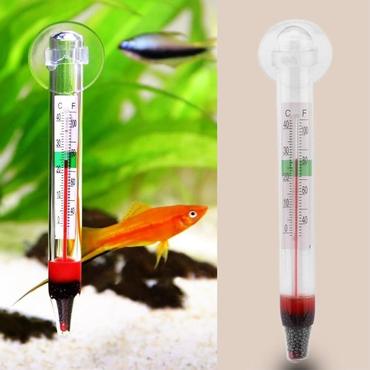
- Temperature: Most tropical freshwater fish thrive between 74 degree Fahrenheit and 78 degree Fahrenheit. However, Fancy Goldfish and Mountain Minnows prefer cooler water (64 degree Fahrenheit to 72 degree Fahrenheit), whereas Discus require warmer temperatures (82 degree Fahrenheit to 86 degree Fahrenheit).
To establish a stable environment before adding fish, review our guide on understanding water parameters for freshwater aquariums to ensure your tank's chemistry matches your desired species.
2. Temperament and Social Hierarchy
Fish behavior varies dramatically across different species. Classifying fish by their general temperament helps prevent dangerous pairings:
- Peaceful Community Fish: Non-aggressive species that interact gently with tank mates and rarely defend territory aggressively (e.g., Neon Tetras, Corydoras Catfish, Harlequin Rasboras).
- Semi-Aggressive Fish: Species that display territorial behavior during breeding, target fish with long flowing fins, or establish strict dominance hierarchies (e.g., Angelfish, Gouramis, Tiger Barbs, Red Tail Sharks).
- Aggressive / Territorial Fish: Species that aggressively defend large areas, attack intruders regardless of size, or display high intraspecies aggression (e.g., Central American Cichlids like the Oscar or Convict Cichlid, and African Lake Malawi Cichlids).
Social dynamics also matter. Schooling fish (like Tetras and Danios) require groups of six or more to feel secure. When kept in small numbers, schooling fish often become abnormally shy or defensively aggressive, nipping the fins of slower tank mates out of anxiety.
3. Adult Size and Mouth Size ("The Predation Rule")
In the fish world, a simple law applies across nearly every species: if a fish fits into another fish's mouth, it will eventually be eaten. This is not necessarily due to malicious aggression, but rather predatory instinct and opportunistic feeding.
A classic beginner mistake is pairing juvenile Angelfish with Neon Tetras. While they may live together peacefully for months while young, a full-grown Angelfish will comfortably consume adult Neon Tetras once its mouth grows large enough. Always research the maximum adult size of every species rather than relying on their size at the pet store.
4. Swimming Zones and Spatial Niche
Aquariums are three-dimensional spaces divided into three distinct swimming zones:
- Top Dwellers: Surface-oriented fish like Hatchetfish, Guppies, and Halfbeaks that feed and swim near the top layer of water.
- Mid-Water Dwellers: Schooling fish like Tetras, Rasboras, Barbs, and Rainbowfish that occupy the open middle water column.
- Bottom Dwellers: Benthic fish like Corydoras Catfish, Plecostomus species, Loaches, and freshwater Shrimp that forage along the substrate.
By selecting species that inhabit different swimming zones, you reduce physical competition, spread out territorial boundaries, and create a visually balanced display.
Peaceful Community Fish Combinations for Beginners
If you are building your first community aquarium, starting with docile, tolerant species gives you a wide margin of safety while you master daily maintenance and water quality management.
For detailed species profiles and tank ideas, explore our curated list of peaceful community freshwater fish to build a compatible centerpiece display.
Recommended Peaceful Species Profiles
- Neon Tetras & Cardinal Tetras: Small, colorful schooling fish that occupy the mid-water zone. Keep in groups of 8 to 12. Ideal pH: 6.0–7.2; Temp: 73–78 degree Fahrenheit.
- Corydoras Catfish (Panda, Bronze, Julii): Playful, bottom-dwelling catfish that clean up uneaten food. Keep in groups of 6 or more on a soft sand substrate to protect their delicate barbels. Ideal pH: 6.5–7.5; Temp: 72–78 degree Fahrenheit.
- Harlequin Rasboras: Extremely peaceful, tight-schooling fish featuring a striking black triangular patch. Excellent companions for small tetras and peaceful gouramis. Ideal pH: 6.0–7.5; Temp: 73–80 degree Fahrenheit.
- Honey Gourami or Dwarf Gourami: Excellent peaceful centerpiece fish for medium aquariums. Slow-moving and curious, they inhabit the upper-middle zones. Keep one male per tank to prevent territorial disputes between males. Ideal pH: 6.5–7.5; Temp: 75–80 degree Fahrenheit.
- Bristlenose Pleco (Ancistrus): A small, peaceful algae-eating catfish that stays under 5 inches (unlike the Common Pleco, which reaches 18 inches). Excellent for bottom territory. Ideal pH: 6.5–7.5; Temp: 73–80 degree Fahrenheit.
Sample Community Stocking Guides
To help you visualize how these swimming zones and temperaments blend together, here are three battle-tested stocking plans for popular tank sizes:
-
20-Gallon Community Setup:
- 1x Honey Gourami (Centerpiece / Upper Zone)
- 8x Neon Tetras or Harlequin Rasboras (Schooling / Middle Zone)
- 6x Panda Corydoras (Bottom Dwellers)
- 1x Mystery Snail or Nerite Snail (Cleaner)
-
30-Gallon Planted Community Setup:
- 1x Dwarf Gourami or Pair of German Blue Rams (Centerpiece)
- 10x Green Neon Tetras or Ember Tetras (Middle Zone)
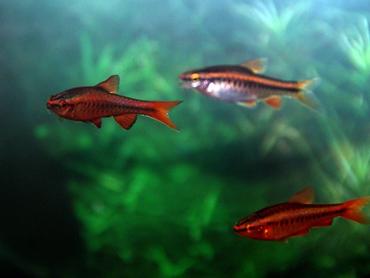
- 8x Cherry Barbs (Middle-Bottom Zone)
- 6x Sterbai Corydoras (Bottom Zone)
- 1x Bristlenose Pleco (Bottom / Algae Control)
-
55-Gallon Classic Community Display:
- 2x Pearl Gouramis (1 Male, 1 Female - Centerpiece)
- 12x Rummynose Tetras (Tight Schooling / Middle Zone)
- 12x Cardinal Tetras (Middle Zone)
- 8x Kuhli Loaches or Similis Corydoras (Bottom Zone)
- 1x Rubber Lip or Bristlenose Pleco (Bottom Zone)
- 6x Amano Shrimp (Invertebrate Cleaners)
Semi-Aggressive and Specialized Compatibility Dynamics
Once you transition into semi-aggressive species or specialized community setups, fish compatibility requires strategic planning, specific male-to-female ratios, and tailored aquascaping.
1. The Angelfish Dynamic
Freshwater Angelfish (Pterophyllum scalare) are iconic centerpieces, but they belong to the Cichlid family. As juveniles, Angelfish are peaceful and sociable. However, as they mature and pair up for breeding, they become highly territorial and aggressive, particularly toward other Angelfish or slow-moving long-finned fish.
- Compatible Angelfish Mates: Medium-sized, fast-moving deep-bodied tetras (such as Bleeding Heart Tetras, Lemon Tetras, or Diamond Tetras), Corydoras Catfish, and Bristlenose Plecos.
- Incompatible Mates: Small slender fish like Neon Tetras or Endlers (which will be eaten), and fin-nippers like Tiger Barbs or Serpae Tetras (which will tear the Angelfish's long trailing fins).
2. Managing Tiger Barbs and Fin-Nippers
Tiger Barbs are notorious for nipping the fins of slow-moving species like Guppies, Betta fish, and Gouramis. However, this behavior is almost always caused by keeping them in groups that are too small.
When kept in small groups of 3 to 5, Tiger Barbs direct their playful aggression outward toward other species. When kept in a proper school of 10 to 12 or more, they establish an internal hierarchy within their own group, leaving other species in the aquarium completely alone. Pair them with robust, fast species like Rainbowfish, Red Tail Sharks, or larger Loaches.
3. Male Betta Fish in Community Tanks
A common myth is that Male Betta fish (Betta splendens) must always live entirely alone in small bowls. While two male Bettas will fight to the death and should never be housed together, a single male Betta can thrive in a peaceful community tank under the right conditions.
- Do Pair Bettas With: Peaceful bottom dwellers (Corydoras, Kuhli Loaches), peaceful snails, and short-finned, non-flashy mid-water schooling fish like Harlequin Rasboras or Ember Tetras.
- Avoid Pairing Bettas With: Brightly colored fish with flowing fins (like male Guppies or Fancy Mollies, which Bettas mistake for rival males), aggressive fin-nippers (Tiger Barbs, Serpae Tetras), or active surface dwellers (Gouramis, which compete for the top water zone).
4. African Cichlids vs. South American Cichlids
One of the most frequent mistakes intermediate keepers make is mixing cichlids from different continents. Cichlids from Lake Malawi and Lake Tanganyika require hard, alkaline water (pH 7.8–8.6) and exhibit extreme hyper-aggression that requires "controlled overstocking" to distribute territorial hostility.
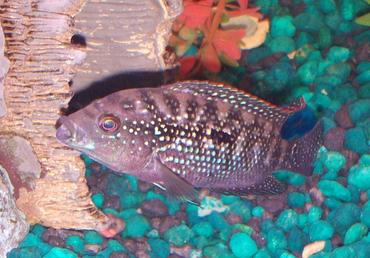
Conversely, South American Cichlids (like Ram Cichlids, Apistogramma, and Discus) prefer soft, acidic water (pH 6.0–6.8) and display far calmer temperaments. Mixing African Cichlids with South American Cichlids creates severe chemical stress, behavioral conflicts, and inevitable casualties.
Compatibility and Care Considerations: Creating a Thriving Ecosystem
Achieving long-term harmony involves more than selecting compatible species on paper. How you set up, decorate, feed, and introduce your fish determines whether your community succeeds or fails.
Tank Size, Footprint, and Territorial Boundaries
When assessing tank size for compatibility, the footprint (surface area of the tank bottom) is often far more important than total water volume. For bottom-dwelling species and territorial fish, a shallow 30-gallon "Long" tank provides significantly more usable territory than a tall, narrow 30-gallon vertical tank.
Providing ample space allows submissive fish to escape dominant tank mates and set up independent territories without constant confrontation.
Strategic Aquascaping and Sightline Breaks
A barren tank with open water invites aggression because dominant fish can spot and chase rivals across the entire length of the aquarium. You can dramatically reduce aggression by strategically aquascaping with visual barriers:
- Driftwood and Rockwork: Create caves, archways, and natural crevices for bottom dwellers like Plecos, Loaches, and Dwarf Cichlids to claim as safe retreats.
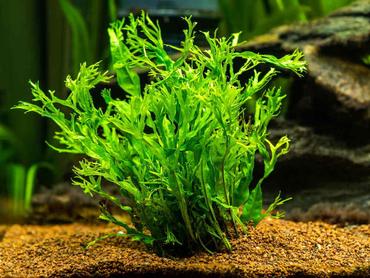
- Tall Live or Silk Plants: Plant dense clusters of tall background plants (such as Vallisneria, Amazon Swords, or Stem plants) to break up direct lines of sight across the mid and upper water zones.
- Territory Anchors: Distribute hardscape elements across both sides of the tank so territorial fish can claim distinct areas rather than fighting over a single central structure.
Targeted Feeding Strategies
Dietary competition is a leading cause of hidden stress in community tanks. Surface-dwelling and mid-water fish usually consume floating flake food before it reaches bottom-dwelling species. Over time, bottom dwellers suffer from chronic malnutrition.
To ensure every inhabitant receives adequate nutrition:
- Use high-quality floating flakes or micro-pellets for top and mid-water feeders.
- Drop sinking algae wafers or sinking carnivore pellets near caves after turning off the aquarium lights to feed nocturnal bottom dwellers like Corydoras, Plecos, and Loaches.
- Feed frozen or live foods (like Bloodworms, Artemia, and Daphnia) dispersed across multiple areas of the tank so timid fish can feed without competing directly with aggressive species.
Quarantine Protocols and Safe Introductions
Introducing new fish into an established aquarium can trigger sudden territorial disputes. Established fish view the entire aquarium as their personal territory and will aggressively defend it against new arrivals.
Before introducing new livestock, always follow proper health protocols. Consult our detailed guide on how to cycle a fish tank to maintain rock-solid biological filtration whenever adding new fish load.
Use these proven strategies when introducing new fish to an existing community:
- Rearrange the Hardscape: Right before adding new fish, slightly adjust the position of rocks, plants, and driftwood. This disrupts established territorial boundaries, forcing all fish to re-evaluate and claim new areas simultaneously.
- Feed Before Introducing: Feed the existing tank inhabitants shortly before adding new fish so they are less driven by food-seeking aggression.
- Turn Off Aquarium Lights: Dim or turn off the aquarium lights for 4 to 6 hours after releasing new fish. Darkness calms both existing and new inhabitants, allowing new arrival stress levels to settle safely.
- Add Species in Groups: When stocking schooling fish, add the entire school at once rather than trickling them in two at a time, which subjects individual new arrivals to targeted harassment.
Common Beginner Compatibility Mistakes (And How to Avoid Them)
Even well-intentioned hobbyists occasionally make critical stocking errors. Recognizing these widespread mistakes will save you time, money, and emotional frustration:
- Impulse Buying at the Pet Store: Purchasing fish based solely on color without researching their adult size, water parameter needs, or behavioral traits. Solution: Always research every species on your smartphone before purchasing.
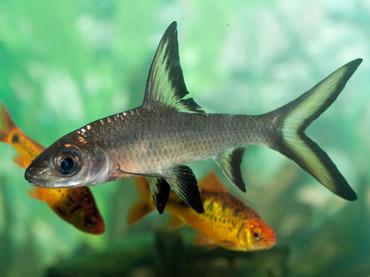
- The "Miniature Monster" Trap: Buying cute juvenile fish like Redfin Bala Sharks, Common Plecos, or Iridescent Catfish without realizing they grow to 12–24 inches long and require 100+ gallon aquariums.
- Under-Stocking Schooling Fish: Buying 2 or 3 Tetras, Barbs, or Rasboras instead of a proper school of 6 to 10+. Small numbers cause extreme stress and trigger fin-nipping.
- Ignoring Water Hardness and pH Compatibility: Mixing soft-water Amazonian species (Discus, Neon Tetras) with hard-water African Rift Cichlids or Livebearers, causing long-term osmotic shock.
- Overstocking the Bottom Zone: Loading the bottom of the tank with multiple territorial species (e.g., Red Tail Sharks, Male Dwarf Cichlids, and multiple Plecos) without sufficient hideouts or substrate space.
Conclusion: Building Your Perfect Freshwater Community
Successful fish compatibility isn't about luck—it is a science built on understanding the natural biology, behavior, and environmental requirements of each species you keep. By carefully balancing water parameters, selecting species that occupy different swimming zones, matching temperaments, and providing adequate aquascaping and swim space, you can transform your aquarium into a peaceful, vibrant, and sustainable ecosystem.
Remember that every fish has its own unique personality, and even normally peaceful species can occasionally display surprising behaviors. Observe your tank closely during feeding times and daily routines, keep a quarantine tank ready for unexpected behavioral issues, and adjust your aquascaping as your livestock grows.
Ready to take the next step in planning your dream aquarium? Explore our vast library of detailed species guides, aquascaping tutorials, and tank maintenance tips at RateMyFishTank.com, or share your own tank setup with our thriving community of passionate aquarists today!


MOST RECENT ARTICLES