SETTING UP A HOSPITAL TANK: STEP-BY-STEP 14-DAY TREATMENT PLAN
The Critical Role of the Hospital Tank in Disease Management
Many beginners make the mistake of treating their entire display tank when only one or two fish appear ill. This "shotgun approach" is often counterproductive and can lead to a total system collapse. A hospital tank is not just a luxury for advanced keepers; it is a fundamental tool for anyone serious about the longevity of their fish. The primary reason to utilize a separate tank is the safety of your beneficial bacteria. Many common medications, particularly those containing copper, formaldehyde, or strong antibiotics like Erythromycin, are indiscriminate. They kill the nitrifying bacteria in your substrate and filters just as effectively as they kill pathogens. If your biological filter crashes in a 75-gallon display tank, you are looking at a massive ammonia spike that could kill every inhabitant, sick or healthy.
Furthermore, a hospital tank allows for much more precise dosing. Medications are expensive, and dosing a large volume of water is not only wasteful but also harder to control. In a smaller, bare-bottom environment, you can ensure the concentration of the medication remains at the therapeutic level required to actually kill the parasite or bacteria. This is also the only way to protect "sensitive" inhabitants. For example, if you have a beautiful planted tank with Nerite snails and Amano shrimp, many Ich treatments will be lethal to those invertebrates. By moving the sick fish to a dedicated hospital setup, you preserve the life and aesthetics of your main display while focusing purely on the clinical needs of the patient.
Benefits of a Hospital Tank
- Pathogen Isolation: Moving a sick fish immediately stops the shedding of infectious spores or bacteria into the main water column, protecting your healthy specimens.
- Behavioral Observation: In a bare-bottom hospital tank, there are no plants or rocks for a fish to hide behind. You can monitor exactly how much they are eating and observe the frequency and consistency of their waste, which are vital indicators of internal health.
- Eliminating Competition: Sick fish are often bullied or outcompeted for food by their healthier tank mates. A hospital tank provides a "stress-free zone" where the fish can rest without defending a territory.
- Financial Savings: Treating a 10-gallon tank requires far less medication than a 50 or 100-gallon system, saving you significant money over a two-week treatment cycle.
Before you begin the setup, it is vital to understand the distinction between different types of auxiliary tanks. While many use the terms interchangeably, you should review the importance of quarantine tanks to understand how preventive care for new arrivals differs from the active, clinical intervention required in a hospital tank environment. A hospital tank is effectively an ICU for your fish, and its design should reflect that clinical necessity.
Essential Equipment for a Clinical Hospital Setup
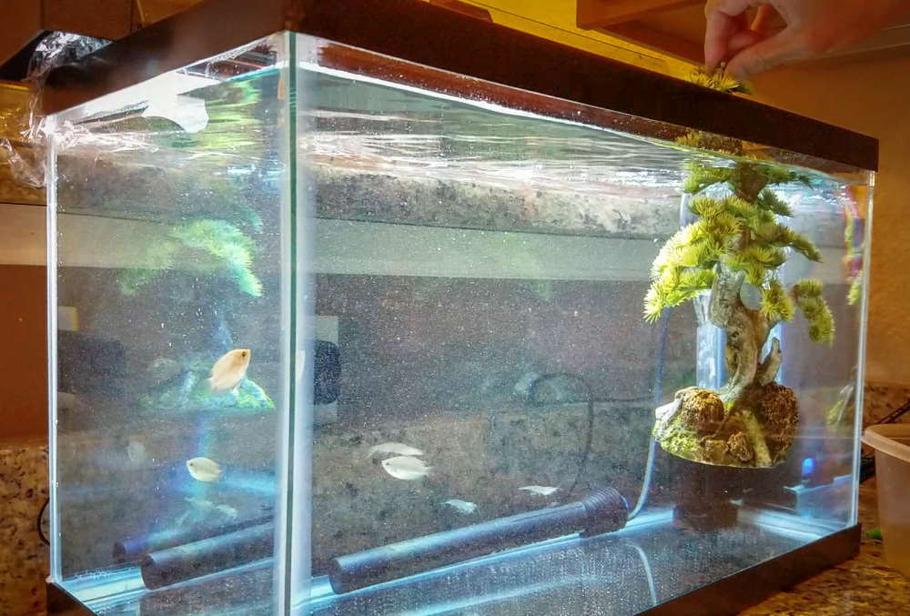
When setting up a hospital tank, the mantra should be "function over form." You want an environment that is incredibly easy to clean, disinfect, and monitor. A standard 10-gallon glass aquarium is the most versatile choice for most freshwater species, such as Guppies, Tetras, or Dwarf Cichlids. However, if you are treating larger species like Oscars, large Goldfish, or full-grown Angelfish, you should opt for a 20-gallon "long" tank to provide adequate swimming space and oxygen exchange. The larger the volume of water, the more stable the parameters will be, which is helpful when the fish is already in a weakened state.
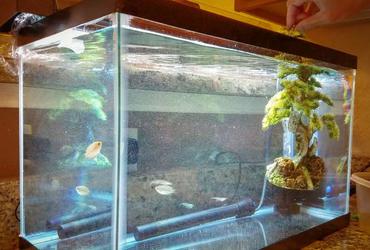
One of the most common mistakes beginners make is adding substrate to a hospital tank. You must leave the bottom bare. Gravel and sand act as sponges for medications, particularly copper-based ones, absorbing the active ingredients and making it impossible to know the true concentration in the water. Furthermore, many parasites, such as the various stages of Ich, fall to the substrate to reproduce. A bare glass bottom allows you to vacuum these pathogens out daily, significantly speeding up the recovery process. Instead of plants, use short sections of PVC pipe or ceramic mugs. These provide the fish with a place to hide and feel secure but are non-porous and easy to sterilize between uses.
Essential Equipment List
- Filtration: Use a simple sponge filter powered by an air pump. This provides gentle water movement and vital aeration without the risk of sucking in a weakened fish. Crucially, avoid using any chemical media like activated carbon or Purigen, as these will remove the medication from the water.
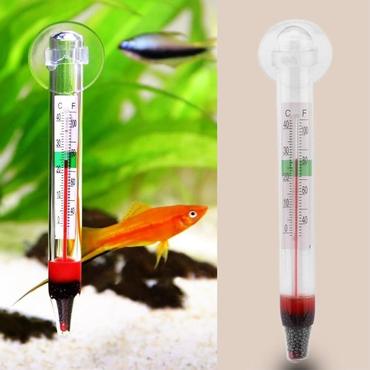
- Heating: A high-quality, adjustable heater is essential. Many treatments for parasites require a slight increase in temperature to speed up the life cycle of the organism, so you need a heater that can reliably maintain specific set points.
- Lighting: Keep the hospital tank in a low-traffic, dimly lit area. Many fish medications are light-sensitive and will break down under bright aquarium lights. Furthermore, darkness helps keep the fish's metabolic rate low and reduces stress.
- Monitoring Tools: You will need a dedicated liquid test kit for ammonia, nitrite, and pH. Since hospital tanks often lack a fully matured nitrogen cycle, ammonia can build up rapidly.
- Aeration: Many medications reduce the amount of dissolved oxygen in the water. Adding an extra air stone is a proactive way to ensure your fish doesn't struggle to breathe while recovering.
It is also a good idea to have a dedicated "hospital kit" of nets, siphons, and buckets that are never used on your main display tank. This prevents "cross-contamination," where you accidentally move the very disease you are trying to cure back into your healthy system. Always disinfect these tools with a mild bleach solution or a specialized aquarium disinfectant after every use.
Day 1 to Day 5: The Stabilization and Loading Phase
The first five days of your treatment plan are the most intense and require the most vigilance. This is the period where the fish is at its highest risk of mortality due to the combination of the disease and the stress of being moved. Before you even catch the fish, you must ensure the hospital tank water is a perfect match for the display tank. Using water directly from the display tank to fill the hospital tank is a common practice, as it ensures the pH, GH, and KH are identical, preventing osmotic shock during the move.
Day 1: Carefully move the fish using a soft mesh net or, preferably, a plastic container to keep the fish submerged during the transfer. Once the fish is in the tank, allow it to settle for one hour before adding any medication. If you are dealing with a general "sick fish" and are unsure of the exact cause, many experts recommend a "triage" dose of aquarium salt (1 tablespoon per 5 gallons). This aids in osmoregulation and helps the fish produce a healthy slime coat. If the diagnosis is clear (e.g., White Spot or Fin Rot), administer the first dose of the primary medication according to the manufacturer's instructions.
Days 2-4: This is the observation window. You must monitor the fish's breathing and activity levels. If you see the fish gasping at the surface, perform an immediate 25% water change and increase aeration. On Day 3, you should perform a routine 25% water change to keep ammonia levels at zero. Remember: if the medication instructions say to dose daily, do so after your water change. If the medication is meant to stay in the water for several days, you must re-calculate and add back the amount of medicine lost during the water change. For example, if you remove 5 gallons of a 10-gallon tank, you must add a half-dose of medication back in to maintain the concentration.
Day 5: By this point, you should see the first signs of stabilization. In cases of bacterial infections, the redness should stop spreading. In cases of Ich, you might actually see more spots; this is normal, as the medication only kills the parasite in its free-swimming stage. Do not get discouraged. Consistency is the key to success here. If the fish is willing to eat, offer a very small amount of high-quality flake or frozen daphnia. Daphnia is excellent for sick fish as it acts as a mild laxative and is easy to digest.
Day 6 to Day 10: Managing the Environment and Secondary Issues
During the middle phase of the 14-day plan, the primary threat often shifts from the original disease to environmental stress and secondary infections. When a fish’s immune system is occupied fighting off a parasite like Velvet, it becomes a prime target for opportunistic bacteria or fungi. This is why many hobbyists choose to use a "medication cocktail" that covers both bases, though this should be done with caution and only if the medications are known to be compatible. For a deeper look at what you might be seeing, consult our guide on freshwater fish diseases identification and treatment.
The Ammonia Challenge
Because most hospital tanks use a simple sponge filter that may not be fully seasoned, you are essentially performing a "fish-in cycle" under the worst possible conditions. Ammonia is a silent killer that can undo all the progress of your medicine. On Day 6 and Day 8, perform 30% water changes regardless of what your test kit says. This "dilution is the solution to pollution" approach ensures that even trace amounts of toxins don't stress the fish's healing gills.
Species-Specific Adjustments
During this phase, you may need to adjust your approach based on the fish species.
- Livebearers (Mollies, Platies, Swordtails): These fish thrive with a bit more salt. You can gradually increase the salinity to 1 tablespoon per 3 gallons to help them fight off skin flukes or shimmying.
- Tetras and Rasboras: These are "soft water" fish and can be sensitive to heavy metal-based medications. If you notice them becoming extremely pale or darting erratically, reduce the medication concentration by performing a water change.
- Scaleless Fish (Loaches and Catfish): Species like the Clown Loach or Corydoras are notoriously sensitive to Ich medications containing malachite green. For these fish, it is safer to use heat treatment (gradually raising the temp to 86°F) combined with half-strength medication doses.
Day 10: This is the "milestone" day. By now, all external signs of the disease—such as white spots, fuzzy patches, or cloudy eyes—should be completely gone. If they are not, you may need to consult a specialist or consider that the pathogen is resistant to the current medication. However, for 90% of common aquarium ailments, the fish should be looking significantly better by Day 10. Even if the fish looks perfect, do not move it back to the display tank yet. The most common cause of re-infection is ending the treatment too early.
Day 11 to Day 14: The "Cool Down" and Re-Acclimation Phase
The final four days of the hospital tank protocol are about weaning the fish off the medication and preparing its body for the return to the display aquarium. Think of this as the "convalescence" period. The fish's internal organs—specifically the liver and kidneys—have been working hard to process the chemicals you've added to the water. They need clean, fresh water to flush those toxins out.
Day 11: Perform a 50% water change. This is the largest water change of the cycle. At this point, stop adding new doses of medication. To help remove the residual chemicals, you can now add a small bag of high-quality activated carbon to the hospital tank. This will "polish" the water and remove any yellow tint or chemical odors left behind by the treatment.
Day 12: Observe the fish's appetite. Now that the medication levels are dropping, the fish should become much more active and interested in food. Feed slightly more than you did during the first week, but still be careful not to overfeed. You want the fish to regain its strength and fat reserves before it has to compete with its tank mates again.
Day 13: Perform another 25% water change with water from the display tank. This serves as a "pre-acclimation" step. By introducing water from the main tank back into the hospital tank, you are slowly re-introducing the fish to the specific microbial balance and chemistry of its permanent home. Check the temperature of both tanks; they should be within one degree of each other.
Day 14: The big day. Inspect the fish under a flashlight to check for any lingering issues. If the fins are clear, the scales are flat against the body, and the eyes are bright, the fish is cleared for transfer. Use the drip acclimation method over the course of 30 to 60 minutes. Even though the water is similar, the "shock" of moving can trigger a relapse if not done carefully. Once the fish is back in the display tank, leave the lights off for the rest of the day to let it settle in. To ensure your main tank remains a healthy environment for the returning patient, refer to our article on how to properly clean an aquarium to keep pathogens at bay.
Compatibility and Care: Avoiding Common Pitfalls
While the 14-day plan is a robust framework, success often depends on the nuances of compatibility and individual care. One of the biggest challenges is treating "schooling" fish. A single Neon Tetra isolated in a bare 10-gallon tank will often become so stressed that it may die from the isolation rather than the disease. In these cases, it is often better to move a small group of its "friends" into the hospital tank with it, provided you have the space and filtration capacity. The presence of others provides a sense of security that can be more effective than any medicine.
Water Chemistry Sensitivity
You must be aware of the "pH shift" that occurs in small tanks. In a hospital tank with high aeration and low volume, the pH can fluctuate more than in a large display tank. Always test your pH before and after a water change. If your tap water has a significantly different pH than your tank water, you must age or treat the water before adding it to the hospital tank. Sudden pH swings can cause "acidosis" or "alkalosis," both of which can kill a recovering fish faster than Ich can.
Antibiotic Resistance
Just like in human medicine, skipping doses or ending the treatment on Day 7 because the fish "looks fine" contributes to antibiotic-resistant bacteria. If you start a course of antibiotics, you must finish the full 14 days. If you don't, you risk the disease coming back even stronger, and next time, the medication might not work at all. This is a common mistake among beginner hobbyists who are eager to get their fish back into the beautiful display tank.
Post-Treatment Sterilization
Once the 14 days are over and the fish is safely home, do not just pour the hospital tank water down the drain and put the tank away. You must sterilize everything. Soak the sponge filter, the heater, the PVC pipes, and the tank itself in a solution of 1 part bleach to 10 parts water for 20 minutes. Rinse everything multiple times with fresh water and use a heavy dose of dechlorinator to neutralize any remaining bleach. Let everything air dry completely before storage. This ensures that the next time you have an emergency, you aren't starting with a contaminated tank.
Conclusion: Your Roadmap to Aquatic Health
Setting up and maintaining a hospital tank is undoubtedly an investment of time and effort, but it is the most significant step you can take toward becoming a pro-level aquarist. The 14-day treatment plan provides a clear, logical structure that takes the guesswork out of fish health management. By focusing on isolation, strict water quality control, and a full course of targeted medication, you give your fish the absolute best chance at a full recovery. You also protect your main display tank from the devastating consequences of whole-tank treatments and "crashes."
The peace of mind that comes with having a dedicated "fish hospital" ready to go cannot be overstated. Instead of panicking when you see a sick fish, you will have a proven protocol to follow. This proactive approach saves lives, saves money, and ensures that your aquarium remains the beautiful, tranquil centerpiece it was meant to be. If you found this guide helpful and want to ensure you are providing the best possible environment for your pets, continue your journey by exploring our detailed guides on advanced filtration, nutrition, and water chemistry. A healthy tank starts with an educated hobbyist—keep learning and keep your fish swimming strong!
Further Reading and Resources
The world of fish health is vast, and the hospital tank is just one part of a comprehensive care strategy. To further sharpen your skills, consider researching the "quarantine-first" philosophy, which can prevent you from ever needing the hospital tank in the first place. Additionally, keeping a "fish first aid kit" stocked with essentials like Seachem Prime, API General Cure, and a reliable thermometer will ensure you can start your 14-day plan the very minute you notice something is wrong. Your fish rely on you to be their doctor, their janitor, and their provider—with the right tools and knowledge, you can excel at all three.
Do you have a success story using a hospital tank, or perhaps a lesson learned the hard way? Join the conversation in our community forums or share this article with a fellow hobbyist who might be facing their first fish health challenge. Together, we can make the hobby better for every fish and every keeper.


MOST RECENT ARTICLES