FISH TANK FILTER NOT WORKING? HOW TO FIND THE PROBLEM AND FIX IT SAFELY
Why Is Your Fish Tank Filter Not Working?
An aquarium filter can stop working for several reasons, including electrical problems, clogged filter media, trapped air, and damaged internal components. The most useful first step is to identify exactly what has changed.
A filter that makes no sound may have a power problem. One that hums without moving water may have a blocked impeller or need priming. If the water flow has gradually weakened, accumulated debris is a more likely explanation.
Common signs of a malfunctioning aquarium filter
-
No sound or movement: The filter may not be receiving power, or its motor may have failed.
-
Humming without water flow: The impeller may be jammed, or the filter may contain trapped air.
-
Weak water circulation: Clogged mechanical media, a blocked intake, or restricted tubing may be reducing flow.
-
Grinding or rattling noises: Debris, a worn impeller, or incorrectly seated components may be interfering with the motor.
-
Failure after a water change: The filter may have lost its prime when the aquarium water level dropped.
-
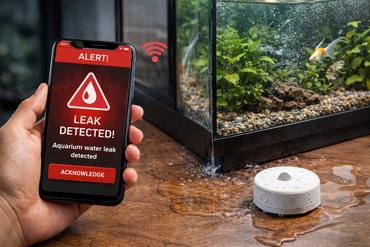
Water leaking around the filter: A damaged seal, loose connection, or incorrectly assembled component may be responsible.
These symptoms help narrow down the problem, but they aren't definitive diagnoses. A filter can have more than one issue at the same time.
Why filter problems shouldn't be ignored
Your aquarium filter does more than collect visible debris. It also provides surfaces for beneficial bacteria that convert ammonia into nitrite and then nitrate.
These bacteria require oxygen, which normally reaches them through moving water.
When circulation stops, oxygen availability inside the filter can decline. Meanwhile, fish continue producing waste, and uneaten food or decaying plant material can contribute additional ammonia.
The consequences depend on the aquarium's size, stocking level, temperature, and available aeration.
A lightly stocked aquarium with a separate air pump may tolerate a short interruption better than a heavily stocked tank that depends entirely on its main filter for water movement.
The goal is to restore circulation while preserving the biological filtration already established in your aquarium.
What Should You Do Immediately When Your Filter Stops?
Before opening the filter, check your fish and make sure the aquarium has adequate aeration.
Fish breathing rapidly, gasping near the surface, or behaving unusually may indicate poor water conditions or insufficient dissolved oxygen.
However, these symptoms can have several causes. Don't assume that every fish near the surface is struggling to breathe, particularly if the species normally spends time there.
Keep your fish safe while troubleshooting
Follow these steps before attempting repairs:
-
Observe your fish. Look for unusual breathing, lethargy, or changes in swimming behavior.
-
Check for water movement. Determine whether another filter, air stone, or circulation pump is still operating.
-
Add backup aeration if needed. A battery-powered air pump can help maintain oxygen exchange during a power outage.
-
Reduce feeding temporarily. Less food means less waste entering the aquarium while filtration is interrupted.
-
Check the water temperature. Heater failure or unusually warm water can make an equipment problem more serious.
-
Test ammonia and nitrite. Water testing becomes especially important if the filter has been off for an extended period.
If your aquarium has no functioning circulation, maintaining aeration should take priority over dismantling the filter.
A separate air pump can help oxygenate the water, but it doesn't automatically replace the biological filtration provided by an established filter.
What should you do with the filter media?
Keep established biological media wet while repairing the filter.
If you need to remove a sponge or other reusable biological media, place it in a clean container of aquarium water. For a prolonged interruption, gentle aeration around the media can help maintain oxygen availability.
Avoid leaving the media exposed to air for extended periods or allowing it to dry out.
You should also avoid unnecessarily replacing all the media when repairing a mechanical problem.
The bacteria living on these surfaces are part of the aquarium's biological filtration system, and losing too much established media can temporarily reduce its ability to process waste.
How to Fix an Aquarium Filter That Has Stopped Working
Once your fish are safe, work through the likely causes in a sensible order. Start with simple external checks before opening the motor housing or replacing components.
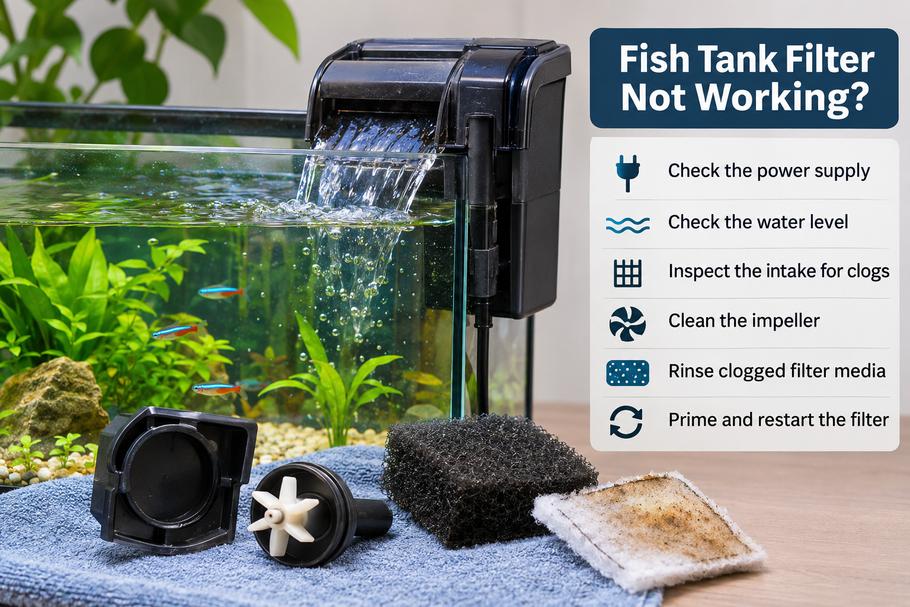
Step 1: Check the electrical connection
If the filter is completely silent, check whether it's receiving power.
Make sure the plug is properly connected and that the power strip hasn't been switched off.
Some aquarium outlets are protected by a ground-fault circuit interrupter (GFCI), which can disconnect power when an electrical fault is detected.
If it's safe and dry, you can check whether the outlet works using another suitable device.
Inspect the filter's cable and housing for visible damage.
Never handle damaged plugs with wet hands, and don't attempt to repair a cracked electrical cable or sealed motor housing.
If the filter repeatedly trips an electrical safety device, disconnect it and stop using it until the cause has been identified.
Step 2: Check the aquarium water level
Some filters cannot draw water properly when the aquarium level becomes too low.
This commonly affects hang-on-back filters, which draw water through an intake tube and return it over the aquarium rim.
If evaporation or a water change has lowered the water level, the pump may draw air instead of water.
Restore the aquarium to the manufacturer's recommended operating level using appropriately conditioned water.
Make sure the intake is fully submerged and correctly assembled.
A filter that stopped immediately after a water change may simply need to be primed before it can resume normal circulation.
Step 3: Inspect the intake and tubing
Fish waste, plant leaves, algae, and small pieces of debris can gradually block the intake.
Unplug the filter and inspect the intake strainer.
Remove any visible obstruction using a soft brush or rinse it in aquarium water.
For canister filters, inspect the hoses for kinks, restrictions, or accumulated debris. Confirm that the valves are positioned correctly.
A blocked intake restricts the amount of water reaching the pump, which can reduce output even when the motor is functioning normally.
If the filter has a pre-filter sponge, check whether it needs rinsing.
Step 4: Clean the impeller
The impeller is a rotating component that moves water through many aquarium filters.
Over time, fine sand, plant fragments, and biological buildup can interfere with its movement.
A blocked or damaged impeller may cause humming, rattling, reduced flow, or complete failure to pump water.
To inspect it:
-
Disconnect the filter from electricity.
-
Remove the impeller cover according to the manufacturer's instructions.
-
Carefully remove the impeller assembly.
-
Inspect the blades, shaft, and surrounding chamber.
-
Use a soft brush to remove accumulated debris.
-
Rinse the components as recommended by the manufacturer.
-
Reassemble the impeller and cover correctly.
Some impeller shafts are ceramic and can break if handled roughly.
If the impeller is cracked, worn, or unable to rotate correctly after cleaning, replace it with a compatible component.
Don't force damaged parts into position or operate the filter with an incorrectly installed impeller.
Step 5: Clean clogged filter media
If the motor works but water flow has gradually weakened, the mechanical filter media may be restricting circulation.
Sponges and filter pads trap suspended particles, including uneaten food, fish waste, and plant debris.
As these materials accumulate, water has more difficulty passing through.
Remove the reusable mechanical media and gently rinse away excess debris in water taken from the aquarium during maintenance.
The goal is to restore normal water movement without unnecessarily disturbing established beneficial bacteria.
Avoid scrubbing biological media until it looks completely clean.
If a cartridge is damaged or cannot be cleaned sufficiently to restore flow, follow the manufacturer's replacement guidance while preserving other established biological media where possible.
Step 6: Prime the filter before restarting
Priming removes trapped air and allows water to circulate through the pump.
The correct procedure depends on the filter design.
Some hang-on-back filters require you to fill the filter chamber with water before switching on the motor.
Canister filters may use a manual priming mechanism, while other models have specific startup procedures.
Follow your filter's instructions rather than assuming every pump primes the same way.
After restarting, check whether water is flowing steadily through the outlet.
If the filter continues making unusual noises or fails to move water, disconnect it and investigate further.
Never leave a pump running dry while waiting for circulation to begin.
Troubleshooting Different Types of Aquarium Filters
Not all aquarium filters operate in the same way. Understanding the differences can help you identify the right repair without unnecessary disassembly.
Hang-on-back filters
Hang-on-back filters are commonly used in freshwater aquariums because they're accessible and relatively straightforward to maintain.
They draw water through an intake tube, pass it through filter media, and return it to the aquarium.
Common problems include clogged cartridges, low water levels, blocked impellers, and lost priming.
If your hang-on-back filter stopped after maintenance, check that the intake tube is seated correctly and that the filter chamber contains enough water for startup.
If the motor runs but the output remains weak, inspect the intake and mechanical media before assuming the motor has failed.
Canister filters
Canister filters move water through an enclosed container, usually positioned below the aquarium.
They often contain several types of media and use external hoses to move water between the tank and the filter.
Common problems include trapped air, restricted hoses, blocked impellers, and incorrectly positioned valves.
If a canister filter won't restart, inspect the hose connections and follow the manufacturer's priming procedure.
Check the seals and connections for leaks before returning the filter to normal operation.
If the filter has been stopped for a prolonged period, stagnant water and accumulated organic waste inside the canister require additional attention.
Don't automatically pump potentially foul or heavily contaminated canister water back into the aquarium. Inspect the contents, discard stagnant canister water when appropriate, and preserve usable biological media according to the manufacturer's maintenance guidance.
Internal power filters
Internal filters operate inside the aquarium and often use a compact pump to move water through sponge or cartridge media.
Because they're submerged, they generally don't experience the same priming problems as external filters.
However, debris can still obstruct the intake or impeller.
If an internal filter becomes noisy or stops moving water, unplug it and inspect the impeller assembly.
Make sure the filter is installed at the correct depth and that the outlet isn't blocked by decorations.
Sponge filters
Sponge filters work differently from motor-driven power filters.
Most use an external air pump to move water through a porous sponge.
If the sponge filter stops producing bubbles, the problem may involve the air pump, airline tubing, check valve, or air stone rather than the sponge itself.
Check whether the air pump is operating and inspect the airline for kinks or disconnected sections.
A blocked air stone or restricted airline can reduce water movement.
Clean the sponge gently in removed aquarium water if accumulated debris is restricting flow.
How Long Can Fish Survive Without a Working Filter?
There's no universal number of hours that applies to every aquarium.
A tank's ability to tolerate filter failure depends on its inhabitants, oxygen supply, temperature, stocking density, and established biological filtration.
A small, heavily stocked aquarium may develop problems more quickly than a larger, lightly stocked tank with independent aeration.
Oxygen can become a concern
Fish consume dissolved oxygen through their gills.
Beneficial bacteria and other organisms in the aquarium also use oxygen.
When circulation stops, the movement that normally helps exchange gases at the water surface may decrease.
Warm water generally holds less dissolved oxygen than cooler water, which can make interruptions more concerning in tropical aquariums.
If fish begin gasping or breathing rapidly, check aeration and water conditions immediately.
A functioning air stone can help maintain surface movement while the main filter is unavailable.
Ammonia and nitrite may accumulate
Fish continually release ammonia as a waste product.
In an established aquarium, beneficial bacteria convert ammonia into nitrite and then nitrate.
When filtration is disrupted, the system's ability to process these compounds may decline.
Ammonia and nitrite can harm fish, even when the aquarium water appears clear.
Test both parameters after a significant interruption.
If either becomes detectable, investigate the cause and consider partial water changes using conditioned, temperature-matched water.
Continue monitoring until readings return to the normal range for a stable, established aquarium.
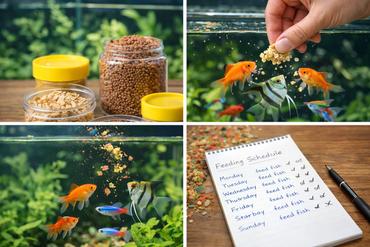
Should you feed fish during filter failure?
Temporarily reducing or pausing feeding can help limit waste production during a short interruption.
Healthy adult fish of many commonly kept species can tolerate a brief feeding pause, but this advice doesn't apply equally to fry, fish with special dietary needs, or animals requiring frequent feeding.
Avoid adding more food than the aquarium can safely process.
Once circulation and water quality have stabilized, gradually resume the normal feeding routine.
How to Prevent Your Fish Tank Filter From Stopping Again
Preventing filter problems is usually easier than repairing a complete failure.
Regular observation and sensible maintenance can help you identify declining performance before circulation stops.
Monitor water flow
Pay attention to the normal strength of the filter's output.
A gradual reduction in water movement may indicate that the intake, tubing, or mechanical media needs attention.
Don't wait until the filter stops completely before checking a noticeable change.
Clean components when needed
Inspect reusable mechanical media and rinse it when debris begins restricting water flow.
Check the impeller periodically for accumulated particles and wear.
The appropriate maintenance frequency depends on the filter design, aquarium stocking, feeding habits, and amount of debris produced.
A heavily stocked aquarium may require more frequent mechanical cleaning than a lightly stocked planted tank.
Avoid unnecessary media replacement
Beneficial bacteria colonize filter sponges and other suitable surfaces.
Replacing all established biological media at once can reduce the aquarium's capacity to process ammonia and nitrite.
Preserve reusable media when possible.
If replacement is necessary, consider transferring compatible established media to the new filter and monitoring water chemistry afterward.
Keep backup equipment available
A battery-powered air pump can be especially useful during power outages.
Keep compatible spare parts for components that are likely to wear, such as impellers, when they're available for your filter model.
For aquariums where a filtration interruption would be particularly risky, consider running an additional established sponge filter.
This can provide supplementary biological filtration and aeration if the main filter fails.
Check equipment after maintenance
After every water change or filter cleaning, confirm that the equipment has restarted correctly.
Look for steady output, normal motor sounds, and leaks around external connections.
A filter that has power but isn't moving water shouldn't be left unattended.
When Should You Replace Your Aquarium Filter?
Cleaning and minor repairs can solve many filtration problems, but some failures require replacement.
Consider replacing the filter or its motor assembly when:
-
The electrical cable or motor housing is damaged.
-
The motor fails despite a functioning electrical supply.
-
The filter repeatedly trips an electrical safety device.
-
The impeller or other essential components cannot be repaired or replaced.
-
The unit leaks from damaged structural components that cannot be safely serviced.
-
The filter no longer provides suitable circulation or media capacity for the aquarium.
Before buying a replacement, consider the needs of your fish rather than relying only on the manufacturer's advertised tank-size rating.
A heavily stocked aquarium with large, messy fish may need greater filtration capacity than a lightly stocked aquarium of the same volume.
Likewise, species that prefer gentle water movement may not be comfortable with an excessively strong current.
Choose a filter that provides appropriate biological media capacity, reliable circulation, and manageable maintenance.
If the existing filter contains established biological media, transfer compatible media to the replacement system where practical.
Continue testing ammonia and nitrite during the transition.
Final Thoughts: Restore Flow and Protect Your Fish
When your fish tank filter stops working, start by checking the simplest possibilities: power, water level, intake blockages, and trapped air.
If the motor runs but water doesn't move, inspect the impeller and filter media before deciding that the entire unit needs replacing.
Throughout the repair, pay attention to your fish and maintain adequate aeration.
Keep established biological media wet, avoid unnecessary replacements, and test ammonia and nitrite if filtration has been interrupted.
Once the filter is running again, confirm that water is circulating normally and monitor the aquarium for any changes.
A little routine maintenance and a reliable backup aeration option can make the next equipment problem much easier to manage.

MOST RECENT ARTICLES