HOW TO PREVENT FISH FROM GETTING TRAPPED BEHIND FILTERS AND DECORATIONS
Understanding Why Fish Get Trapped in the First Place
To effectively prevent your fish from becoming wedged into tight spaces, you must first understand the underlying drivers behind this behavior. Fish do not enter confined gaps out of spite or sheer clumsiness; their actions are dictated by natural instincts, physical limitations, or environmental stressors within the aquarium. Identifying the root cause of why fish navigate toward filtration equipment and hardscape crevices is the crucial first step toward creating a safer aquatic habitat.
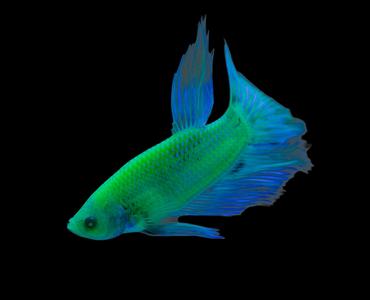
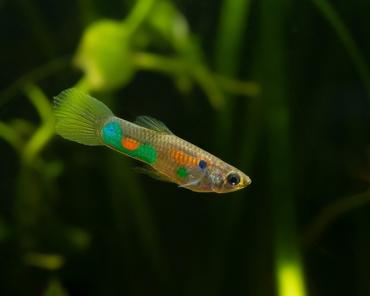
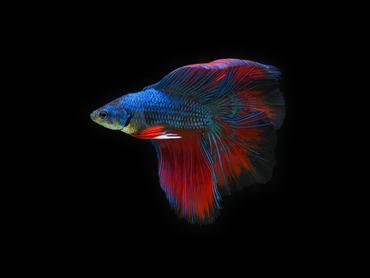
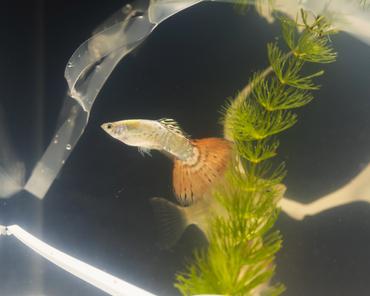
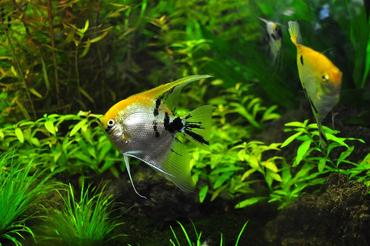
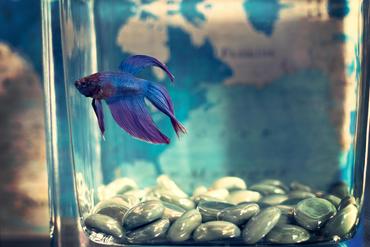
One primary culprit is the mechanical suction created by power filters, hang-on-back (HOB) units, and internal filter pumps. In many community aquariums, the pull exerted by filter intake tubes is significantly stronger than the natural currents a fish encounters in its wild habitat. Long-finned species—such as fancy Guppies ( Poecilia reticulata ), long-fin Betta fish ( Betta splendens ), and Veil-tail Angelfish ( Pterophyllum scalare )—possess substantial fin surface area that creates drag. When these delicate swimmers drift too close to an unguarded intake slot, the vacuum force can pin their fins against the plastic grate, trapping them against the structure until they exhaust themselves trying to break free.
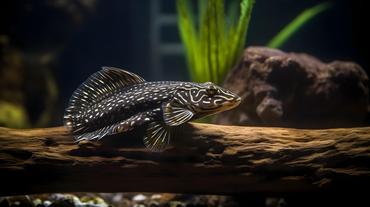
Curiosity and natural foraging behaviors also drive certain species into hazardous tight spots. Bottom-dwelling and crevice-seeking species, such as Kuhli Loaches ( Pangio kuhlii ), Bristlenose Plecos ( Ancistrus cirrhosus ), and freshwater Dwarf Frogs ( Hymenochirus boettgeri ), spend their active hours searching for micro-fauna, leftover food particles, and dark hiding spots. To a inquisitive loach or small eel, the narrow dark space behind a internal filter or the hollow underside of an artificial ornament looks like a secure, cozy cave. Unfortunately, while entering these spaces is easy, turning around inside a narrowing gap often proves impossible.
Finally, stress and fear play a major role in pushing fish into unsafe areas. When fish are frightened by sudden room lighting changes, loud household vibrations, or aggressive tankmates, their instinct is to dart into the nearest dark sanctuary. If your tank lacks adequate, safe hiding places like dense live plants or properly sized caves, vulnerable fish will wedge themselves into the tiny half-inch gap between the back glass and the filter intake tube out of sheer desperation.
Essential Equipment Modifiers and Safety Hacks for Filters
Filtration is non-negotiable for maintaining healthy water parameters, but off-the-shelf filter designs are rarely built with the safety of tiny or long-finned fish in mind. Fortunately, you can easily modify your existing filtration hardware using inexpensive, readily available materials to make it completely fish-safe without sacrificing mechanical or biological filtration performance.
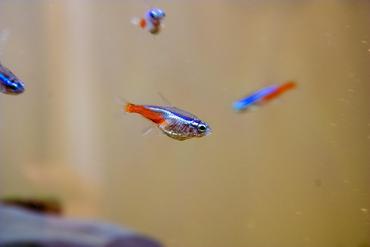
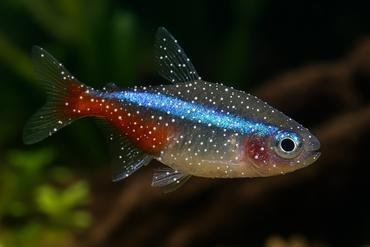
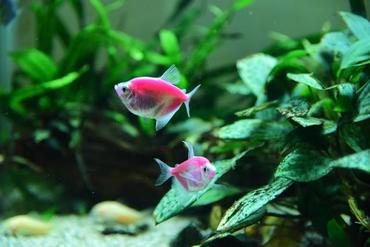
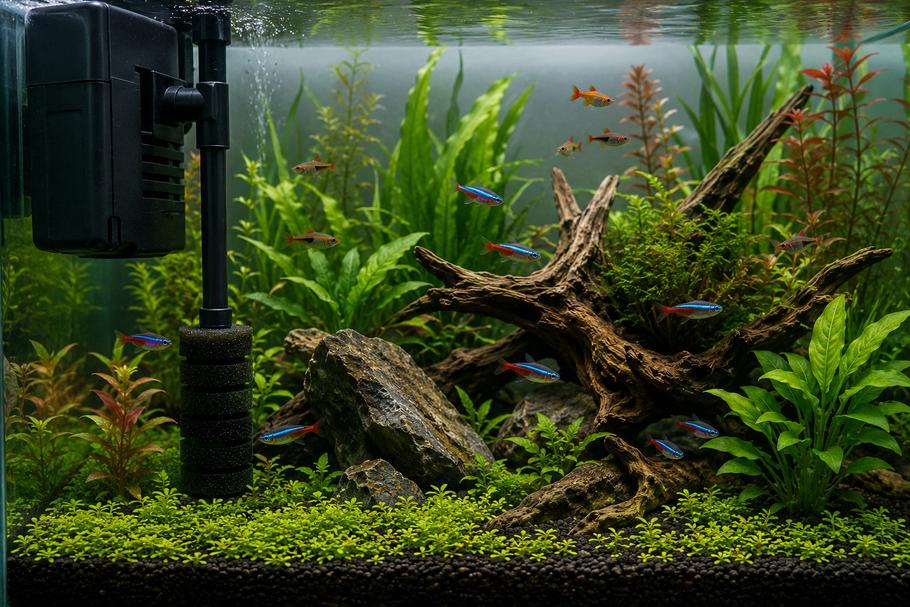
The single most effective upgrade you can make to any filter setup is installing a high-density pre-filter sponge over the intake tube. A pre-filter sponge acts as a physical barrier that distributes the suction force across a much broader surface area, effectively neutralizing the dangerous vacuum point. Small species like Neon Tetras ( Paracheirodon innesi ) and delicate shrimp can swim directly onto the sponge without fear of being drawn in. As an added benefit, pre-filter sponges capture large debris before it enters your filter media, prolonging the life of your impeller and serving as a home for beneficial nitrifying bacteria. Understanding common problems with tank filters will ensure your water flow matches your inhabitants' physical swimming capabilities.
For internal filters and hang-on-back units that rest inside the tank frame, the rear gap between the filter body and the aquarium glass represents a prime trapping zone. To eliminate this gap, you can employ several practical hacks:
- Aquarium-Safe Foam Blocks: Cut custom blocks of coarse reticulated filter foam (20 to 30 PPI) and slide them firmly into the gap behind the filter housing. Water can still circulate freely through the porous foam, but fish are physically blocked from swimming behind the unit.
- Plastic Canvas Barriers: Cut craft plastic canvas mesh to fit the exact dimensions of your filter's sides and secure it with suction cups or silicone. This creates a smooth guard that guides fish away from intake slots.
- Flow Deflectors and Spray Bars: Attach spray bars or custom plastic baffles to filter outlets to disperse strong return currents. Reducing turbulent water flow prevents weak swimmers from being thrown against decor or pinned against suction intakes.
When implementing these modifications, remember to check them weekly during routine tank maintenance. Algae and debris can accumulate on intake sponges and mesh guards over time, which may alter water flow patterns or cause water to bypass your biological filter media if left uncleaned.
Smart Decor Placement and Aquascaping Strategies
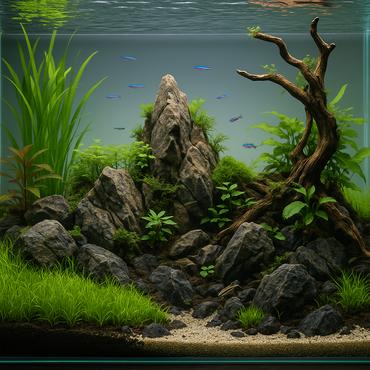
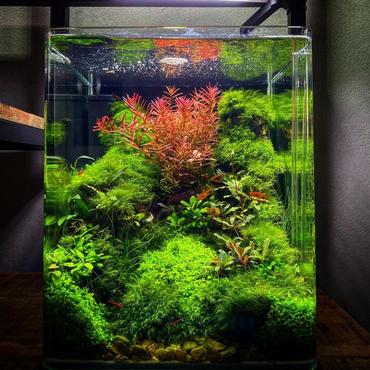
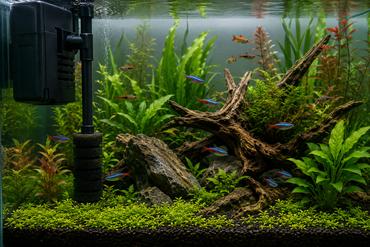
Hardscape elements such as driftwood, slate rocks, molded resin castles, and artificial hollow logs give aquariums personality and provide vital structure for your fish. However, improper arrangement and poor decoration selection are leading causes of physical entrapment. By applying smart aquascaping principles, you can build a stunning underwater landscape that keeps your livestock active, visible, and entirely safe.
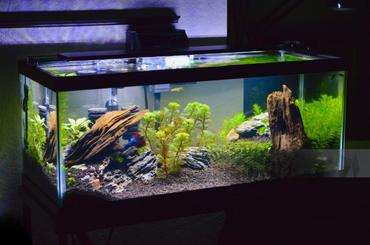
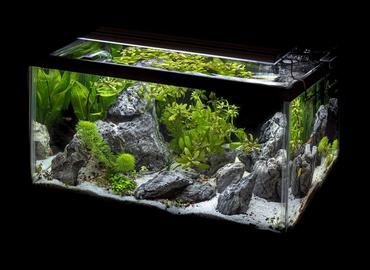
A fundamental rule of aquarium safety is the "Two-Inch Clearance Rule." When arranging large rocks, heavy driftwood, or commercial resin ornaments against the aquarium glass, always leave at least two inches of open space between the object and the glass walls. Avoid placing decorations in a way that creates a narrowing V-shaped wedge against the glass. Fish will often enter the wider side of the wedge, keep swimming forward until they become wedged tight, and then find themselves unable to back out due to the direction of their scales and fins.
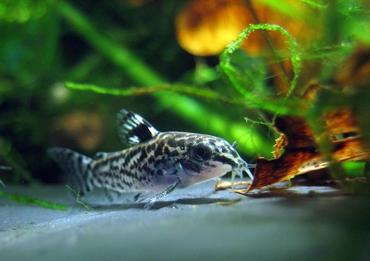
If you prefer a flush-mounted look—such as placing a flat 3D background or stacking rocks directly against the rear glass—you must ensure the seal is absolute. Use 100% aquarium-safe silicone to seal all edges and gaps between the decoration and the glass. If even a quarter-inch gap remains open at the top or side of a 3D background, small fish like Endler's Livebearers ( Poecilia wingei ) or juvenile Corydoras catfish will inevitably find a way behind it, becoming trapped in a stagnant, unoxygenated zone where rescue is extremely difficult.
Hollow resin decorations pose another major risk that many beginners overlook during setup. Commercial ornaments frequently feature tiny hollow cavities, open manufacturing drain holes at the bottom, or narrow internal turrets. Fish can squeeze through a tiny exterior hole to explore the dark interior, only to get lost or trapped inside a secondary chamber. Before placing any artificial decoration into your tank, carefully inspect it for hidden holes. Use aquarium silicone, non-toxic epoxy putty, or small pieces of filter sponge to plug every opening that is smaller than your largest fish. Reviewing safe selections for aquarium decorations prior to aquascaping will help you identify potential hazards before they cause harm.
Fish Compatibility, Behavior, and Stress Considerations
Physical hazards are only half of the safety equation; social dynamics and species-specific behaviors play an equally critical role in entrapment incidents. Even in a tank equipped with pre-filter sponges and properly spaced decorations, severe social stress can force fish into hazardous hiding places that they would normally avoid.
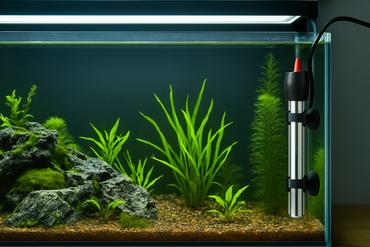
Systemic aggression and territorial bullying are prime triggers for entrapment. In aquariums with dominant or semi-aggressive species—such as Male Bettas, Dwarf Cichlids ( Mikrogeophagus ramirezi ), or aggressive Barbs—subordinate fish are relentlessly chased away from prime feeding zones and open swimming space. Desperate to escape bodily harm, targeted fish will squeeze into tight spaces like the crack behind a heater holder or the suction gap of an internal filter. If you notice a specific fish repeatedly hiding behind equipment, do not simply push it back into the open water; inspect the tank for signs of fin nipping or aggressive chasing.
To reduce aggression-driven hiding, ensure your tank layout offers plenty of safe, spacious hiding places distributed across all water tiers. Broad-leafed live plants like Java Fern ( Microsorum pteropus ), Anubias, and Amazon Swords create natural physical visual barriers that break line-of-sight between aggressive fish and passive tankmates. When fish feel secure knowing they can retreat into a lush plant thicket, they are far less likely to seek refuge in dangerous mechanical crevices. Utilizing aquascaping tips to reduce aggression in fish through balanced stocking levels and territory layout is essential for keeping stress low across your entire community.
It is equally crucial to match tank equipment and aquascaping to the specific physical capabilities of the species you keep. Consider the following stocking and care guidelines to avoid compatibility issues:
- Weak Swimmers: Long-finned fancy Goldfish, male Bettas, and fry require low-flow sponge filtration or gentle air-driven corner filters. High-powered canister filter intakes should never be used without baffled outlets and coarse intake sponges.
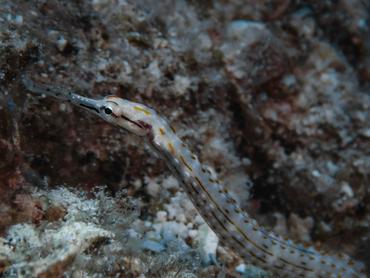
- Eel-Like and Slender Species: Kuhli Loaches, Ropefish, and Spiny Eels require tight-fitting aquarium lids and completely sealed equipment gaps. These species are master escape artists and will explore any opening larger than their skull.
- Nocturnal Foragers: Plecos, Synodontis Catfish, and Knife-fish require oversized, smooth-walled caves (such as terra cotta pots or PVC tubes) so they do not feel compelled to wedge behind filters during daylight hours.
- Sick or Elderly Fish: Fish suffering from swim bladder disorder, dropsy, or extreme old age lose steering precision and swimming power. They should be temporarily relocated to a hospital tank equipped with a gentle sponge filter to prevent accidental intake entrapment.
Daily Inspection and Emergency Rescue Techniques
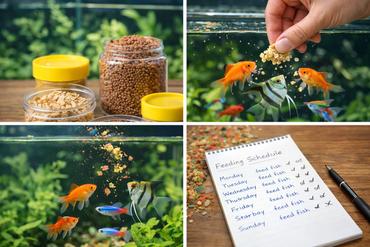
Despite taking every precaution, accidents can still happen. Developing a quick daily inspection habit during feeding times allows you to spot trapped fish early, drastically increasing their chances of survival. A healthy fish is eager and active when food hits the water; if a usually social fish fails to appear for two consecutive feedings, perform an immediate visual scan of your filter intakes, behind heater mounts, and inside ornament crevices.
If you discover a fish trapped behind equipment or decor, remain calm and follow a step-by-step rescue protocol to prevent further injury to the animal:
-
Cut Power immediately. Turn off the filter pump, powerheads, and heater before attempting any rescue. Stopping water suction eliminates opposing forces and prevents electrical hazards while your hands are in the tank.
-
Gently Clear the Way. Slowly lift or move surrounding plants and decorations away from the trapped fish. Do not pull the fish out forcibly with a net while it is wedged; doing so can tear delicate fin rays, dislodge scales, or fracture internal bones.
-
Create Space for Escape. If a fish is wedged between an internal filter and the glass, un-suction the filter unit and gently slide it sideways to loosen the pressure. In most cases, once the pinch point is removed, the fish will swim out on its own.
-
Use a Soft Guide. If the fish is disoriented or stuck inside a hollow decoration, gently submerge the ornament in a shallow bucket of aquarium water and use a soft, dull plastic instrument or gloved finger to guide the fish toward the exit.
Once the fish is freed, assess its condition carefully. Trapped fish often suffer from severe exhaustion, lost slime coating, and localized physical trauma from struggling against rough surfaces. Immediately add a high-quality water conditioner containing aloe vera or slime coat synthetic restorers to protect open wounds from bacterial infections like fin rot or fungal growth.
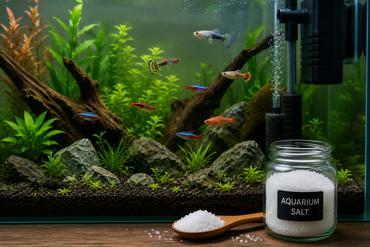
If the rescued fish shows severe signs of shock—such as lying sideways on the substrate or rapid gilling—consider moving it to a dim, quiet quarantine tank with clean, well-aerated water and a low dosage of stress-reducing aquarium salt. Monitor the water quality daily, keeping ammonia and nitrites at absolute zero to encourage fast tissue regeneration.
Key Takeaways for a Trap-Free Aquarium
Keeping your aquatic pets safe from mechanical and hardscape traps does not require expensive equipment or complex engineering. By understanding why fish seek out tight spaces, installing simple pre-filter sponges, maintaining the two-inch clearance rule during aquascaping, and managing tankmate aggression, you can eliminate structural death traps and enjoy a thriving, worry-free aquarium.
Take a few minutes today to perform a safety audit on your setup: check your filter intake for exposed slots, feel behind your heater for narrow gaps, and ensure all hollow decorations are properly sealed. Your fish will reward your effort with vibrant coloration, natural behavior, and long, healthy lives. For more expert guides on aquarium maintenance, species profiles, and tank troubleshooting, explore our extensive library of practical articles right here on RateMyFishTank.com!
MOST RECENT ARTICLES