AQUARIUM PLANTS THAT FLOWER UNDERWATER
Why Do Some Aquarium Plants Flower Underwater?
To successfully cultivate underwater flowers, it helps to understand the botany behind aquatic blooming. In nature, the vast majority of aquatic flora are actually amphibious plants that inhabit floodplains, riverbanks, and seasonal marshes. During the wet season, these plants live completely submerged, relying on vegetative growth to spread. When the dry season arrives and water levels drop, the plants transition to their emersed state, exposure to open air triggers their reproductive cycle, and they produce flowers to be pollinated by flying insects or breeze.
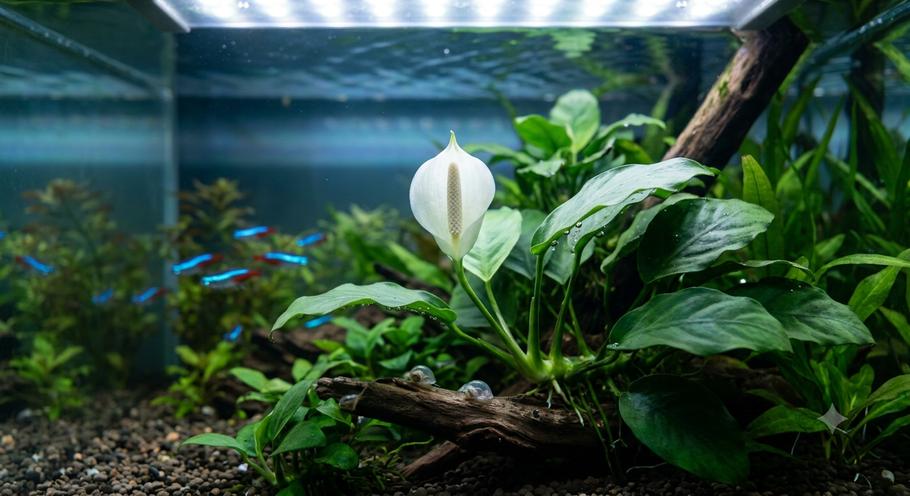
However, inside a closed aquarium ecosystem, certain resilient genera—most notably Anubias, Bucephalandra, and Aponogeton—can be trickier and more fascinating. Under stable light cycles, rich water column nutrients, and consistent trace element availability, these plants often get "tricked" into sending up flower spikes even when permanently submerged. While underwater flowers typically do not produce viable seeds because pollination cannot occur submerged in water, the blooms themselves remain intact for weeks, offering an extraordinary visual reward for the attentive hobbyist.
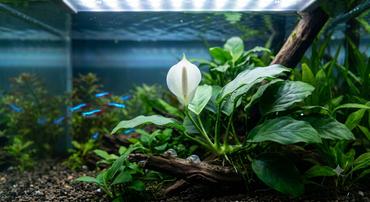
Submerged aquatic flowers usually take the form of spathes (a specialized leaf surrounding a central flower spike, common in the arum family) or delicate white and purple petals that unfurl just beneath or right at the water line. Achieving these blooms requires a delicate balance of water chemistry, light spectrum quality, and patience, as flowering represents the peak of a plant's energy output.
Top Underwater Flowering Plants for Freshwater Aquariums
Not all aquatic plants have the capacity to bloom beneath the water surface, but several popular, widely available species frequently display underwater blossoms when given proper care.
Anubias Species (Anubias barteri, Anubias nana, Anubias pinto)
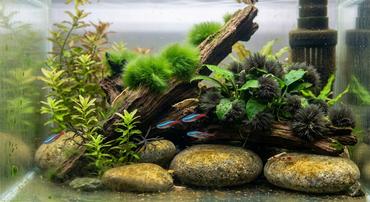
Anubias is the undisputed king of low-light flowering plants. Known for its thick, leathery leaves and hardy rhizome, this slow-growing genus produces white, calla-lily-like blooms consisting of a spadix enclosed by a pale spathe. These blooms emerge directly from the rhizome and can remain open underwater for up to three weeks. Because Anubias derives nutrients primarily from the water column rather than substrate, attaching it to driftwood or rockwork gives the flower spike maximum visibility in your aquascape. For beginners, choosing hardy species featured in our guide on low-light aquarium plants for beginners is the easiest entry point into flowering aquatics.
Bucephalandra Species
Endemic to the fast-flowing streams of Borneo, Bucephalandra species are prized for their iridescent foliage and frequent flowering habits. Unlike many plants that only bloom once or twice a year, healthy Bucephalandra rhizomes can push out small, creamy white or soft pink tears of spathes every few weeks under moderate lighting and CO2 enrichment. Their flowers open fully under water and contrast beautifully against the dark green, blue, or burgundy hues of their leaves.
Aponogeton Species (Aponogeton ulvaceus, Aponogeton boevinianus, Madagascar Lace)
Bulb plants belonging to the Aponogeton genus are famous for their explosive growth rates and long, elegant flower stalks. Plants like Aponogeton ulvaceus send long, spiraling flower stems rapidly toward the surface. While the flower heads often break the surface to open, under high water flow or deeper tank configurations, the dense clusters of yellow, white, or violet flowers will expand just below the surface, creating an impressive focal point in taller tanks.
Echinodorus Species (Amazon Swords)
While Amazon Swords typically send long runner spikes out of the top of the aquarium to bloom in the air, in large tanks with deep water columns, these spikes will produce adventitious plantlets along with small white, three-petaled submerged flowers. Ensuring your substrate is rich in iron and root nutrients will encourage sword plants to send out reproductive runners more frequently.
Best Fish Species to Pair with Flowering Aquatic Plants
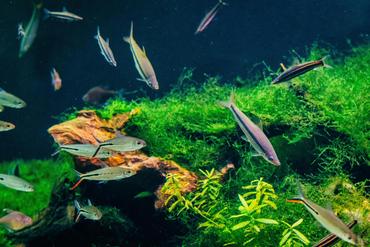
Selecting the right aquatic inhabitants is just as vital as providing proper lighting and fertilizers. Certain fish species cherish planted environments and protect delicate buds, while others will tear soft flower petals to shreds within minutes. Creating a harmonious community requires stocking fish that complement and preserve your flowering flora.
Ideal plant-safe community fish include:
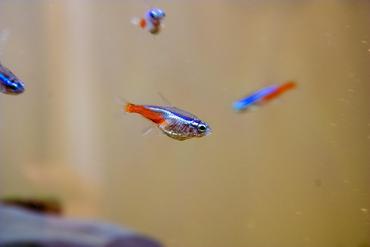
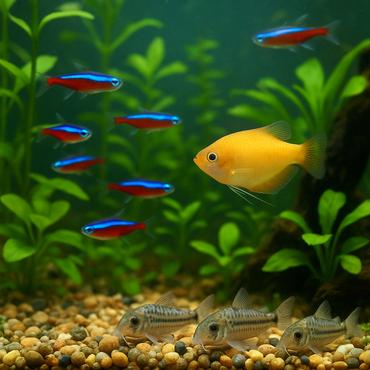
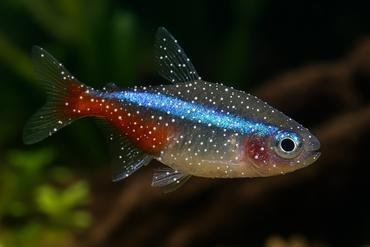
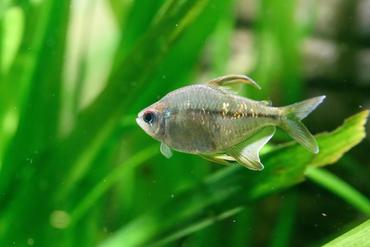
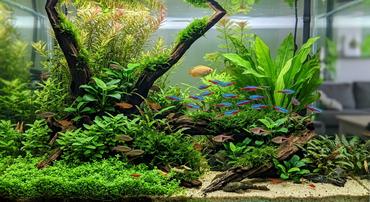
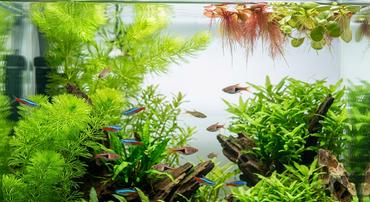
- Neon and Cardinal Tetras: Small schooling characins that navigate smoothly around plant foliage without nibbling on soft tissues or emerging flower spikes.
- Otocinclus Catfish: Essential clean-up crew members that graze gently on algae coating plant leaves without damaging delicate flower spathes.
- Harlequin Rasboras: Peaceful mid-water swimmers whose orange-red coloration offers a striking visual contrast to green foliage and white Anubias blooms.
- Dwarf Gouramis: Slow-moving, peaceful centerpiece fish that utilize plant cover for security and interact gently with dense aquatic vegetation.
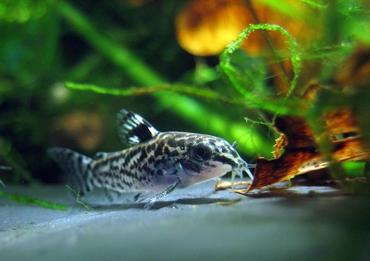
- Corydoras Catfish: Bottom-dwelling scavengers that sift through substrate around rooted plants like Aponogeton without uprooting them.
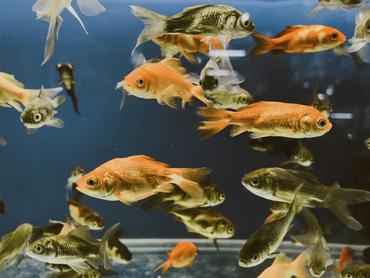
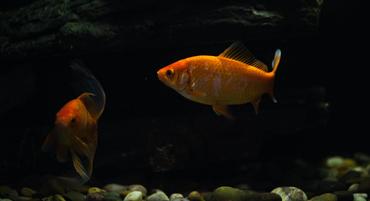
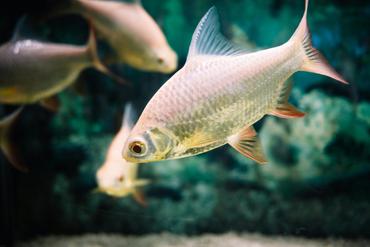
Conversely, herbivorous or destructive species must be strictly avoided in a flowering planted tank. Large Cichlids (such as Oscar fish or Jack Dempseys) constantly dig up substrate, dislodging root systems and snapping fragile flower stems. Silver Dollars, Buenos Aires Tetras, and large goldfish view live aquatic plants—especially soft, nutrient-rich flower buds—as a primary food source and will strip them overnight. Stick with peaceful dwarf species and small schooling fish to protect your floral displays.
Essential Care and Compatibility Considerations for Aquatic Flowers
Getting your aquarium plants to transition from basic survival mode to active blooming requires optimizing your tank environment. Flowers require significant energy investments from the plant, meaning nutrient deficiencies or environmental stress will cause the plant to drop its buds before they unfurl.
-
Lighting Quality and Photoperiod
While Anubias can bloom under relatively low light levels, most flowering plants require moderate to high lighting with a balanced PAR (Photosynthetically Active Radiation) spectrum. A consistent photoperiod of 8 to 10 hours per day using full-spectrum LED lighting simulates natural tropical daylight cycles. Sudden fluctuations in lighting duration can cause plant stress and interrupt flower bud formation.
-
CO2 and Nutrient Supply
Carbon is the fundamental building block of plant tissue. While low-tech plants can bloom without added carbon, injecting pressurized carbon dioxide drastically increases the frequency and size of blooms in species like Bucephalandra and Aponogeton. If you are considering adding carbon enrichment to your system, reviewing a comprehensive breakdown of freshwater aquarium CO2 systems will help you determine the safest dosing strategy for your livestock.
In addition to carbon, macro and micronutrients are critical. Phosphate triggers root and blossom development, while iron keeps foliage vibrant enough to support energy production. Micronutrients like potassium, magnesium, and trace minerals should be dosed regularly into the water column or supplied via root tabs.
-
Substrate Selection
Heavy root-feeders such as Aponogeton and Echinodorus rely on nutrient-dense substrates to gather the energy required for flowering. Plain gravel or inert sand lacks the essential minerals these species require. Utilizing specialized aquascaping soils rich in organic matter gives plants continuous root access to macro-nutrients. To evaluate substrate choices for your setup, consult our practical guide on picking the best substrate for planted tanks.
-
Water Parameter Stability
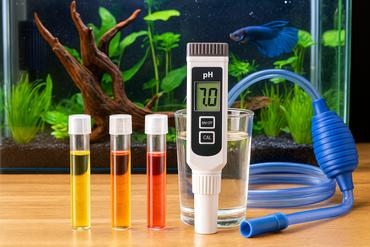
Submerged flowering is highly dependent on water stability. Rapid shifts in pH, general hardness (GH), or temperature can cause plants to abort flower buds. Most flowering freshwater species thrive in slightly acidic to neutral water (pH 6.2–7.2), soft to moderate hardness (3–8 dGH), and stable tropical temperatures between 74°F and 78°F (23°C–26°C).
Common Mistakes That Prevent Underwater Blooming
Even experienced hobbyists sometimes struggle to get their aquatic foliage to bloom. Avoiding these common beginner mistakes will significantly increase your chances of seeing vibrant submerged flowers in your tank.
Burying Rhizomes in Substrate
The single most frequent mistake made with Anubias and Bucephalandra is planting their horizontal rhizome under sand or gravel. The rhizome needs direct contact with flowing water to absorb oxygen and nutrients. Burying it leads to rhizome rot, which kills the plant before it ever has a chance to produce flower spikes. Always tie or glue these species to rocks or wood.
Pruning Flower Buds Prematurely
When a flower stalk first emerges, beginners often mistake the tightly wrapped spathe for an unhealthy leaf or a weird growth and cut it off. Give emerging stalks several days to develop before making pruning decisions. Allow the bloom to complete its full cycle underwater; only trim the stalk at its base once the spathe browns and begins to decay.
Excessive Water Movement at the Surface
While moderate water circulation distributes nutrients evenly, blast-level surface agitation or excessive powerhead current can physically damage delicate flower stalks or cause tall species like Aponogeton to break before blooming. Aim for gentle, uniform water circulation throughout the water column.
Neglecting Trace Element Dosing
Macro-nutrients like nitrogen and phosphorus promote leafy growth, but trace elements—particularly boron, manganese, and iron—catalyze floral development. Skipping liquid micro-fertilizers often leaves plants strong enough to grow leaves, but too deficient in micro-nutrients to build complex flower structures.
Transform Your Aquascape with Submerged Blooms
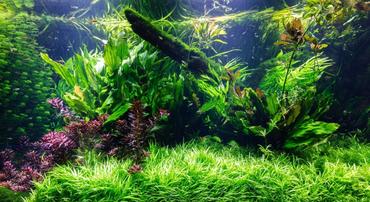
Cultivating aquarium plants that flower underwater adds an enchanting, natural dimension to your aquatic hobby. By selecting reliable flowering species like Anubias, Bucephalandra, and Aponogeton, pairing them with peaceful community fish, and providing a stable foundation of light, nutrients, and proper substrate, you can turn your aquarium into a thriving underwater garden. Remember that flowering is a plant's ultimate sign of health and comfort within your ecosystem—patience and consistency are your greatest tools.
Ready to take your planted tank to the next level? Explore our extensive library of aquascaping guides, tank showcases, and species care sheets on RateMyFishTank.com to discover new ways to optimize your aquarium setup today!
MOST RECENT ARTICLES