TIPS FOR LIGHTING A REEF TANK

1. Demystifying Reef Lighting: PAR, PUR, and Spectrum Mechanics
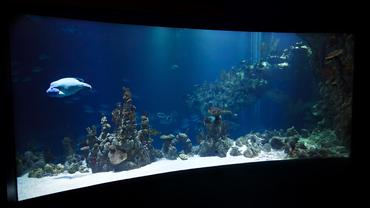
To master reef tank illumination, hobbyists must look beyond standard room lighting terms like lumens or wattage and focus on metrics that directly impact marine life: Photosynthetically Active Radiation (PAR), Photosynthetically Usable Radiation (PUR), and color spectrum. In natural ocean reefs, sunlight penetrates the ocean surface, but seawater rapidly absorbs longer light wavelengths such as red, orange, and yellow. By the time light reaches shallow and mid-depth reefs, the spectrum is dominated by blue wavelengths between 400 and 480 nanometers (nm). Coral zooxanthellae have evolved to capture these precise blue and violet wavelengths to perform photosynthesis, converting light energy into sugars that nourish the host coral.
When measuring light output over your aquarium, PAR measures the total volume of light within the 400nm to 700nm spectral range available for photosynthesis. However, not all PAR is created equal; PUR represents the specific portion of that light that corals can actually absorb efficiently. Providing high PAR through heavy red or green light channels does little for coral health and frequently fuels unwanted algae outbreaks. Instead, modern reefers target a color temperature between 14,000K and 20,000K, which produces a deep ocean appearance while delivering the high actinic blue output required for photosynthetic efficiency and dramatic fluorescent coral coloration.
A common beginner mistake is purchasing an inexpensive freshwater planted tank light and expecting it to support corals. Freshwater lights emphasize 6,500K daylight spectrums rich in warm yellow and red light, which will leave marine corals starved for blue energy while transforming your rockwork into a breeding ground for hair algae. Investing in dedicated reef lighting ensures your livestock receives the correct spectral balance necessary for long-term vitality, making it an essential consideration when reviewing marine aquarium setup guides.
2. Choosing the Right Fixture: LEDs, T5 Fluorescents, and Hybrids
Selecting the right lighting fixture depends on your budget, tank dimensions, maintenance preferences, and the types of corals you intend to keep. While older technologies like Metal Halides were once the gold standard, modern advancement has made Light Emitting Diodes (LEDs) and T5 fluorescent hybrids the primary choices for contemporary aquarists.
LED lighting fixtures dominate today's market due to their exceptional energy efficiency, long diode lifespan, minimal heat emission, and programmable spectrum control. Brands designed specifically for reef aquariums allow users to independently adjust blue, violet, UV, and white channels from a smartphone app. Furthermore, point-source LEDs create a mesmerizing visual "shimmer" on the sandbed, mimicking natural sunlight breaking through ocean waves. However, because point-source LEDs concentrate light from small clusters, they can create harsh shadows under coral ledges where branch overhangs block light from reaching lower tissue.
T5 High-Output (HO) fluorescent fixtures offer incredibly even light distribution with virtually zero shadowing, making them exceptional for growing dense, branching Small Polyp Stony (SPS) corals. The downside to T5 fixtures is their higher power consumption, ongoing annual bulb replacement costs, lack of programmability, and thermal output that can elevate aquarium water temperatures. For intermediate hobbyists seeking the best of both worlds, T5/LED hybrid fixtures combine the shadow-reducing fill light of T5 tubes with the shimmer, efficiency, and blue-spectrum punch of central LED modules.
3. Designing the Ultimate Photoperiod and Daily Schedule
Corals and reef fish thrive on consistency. In tropical regions near the equator where wild reefs are located, daylight hours remain relatively constant year-round, offering approximately 10 to 12 hours of light per day. Replicating this natural photoperiod in your home aquarium prevents physiological stress and stabilizes your tank's daily biological rhythms.
A proven strategy for reef lighting schedules is the "1-8-1 ratio," which structures a total 10-hour photoperiod into three distinct phases:
-
Sunrise Ramp-Up (1 Hour):
Lights gradually increase from zero intensity to peak spectrum, allowing fish and corals to wake up naturally without sudden light shock.
-
Peak Photoperiod (8 Hours):
Lights run at full target intensity and spectrum, delivering maximum PAR for zooxanthellae photosynthesis.
-
Sunset Ramp-Down (1 Hour):
Lights slowly dim down to zero or low-level actinic moonlight, signaling fish to seek night shelter and encouraging coral polyps to extend for nocturnal feeding.
Snapping high-intensity lights directly on or off instantly can startle shy marine fish species, causing panicked jumps that may result in fish leaping out of the tank or colliding with glass and rockwork. Species like the Carpenter's Flasher Wrasse ( Paracheilinus carpenteri ) and the Royal Gramma ( Gramma loreto ) are particularly sensitive to sudden light changes. Utilizing programmable controllers with built-in sunrise and sunset ramping features creates a peaceful transition that protects your aquatic inhabitants.
4. Coral Placement and Light Acclimation Strategies
Not all corals require the same light intensity. A fundamental skill in reef keeping is mapping your aquascape into distinct PAR zones and matching specific coral species to their natural light requirements. Placing a low-light coral at the top of your reef structure under intense LED beams will result in severe photo-inhibition and bleaching, while placing a high-light coral in deep shade will cause it to brown out and slowly starve.
Before buying new livestock, consult general resources on saltwater aquarium coral care to understand where different groups fit within your aquascape:
-
Upper Reef Zone (200–350+ PAR):
High-light SPS corals like Acropora and Montipora require bright, direct light near the top of the rockwork to sustain rapid calcification and intense coloration.
-
Mid Reef Zone (100–200 PAR):
Large Polyp Stony (LPS) corals, such as the Duncan Coral ( Duncanopsammia axifuga ), Torch Coral ( Euphyllia glabrescens ), and Hammer Coral ( Fimbriaphyllia ancora ), thrive in moderate lighting along middle ledges.
-
Lower Reef and Sandbed Zone (50–120 PAR):
Soft corals and corallimorphs including Zoanthids, Mushroom Corals ( Discosoma sp.), and Green Star Polyps ( Erythropodium caribaeorum ) prefer gentle, diffused light near the bottom of the aquarium.
Whenever you introduce new corals or install a new lighting fixture, you must acclimate your corals to the light. Corals store pigments to protect themselves from UV radiation, and sudden increases in light intensity can destroy these pigments, forcing the coral to expel its symbiotic zooxanthellae—a stress response known as coral bleaching. Always utilize your LED fixture's built-in "Acclimation Mode," which automatically reduces overall light intensity by 30% to 50% and slowly ramps it up back to normal over a period of 4 to 6 weeks. Alternatively, you can place new corals on the sandbed for their first two weeks before moving them to their permanent positions higher on the rockwork.
5. Compatibility and Care Considerations: Balancing Coral Needs, Fish Health, and Algae Control
Lighting does not operate in a vacuum; it directly dictates environmental conditions for every living organism inside your tank. Crafting a balanced aquarium lighting strategy requires evaluating how light intensity affects fish behavior, nuisance algae growth, and routine tank maintenance.
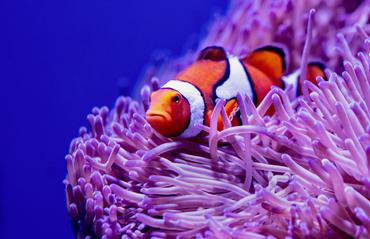
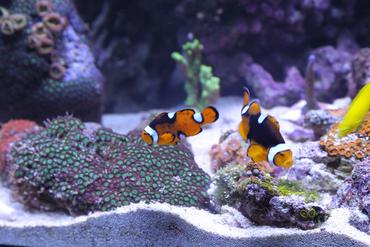
Fish species have evolved to occupy specific ecological niches across different light levels. Open-water swimmers like Ocellaris Clownfish ( Amphiprion ocellaris ) thrive under bright surface light. Conversely, semi-cryptic species such as the Pajama Cardinalfish ( Sphaeramia nematoptera ), Bicolor Blenny ( Ecsenius bicolor ), and Yellow Watchman Goby ( Cryptocentrus cinctus ) prefer shaded rock overhangs, caves, and lower-light regions. If your aquascape consists entirely of flat, exposed rock under high-intensity LEDs with no overhangs or caves, shy species will experience chronic stress, leading to suppressed immune systems and faded coloration. Designing a dynamic aquascape with arches, overhangs, and shaded crevices ensures every fish finds its preferred light level.
Excessive lighting duration or improper spectral balance is the leading cause of pest algae outbreaks in marine aquariums. High intensity combined with long photoperiods exceeding 10 to 12 hours frequently triggers rapid blooms of green hair algae, bubble algae, and dangerous dinoflagellates. If you notice unwanted film or filamentous growth taking over your glass and substrate, review actionable steps for aquarium maintenance and algae management by reducing photoperiod duration, tuning down white light channels, and maintaining low nutrient levels.
To keep your lighting system operating safely and efficiently, incorporate these fundamental maintenance routines:
- Clean Lens Covers and Glass Canopies Weekly: Evaporating saltwater deposits a crusty layer of salt creep and limescale on light lenses and glass tops, blocking up to 40% of PAR output. Wipe down surfaces weekly using a clean cloth dampened with equal parts warm water and distilled white vinegar.
- Maintain Adequate Ventilation: Heat is the primary killer of LED electronics and T5 ballasts. Ensure your light fixtures have at least 2 to 4 inches of open air space above them, and routinely clear cooling fans of dust using compressed air.
- Inspect Electrical Drip Loops: Always install a U-shaped drip loop on all power cords before they reach the electrical outlet to prevent moisture from traveling down the wire and creating a fire hazard.
6. Mastering Your Reef Tank Lighting for Long-Term Success
Achieving breathtaking coral growth and vibrant fish displays in a reef aquarium comes down to mastering the three pillars of lighting: spectrum, intensity, and consistency. By prioritizing blue spectrums between 400nm and 480nm, organizing your corals according to PAR requirements, and implementing a stable 10-hour photoperiod with gradual ramping, you create an ideal underwater environment that mimics natural tropical ocean reefs. Avoid the common temptation to constantly tweak light settings or blast new corals with high intensity on day one; patience and stability are always rewarded in the reef-keeping hobby. Explore our extensive collection of marine care guides on RateMyFishTank.com, share your tank setup with our passionate community, and drop a comment below to let us know what lighting system powers your reef!


MOST RECENT ARTICLES