REVERSE OSMOSIS FOR THE SALTWATER TANK

Why Tap Water Fails in the Marine Environment
Tap water treatment facilities treat water to meet human safety standards, not the delicate biological requirements of ocean life. Municipalities frequently add chlorine or chloramines to disinfect water, along with fluoride and rust inhibitors. While harmless to humans in low doses, these compounds are highly toxic to aquatic life. Chloramines, which are a chemical bond of chlorine and ammonia, do not evaporate off like standard chlorine does, making basic water dechlorinators less reliable for marine applications.
Furthermore, tap water inherently contains varying levels of dissolved solids, commonly measured as Total Dissolved Solids (TDS). These include nitrates, silicates, and phosphates. In a saltwater aquarium, elevated phosphate and silicate levels act as primary fertilizer for nuisance hair algae, cyanobacteria, and diatoms. When you top off evaporating water with tap water, these minerals do not evaporate along with the pure H2O. Instead, they accumulate over time, continually raising the baseline density of unwanted compounds and leading to unstable parameters.
Heavy metals such as copper, zinc, and lead are another silent threat present in tap water. Municipal supply pipes and household copper plumbing slowly leach trace amounts of metal into the water stream. While a hardy freshwater fish might tolerate trace levels of copper, even fractional amounts of copper are lethal to marine invertebrates such as shrimp, snails, anemones, and stony corals. Once copper enters an aquarium, it binds to live rock and substrate, continuously leaching back into the water column and preventing you from ever safely keeping invertebrates.
Understanding Reverse Osmosis and Deionization (RO/DI) Systems
Reverse osmosis works by forcing pressurized water through a semi-permeable membrane that features microscopic pores. These pores allow pure water molecules to pass through while trapping larger molecules, heavy metals, and dissolved salts. A standard drinking water reverse osmosis (RO) system typically removes between 90% and 98% of tap water impurities. However, for a thriving saltwater display, that remaining 2% to 10% of impurities can still cause significant challenges in reef tanks.
This is why marine hobbyists rely on multi-stage Reverse Osmosis Deionization (RO/DI) units rather than basic drinking water systems. An RO/DI unit adds a final chemical resin stage that strips out any residual charged ions, yielding water with a TDS reading of absolute zero. Understanding how each stage functions helps you maintain the equipment properly:
- Sediment Pre-Filter: Traps large physical debris such as rust, silt, and dirt to prevent clogging subsequent filters.
- Carbon Block Stage: Removes chlorine, chloramines, organic compounds, and chemical odors that would otherwise ruin the delicate RO membrane.
- RO Membrane: The primary workhorse that filters out up to 98% of total dissolved solids, heavy metals, and salts.
- Deionization (DI) Resin: Uses charged resin beads to capture the final traces of silicates, phosphates, and nitrates, producing 0 TDS water.
Investing in a dedicated multi-stage unit ensures that you start every water change and top-off with pure H2O. To explore live setups and marine equipment, check out our guide on saltwater aquarium setup and care.
Water Quality, Fish Health, and System Compatibility
Water quality directly dictates the health, immune system strength, and lifespan of your livestock. Saltwater species evolved in vast ocean environments where water parameters remain exceptionally stable day in and day out. Introducing tap water toxins creates chronic stress, leaving fish susceptible to external parasites like Marine Ich (Cryptocaryon irritans) and bacterial infections.
When stocking a marine tank, understanding species sensitivity highlights why pure RO/DI water is necessary:
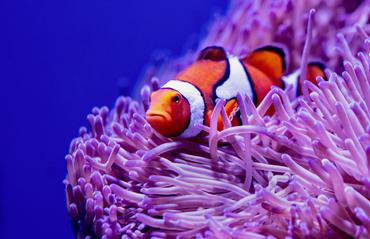
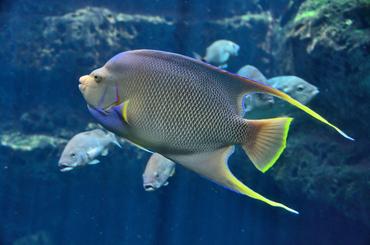
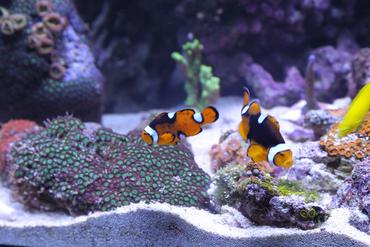
Popular and resilient species like the Ocellaris Clownfish (Amphiprion ocellaris) and the Royal Gramma (Gramma loreto) might survive initial exposures to subpar tap water, but they will show signs of chronic stress, faded coloration, and reduced appetite over time. Intermediate species such as the Blue Tang (Paracanthurus hepatus) and the Flame Angelfish (Centropyge loricula) are highly prone to lateral line erosion and skin infections when exposed to heavy metals or elevated nitrates.
Invertebrates and delicate reef dwellers require absolute purity. Marine invertebrates lack the physiological mechanisms to regulate heavy metals or sudden shifts in osmotic pressure. Consider the specific demands of these delicate inhabitants:
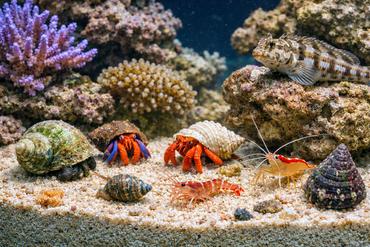
- Clean-up Crew: Skunk Cleaner Shrimp (Lysmata amboinensis) and Turbo Snails quickly perish in the presence of trace copper or sharp parameter swings.
- Soft Corals & Zoanthids: Green Star Polyps and Zoanthid colonies may close up and decay when exposed to high phosphate levels or tap water contaminants.
- SPS Corals: Delicate Small Polyp Stony corals like Acropora require zero-phosphate baselines to build their calcium carbonate skeletons and maintain vibrant coloration.
Starting with pure RO/DI water guarantees that when you mix synthetic sea salt, you are achieving the exact targeted levels of calcium, magnesium, and alkalinity without unexpected additions from tap water. For help planning your tank mates, check our interactive saltwater fish compatibility tool.
Proper Care and Operating Protocols for RO/DI Water
Using reverse osmosis water requires adopting proper handling procedures to ensure safety and stability. One critical fact every beginner must learn is that pure RO/DI water should never be added directly to a saltwater tank without proper mixing, nor should it ever be used alone for water changes. Because pure RO water lacks minerals, its osmotic pressure is extremely low. Submerging marine fish directly in fresh RO water causes their cells to swell rapidly through osmosis, leading to severe biological shock and death.
Follow these operational best practices when preparing and storing your purified water:
- Top-Off vs. Water Changes: Use pure, un-salted RO/DI water solely to replace evaporated water. As water evaporates from your tank, only H2O turns into vapor while the salt stays behind. Adding saltwater to compensate for evaporation will dangerously spike your salinity.
- Mixing Synthetic Salt: For regular water changes, always mix your synthetic marine salt mix into a dedicated bucket of RO/DI water at least 12 to 24 hours prior to use. Utilize a small submersible heater and powerhead to thoroughly dissolve the salt and aerate the solution until it matches your tank's temperature and target specific gravity (typically 1.024–1.026).
- Food-Grade Storage: Store purified water in clean, food-grade containers (such as Brute trash cans or polyethylene tanks) fitted with tight covers to prevent airborne dust, oils, or household sprays from contaminating the water.
Developing a standardized routine for water preparation eliminates parameter fluctuations, which are the leading cause of stress in captive marine ecosystems. To explore species-specific care guides and tank management, explore our main RateMyFishTank article library.
Maintaining Your Reverse Osmosis Unit for Peak Performance
An RO/DI system is only as effective as its filter media. Allowing filters to exhaust leads to breakthrough, where trapped contaminants leak through the system and flow directly into your holding container.
Equip your unit with a dual-inline TDS meter. Monitor the water quality coming out of the RO membrane as well as the final water coming out of the DI stage. The final reading must consistently read 0 PPM (parts per million). If the meter reads 1 PPM or higher, your deionization resin is exhausted and needs immediate replacement.
Adhere to a clear maintenance schedule based on typical household usage:
- Sediment and Carbon Filters: Replace every 6 to 12 months depending on local tap water clarity and chloramine concentrations.
- RO Membrane: Flush the membrane regularly using a bypass valve to clear built-up mineral scale. A quality membrane usually lasts between 2 and 4 years.
- DI Resin: Replace as soon as the color-changing indicator shifts completely or when TDS meters read above 0 PPM.
Additionally, monitor source water pressure. Reverse osmosis membranes rely on adequate water pressure (ideally between 50 and 65 PSI) to push water through the membrane effectively. If your municipal supply delivers low pressure, installing a small booster pump will significantly improve production speed, reduce waste water ratios, and extend the lifespan of your filter media.
Common Beginner Mistakes to Avoid
Navigating water purification can present a learning curve for newcomers to the marine hobby. Avoiding common pitfalls saves time, money, and livestock:
Relying on Store-Bought Spring Water: A frequent mistake is assuming bottled spring water or distilled water from the grocery store is a suitable long-term substitute. Bottled spring water actively re-introduces minerals like calcium and silicates tailored for human taste, which fuels algae growth. Distilled water can sometimes be processed through copper condensing coils, introducing trace copper into your system.
Ignoring Water Temperature During Filtration: RO membranes are rated for efficiency at specific temperatures (typically around 77 degrees Fahrenheit). Feeding ice-cold tap water through your unit in winter drastically reduces output production speed and causes higher waste water ratios. Conversely, running hot water through the system will melt and permanently destroy the delicate RO membrane.
Forgetting to Change Carbon Pre-Filters: Chloramines rapidly degrade thin-film composite (TFC) RO membranes if allowed past the carbon stage. Replacing inexpensive carbon blocks on time protects the far more expensive RO membrane from premature failure.
Mastering Water Purity for Saltwater Success
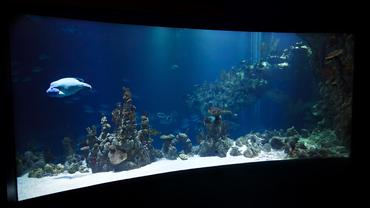
Mastering reverse osmosis filtration is one of the most impactful steps you can take toward maintaining a thriving saltwater aquarium. By removing chlorine, heavy metals, silicates, and phosphates before they ever touch your tank, you eliminate the root cause of frequent algae outbreaks and mysterious livestock losses. Whether you keep a dedicated fish-only tank housing iconic species like Clownfish and Royal Grammas, or a complex reef filled with delicate corals and invertebrates, starting with 0 TDS RO/DI water gives you complete authority over your marine environment. Take control of your water parameters today, audit your current water source, and invest in an RO/DI system to give your aquatic inhabitants the clean, stable home they need to flourish.


MOST RECENT ARTICLES