MARINE SHRIMP FOR THE SALTWATER OR REEF TANK

The Functional Beauty of Cleaner and Peppermint Shrimp
In the marine trade, the most popular shrimp are often categorized by the specific jobs they perform. The Skunk Cleaner Shrimp is arguably the most recognizable species, featuring a bold white stripe and long white antennae. In the wild, they occupy cleaning stations where fish wait for the shrimp to remove parasites and dead tissue. In the home aquarium, these shrimp are famously bold; they will often hop onto a hobbyist's hand during maintenance to clean their cuticles. This behavior makes them a joy to watch and a practical asset for maintaining fish health, acting as a first line of defense against external parasites. Their presence can significantly reduce stress in newly introduced fish, as the grooming process has a calming effect on many species.
For those struggling with the dreaded Aiptasia anemone, the Peppermint Shrimp is a common recommendation. These shrimp are more reclusive and nocturnal than their Skunk Cleaner cousins, but they possess a specialized appetite for nuisance anemones that can otherwise overrun a reef. However, beginners should be cautious: several look-alike species, such as the Camel Shrimp, are often mislabeled as Peppermint Shrimp. While true Peppermint Shrimp are generally reef-safe, Camel Shrimp have a nasty habit of nipping at coral polyps. Always verify the scientific name with your supplier to ensure you are adding a helper rather than a hazard. A true Peppermint Shrimp will have a more translucent body with subtle red stripes, whereas the Camel Shrimp has a distinct hump and more vibrant, opaque markings.
Another worker in this category is the Fire Shrimp, also known as the Blood Shrimp. They are stunningly beautiful with deep scarlet bodies and white spots. While they also provide cleaning services, they are significantly more shy than the Skunk Cleaner. They prefer to stay in the shadows of the rockwork, only coming out during feeding time or at night. For a hobbyist with a large enough tank, keeping a variety of these species can ensure that different areas of the reef are serviced. Having multiple species also creates a more diverse biological profile for your aquarium, mirroring the complexity of a natural coral reef and ensuring that no nook or cranny is left uncleaned.
Symbiotic Partnerships: The Pistol Shrimp and Goby Duo
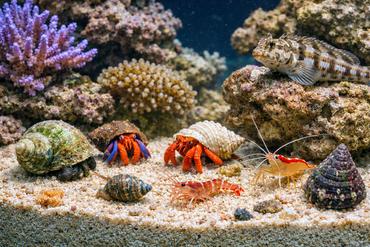
For the intermediate hobbyist looking for something truly unique, the partnership between a Pistol Shrimp and a Watchman Goby is one of nature’s most compelling stories. The Pistol Shrimp is a master excavator, constantly maintaining a complex network of tunnels in the sand. However, the shrimp is nearly blind and vulnerable to predators while it works. To solve this, it pairs with a Watchman Goby. The goby acts as the lookout, hovering at the burrow entrance, while the shrimp keeps its antennae in constant contact with the goby's tail. At the first sign of danger, the goby flicks its tail, and both retreat into the safety of the sand. This relationship is so strong that the two are almost never seen apart.
Keeping this duo requires a specific tank setup. You must provide a deep sand bed mixed with crushed coral or shell rubble, as the shrimp needs structural materials to prevent its tunnels from collapsing. Additionally, the snap of a Pistol Shrimp’s claw, which creates a localized cavitation bubble to stun tiny prey, can be heard from across the room. While this sound might be startling to new owners, it is a sign of a healthy shrimp defending its territory. It is worth noting that while they are called Pistol shrimp, the species sold for goby partnerships are generally safe for tank mates, unlike the larger Mantis Shrimp which is a formidable predator. The sound is simply a part of their communication and defense kit.
This relationship is a perfect example of mutualism. The shrimp gets a bodyguard, and the goby gets a professionally maintained home. In the aquarium, you can often buy these animals already paired, which guarantees they will find each other once introduced. If you buy them separately, they usually find one another through chemical signals. This interaction provides hours of entertainment as you watch the shrimp bulldoze sand while the goby stands guard like a tiny bouncer. It is one of the most rewarding behaviors to observe in the marine hobby, showcasing the complexity of reef life. Watching the goby signal the shrimp to stay inside during a water change is a testament to their evolutionary bond.
Water Chemistry and the Molting Process
Unlike fish, shrimp possess an exoskeleton that they must shed periodically in order to grow. This process, known as molting, is the most vulnerable time in a shrimp's life. For several hours after shedding its old shell, the shrimp's new body is soft and prone to injury. If your water chemistry is lacking in essential minerals, the shrimp may experience a bad molt, where it becomes trapped in its old shell and perishes. This makes the dangers of high ammonia, nitrite and nitrate particularly acute for crustaceans, as poor water quality interferes with their metabolic ability to calcify new shells. High nitrates in particular are known to inhibit the molting process, leading to stuck shells.
To support a healthy molting cycle, iodine, calcium, and magnesium levels must be maintained. While regular water changes usually replenish these elements, a heavily stocked reef tank with many corals and invertebrates may require supplemental dosing. When you see an empty shrimp in your tank, don't panic; it is likely just the discarded molt. Leave the molt in the tank for a day or two; many shrimp will consume parts of it to reclaim the lost minerals. Understanding how technology has changed the aquarium hobby through the use of precise dosing pumps can help you keep these trace elements at the perfect levels without the guesswork. Proper mineralization ensures that each new shell is stronger than the last.
In addition to minerals, salinity stability is paramount. Shrimp are osmoconformers, meaning their internal fluid balance is directly tied to the salinity of the water around them. A sudden jump in salinity during a top-off can cause the shrimp's cells to shrink or swell too rapidly, leading to death or a forced molt. An Automatic Top-Off system is highly recommended for shrimp keepers to keep the specific gravity perfectly stable. This level of precision is what separates a thriving marine tank from one that merely survives. Constant salinity prevents the shrimp from having to use excess energy to regulate internal pressure, allowing that energy to go toward growth and immune health.
- Maintain a stable specific gravity of 1.023 to 1.025 to avoid osmotic stress.
- Avoid any medications containing copper, as it is highly toxic to all marine invertebrates.
- Ensure magnesium and calcium levels are consistent to support shell formation.
- Drip acclimate shrimp over 60 to 90 minutes to prevent shock during introduction.
- Provide plenty of rockwork caves where shrimp can hide during the 24 hours after a molt.
Compatibility and Care Considerations
While most marine shrimp are peaceful, they are often the targets of predation. This is a crucial part of the basics of fish compatibility that carries over into the saltwater realm. Large predatory fish like Lionfish, Groupers, and most large Wrasses will view shrimp as a gourmet meal. Even certain reef safe fish like Hawkfish are notorious shrimp killers. Furthermore, certain aggressive shrimp species, like the Coral Banded Shrimp, can be territorial toward other shrimp. While they are stunning with their long claws, they have been known to hunt smaller shrimp or even slow-moving fish in confined spaces. They are best kept as solitary residents or in established mated pairs to avoid lethal territory disputes.
Feeding marine shrimp is generally straightforward, as they are opportunistic scavengers. They will happily accept leftover fish food, frozen mysis shrimp, and dried seaweed. However, if your tank is too clean, your shrimp may starve. In high-nutrient tanks, they thrive on detritus and algae, but in pristine systems, you should target-feed them once or twice a week. Using a long pair of tweezers to deliver a small piece of shrimp pellet or frozen scallop directly to the shrimp ensures they have the energy required for the demanding molting process. If you notice your shrimp's color fading or activity levels dropping, it is often a sign of nutritional deficiency or low iodine. Supplemental vitamins can be soaked into their food to ensure complete nutrition.
Another consideration is the social aspect of shrimp. While many are fine alone, Skunk Cleaner Shrimp are often more active when kept in pairs. They are simultaneous hermaphrodites, meaning any two individuals can typically form a pair and produce eggs. While the larvae rarely survive in a standard aquarium, the eggs serve as a nutritious live food source for your fish and corals. Just be sure to provide enough space; in a small nano tank, two Coral Banded shrimp will fight, whereas two Skunk Cleaners will become inseparable companions. Always consider the total footprint of the tank when deciding on the number of invertebrates to include to ensure every individual has its own space to hide and forage.
- House Coral Banded Shrimp singly unless you can find a confirmed mated pair.
- Avoid Hawkfish and Triggerfish if you plan on keeping any ornamental shrimp.
- Flame Shrimp are beautiful but cryptic; give them dark overhangs to feel secure.
- Check that your overflow and powerheads are shrimp-safe with mesh guards.
- Maintain a temperature between 76 and 78 degrees Fahrenheit for a steady metabolism.
Common Pitfalls and Maintenance Tips
One of the most frequent mistakes is the quick introduction. Shrimp are far more sensitive to changes in salinity and pH than most fish. A shrimp that is bag acclimated and dropped directly into a tank often dies within 48 hours from osmotic shock. Drip acclimation is the only reliable way to introduce these animals. Another common error is the use of tap water. The heavy metals and copper found in municipal pipes are lethal to shrimp. Always use RODI water for your saltwater mix and top-offs to ensure a clean environment. Additionally, hobbyists often mistake a shrimp's hiding for illness. It is natural for species like the Blood Fire Shrimp to stay out of sight, especially after a molt. Patience is a virtue in shrimp keeping; as the animal becomes accustomed to your feeding schedule, it will gradually become more comfortable showing itself during the day.
To maximize the lifespan of your shrimp, focus on environmental stability. Sudden changes are the primary killer of invertebrates. If you need to raise your salinity or adjust your temperature, do so slowly over several days. For those keeping Peppermint Shrimp for pest control, remember that once the Aiptasia is gone, you must continue to feed the shrimp. A small sinking pellet dropped near their favorite cave at night is an easy way to keep them healthy. Another tip for those with shy shrimp is to adjust your aquascaping. By creating tunnels that lead toward the front of the glass, you can encourage your shrimp to set up their homes where they are still visible. Using dimmable LED lights can also help; many shrimp are more active during the blue or moonlight phases of the lighting cycle, allowing you to observe their nocturnal behaviors with a red-light flashlight.
Takeaway: The Essential Marine Invertebrate
Marine shrimp are the unsung heroes of the saltwater tank, providing essential cleaning services and fascinating behaviors that enrich the aquarium experience. Whether you choose the industrious Skunk Cleaner, the specialized Peppermint, or the symbiotic Pistol Shrimp, you are adding an animal that bridges the gap between the reef and its inhabitants. By prioritizing slow acclimation, maintaining stable mineral levels for molting, and selecting compatible tank mates, you can enjoy these bugs of the sea for years to come. The key to success is observation; pay attention to their molting cycles and feeding habits, and they will reward you by keeping your tank clean and your fish healthy. Are you ready to add a dedicated cleaning crew to your reef? Explore our species profiles at RateMyFishTank.com and find the perfect shrimp for your aquatic world today! If you found this guide helpful, why not check out our other articles on reef-safe invertebrates to complete your clean-up crew and create a perfectly balanced marine ecosystem?


MOST RECENT ARTICLES