HOW TO SOLVE COMMON SALTWATER TANK PROBLEMS

Mastering Water Chemistry and Salinity Stability
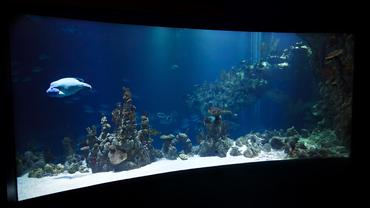
In a saltwater environment, stability is the golden rule. Unlike freshwater fish, which can often tolerate gradual shifts in pH or mineral content, marine organisms have evolved in the vast, unchanging environment of the ocean. The most common problem beginners face is "swinging" parameters, particularly salinity and alkalinity. When these levels bounce around, it causes osmotic stress, which weakens the immune systems of fish like the Powder Blue Tang (Acanthurus leucosternon), making them prone to parasites.
Salinity fluctuations occur primarily through evaporation. As water leaves the tank, salt stays behind, increasing the concentration. To solve this, many successful hobbyists use an Auto Top-Off (ATO) system. This device uses a sensor to detect when the water level drops and automatically adds fresh RO/DI water. Without an ATO, you are forced to manually add water, which creates a "yo-yo" effect that stresses delicate invertebrates. Furthermore, using a refractometer instead of a plastic hydrometer is essential for accuracy, as hydrometers are notorious for giving false readings due to salt deposits or air bubbles.
Alkalinity Control
Alkalinity is the buffer that keeps your pH stable. In a reef tank, corals consume carbonates to build their skeletons. If alkalinity drops below 7 dKH, your pH will swing wildly between day and night, leading to "RTN" (Rapid Tissue Necrosis) in corals.
The Role of Magnesium
Magnesium is often overlooked but acts as a stabilizer for calcium and alkalinity. If you find it difficult to keep your calcium levels up, check your magnesium. It should ideally be between 1250 and 1350 ppm.
RO/DI Purity
Never use tap water. Even with a conditioner, tap water contains silicates and nitrates that fuel algae. Investing in a four-stage RO/DI system is the single best equipment upgrade for any saltwater enthusiast.
If you find your levels are consistently off, it may be time to re-evaluate your salt mix or your water change schedule.
Battling Nuisance Algae and Cyanobacteria Outbreaks
Nothing ruins the aesthetic of a pristine reef faster than a carpet of green hair algae or the dreaded red "slime" known as Cyanobacteria. These outbreaks are usually a symptom of excess nutrients—specifically nitrates and phosphates—coupled with improper lighting cycles. In many cases, these problems arise from "New Tank Syndrome," where the biological filter is not yet mature enough to handle the bio-load of the fish.
To solve algae problems, you must adopt a multi-pronged approach. First, look at your mechanical filtration. Are you cleaning your filter socks or sponges every few days? If not, trapped waste is breaking down into liquid nitrate. Second, consider your lighting. Running high-intensity reef lights for more than 8 to 10 hours a day is an open invitation for algae. Many beginners over-illuminate their tanks, thinking more light equals more growth, but without nutrient control, this only grows "pest" plants.
Green Hair Algae (GHA)
This fibrous algae can choke out corals. To combat it, introduce biological controls like Mexican Turbo Snails or the Lawnmower Blenny. For chemical control, using a GFO (Granular Ferric Oxide) reactor can strip phosphates from the water, starving the algae.
Cyanobacteria
This is actually a photosynthetic bacteria, not an algae. It thrives in "dead spots" with low water flow. Increasing your turnover rate with high-quality powerheads can prevent the bacteria from settling. Siphoning the red mats out during water changes is essential to export the nutrients they have consumed.
Dinoflagellates
Perhaps the most difficult pest, "Dinos" look like snotty brown bubbles. They often appear when a tank is "too clean" (zero nitrates/phosphates). Balancing your nutrients rather than bottoming them out is the key to preventing this nightmare.
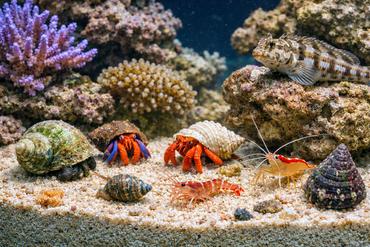
Utilizing a "Clean Up Crew" (CUC) tailored to your tank size is vital. Species like Blue Leg Hermit Crabs and Cerith Snails work tirelessly to keep the rockwork clean. However, remember that the CUC is a supplement, not a replacement for good husbandry and nutrient export via protein skimming.
Managing Fish Health and Preventing Disease
Marine fish are susceptible to various pathogens, with Marine Ich (Cryptocaryon irritans) and Marine Velvet being the most notorious. These diseases can wipe out an entire tank in days if not caught early. The primary cause of disease outbreaks is stress, often resulting from poor water quality, shipping trauma, or aggressive tank mates. Unlike freshwater ich, marine ich has a complex life cycle that can lie dormant in your sandbed for weeks.
The best solution is prevention through quarantine (QT). Every new arrival should spend at least 30 days in a separate tank. This allows you to observe their feeding habits and treat them with copper or praziquantel if necessary without medicating your main display tank, which would kill your corals and invertebrates. If a disease does enter your main tank, the only "true" cure is to remove all fish and let the tank sit "fallow" for 76 days to break the parasite's life cycle.
Marine Ich
Identified by small white spots. Species like Hippo Tangs are often called "Ich magnets." Treatment requires copper-based meds or the "Tank Transfer Method." Raising the temperature does not kill marine ich like it does the freshwater version.
HLLE (Head and Lateral Line Erosion)
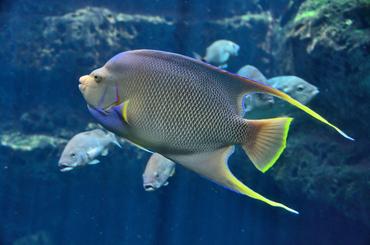
Often seen in Angelfish and Tangs, this causes the skin around the face to erode. This is frequently linked to poor nutrition or the use of cheap, dusty activated carbon. Providing a varied diet of high-quality pellets, frozen mysis, and vitamin-soaked Nori is the best prevention.
Brooklynellosis
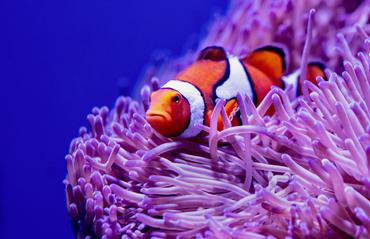
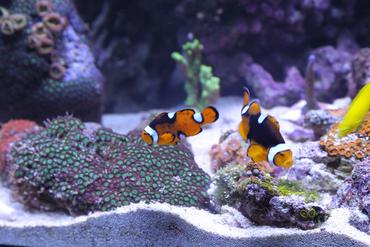
Commonly known as "Clownfish Disease," this is a fast-moving parasite that causes a thick mucus coat on Clownfish (Amphiprion ocellaris). It requires formalin baths and immediate intervention.
Properly diagnosing your fish's symptoms is critical. For more information on identifying and treating common ailments, see our article on common marine fish diseases and how to treat them.
Compatibility and Social Dynamics in the Marine Tank
Many "problems" in a saltwater tank are actually behavioral issues rather than biological ones. Adding the wrong fish to the wrong environment leads to stress, injury, and death. Successful reef keeping requires researching the adult size, temperament, and dietary needs of every inhabitant. A common beginner mistake is buying a fish based on its appearance at the store without realizing it will grow to a foot long or eat its neighbors.
One common mistake is mixing "Reef Safe" and "Non-Reef Safe" species. For example, a Niger Triggerfish might be small and docile at the store, but as it matures, it will likely devour your Cleanest Shrimp and may even flip over corals in search of food. Similarly, many Dwarf Angelfish, while beautiful, are "hit or miss" with corals; they may suddenly decide to nip at your expensive Brain Corals or Acroporas.
Territoriality and Aggression
Damselfish are the classic example of a territorial nightmare. If added first, they will claim the entire tank and kill newcomers. Always add peaceful fish like Firefish or Royal Grammas first, and save aggressive species for last.
Niche Competition
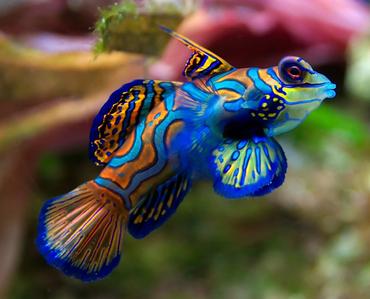
Don't add two fish that occupy the same niche unless the tank is very large. For instance, two Mandarin Dragonets will likely starve unless you have a massive copepod population, as they will compete for the same limited food source.
The "Reef Safe with Caution" Label
Many fish fall into this category. It means they are generally fine until they aren't. Always have a backup plan (like a second tank or a friend who can take the fish) if a "safe" fish starts behaving badly.
Understanding these social dynamics will prevent "mystery deaths" that are actually the result of bullying or starvation. Always cross-reference a compatibility chart and consider the specific swimming needs of your fish. A Yellow Tang needs at least a four-foot tank to swim properly, even if it is small when you buy it.
Solving Technical Failures and Equipment Woes
In the saltwater hobby, your equipment is the life support system for your animals. A heater failure, a clogged protein skimmer, or a burnt-out light bulb can cause a cascade of problems if not caught early. Saltwater is inherently corrosive; the salt itself can find its way into electronics through a process called "salt creep." This crusty buildup can block sensors, jam pump impellers, and even pose a fire hazard if it gets into power strips.
The protein skimmer is perhaps the most important piece of equipment for nutrient control. If your skimmer is overflowing or not producing "nog," you are losing your primary defense against nitrates. This usually happens because of a change in water surface tension—often caused by putting your hands in the tank or using certain epoxy putties. Regular cleaning of the skimmer neck is required to maintain efficiency.
Heater Failsafes
Heaters are the most common equipment failure. They often fail "on," which can cook your livestock in hours. Use an external temperature controller like an Inkbird to cut power to the heater if the temperature exceeds 80 degrees.
Pump Maintenance
Coralline algae and calcium deposits build up on pump impellers. Every six months, soak your powerheads and return pumps in a bath of citric acid or white vinegar to dissolve the scale. This extends the life of the pump and maintains flow rates.
Oxygenation Issues
In the event of a power outage, saltwater tanks lose oxygen much faster than freshwater tanks. Always have a battery-operated air stone on hand. A lack of surface agitation is a silent killer, especially during the summer months when warm water holds less oxygen.
Establishing a routine maintenance schedule is the best way to prevent equipment-related disasters. To help you stay organized, we recommend reviewing our saltwater aquarium maintenance checklist to ensure you never miss a critical step.
Addressing Coral Health and Lighting Problems
For those keeping a reef tank, the problems move beyond fish into the realm of coral physiology. Corals are part animal and part plant (due to the symbiotic zooxanthellae living in their tissues). The most common coral problem is "bleaching," where the coral expels its algae and turns white. This is usually caused by light stress—either too much light too fast or a sudden change in spectrum.
If you are transitioning from older T5 fixtures to LEDs, you must use a "pout" or acclimation mode on your lights. LEDs are much more concentrated and can easily fry delicate corals like Zoanthids or Mushrooms if they are set to 100% intensity immediately. Conversely, "browning out" occurs when corals don't get enough light or have too many nutrients in the water, causing the brown zooxanthellae to overpopulate and mask the coral's natural colors.
Flow for Corals
Corals need water movement to bring them food and carry away waste. Large Polyp Stony (LPS) corals, like Torch Corals, need a gentle sway. If the flow is too strong, the tissue will tear against the skeleton. Small Polyp Stony (SPS) corals, like Acropora, need high, turbulent flow to thrive.
Chemical Warfare
Many corals, especially soft corals like Leathers, release toxins into the water to prevent other corals from growing near them. This is known as allelopathy. Running high-quality activated carbon is the best way to neutralize these chemical signals in a crowded reef.
Pests on Corals
Keep an eye out for Aiptasia (pest anemones), flatworms, and nudibranchs. Dipping every new coral in a dedicated pest-kill solution before adding it to the tank is the only way to ensure you aren't inviting a predator into your reef.
Monitoring your "Big Three" (Calcium, Alkalinity, and Magnesium) becomes even more critical once you add corals. A sudden drop in any of these will stop coral growth and can lead to a crash. Slow, incremental changes are always better than fast "corrections."
Takeaway: Consistency is the Key to Success
Solving common saltwater tank problems is less about finding "quick fixes" and more about cultivating a disciplined approach to aquarium management. Most issues, whether they are chemical imbalances, algae blooms, or disease outbreaks, can be traced back to a lapse in consistency or a shortcut taken during the setup phase. By prioritizing regular water testing, adhering to a strict quarantine protocol, and choosing compatible tank mates, you create a resilient environment that can withstand minor fluctuations. The marine hobby is a marathon, not a sprint; those who take the time to understand the biological needs of their inhabitants will find themselves rewarded with a breathtaking display of nature’s beauty. If you find yourself overwhelmed, take a step back, test your water, and remember that in a saltwater tank, only bad things happen quickly. Good things take time. If you found this guide helpful, don't stop here! Continue your education by exploring our extensive library of articles on reef chemistry, species spotlights, and advanced filtration techniques to keep your tank at its absolute best.


MOST RECENT ARTICLES