NORTH AMERICAN AQUARIUMS GO GREEN

North American Aquariums Go Green
Across North America, aquarium hobbyists are rethinking how their tanks impact the environment, embracing greener, more sustainable ways to enjoy fishkeeping without sacrificing beauty or success. From energy-efficient equipment and captive-bred fish to natural aquascaping and reduced waste, the movement toward eco-friendly aquariums is reshaping the hobby and making it more responsible, accessible, and future-focused.

The Rise of Sustainable Fishkeeping in North America

The aquarium hobby has evolved significantly over the past two decades. What was once centered primarily on aesthetics and exotic appeal is now increasingly driven by environmental awareness. Hobbyists are recognizing that even small home aquariums have ecological footprints, from electricity use and water consumption to the sourcing of fish and décor.

In North America, this shift has been influenced by broader sustainability trends, improved education, and better access to information. Modern aquarists understand that responsible practices lead not only to healthier ecosystems in nature but also to healthier tanks at home. Sustainable aquariums tend to be more stable, easier to maintain, and more rewarding over the long term.

Retailers and manufacturers are also responding. Many now prioritize captive-bred fish, responsibly harvested materials, and energy-efficient equipment. Online resources and communities emphasize long-term success over short-term novelty, helping beginners avoid mistakes that once led to high fish mortality and wasted resources.

Importantly, going green does not mean sacrificing enjoyment or creativity. On the contrary, sustainable aquariums often look more natural and function more efficiently, benefiting both fish and keepers.

Eco-Friendly Equipment and Energy Efficiency

One of the most visible ways North American aquariums are going green is through equipment upgrades. Older aquarium technology often consumed excessive power and required frequent replacement. Today’s options are far more efficient and durable.

LED lighting has largely replaced traditional fluorescent and metal halide fixtures. LEDs use significantly less electricity, generate less heat, and last much longer. For planted freshwater tanks and reef systems alike, modern LED lights also offer customizable spectrums, improving plant growth and coral health while reducing energy waste.

Filtration systems have also improved. High-efficiency canister filters, sponge filters driven by low-wattage air pumps, and well-designed sumps provide excellent biological filtration with minimal energy use. Many aquarists now size filters appropriately rather than oversizing them, reducing unnecessary power consumption.

Heaters remain a major energy draw, particularly in colder regions of North America. Green-minded hobbyists focus on insulating tanks, maintaining stable room temperatures, and choosing reliable, appropriately sized heaters instead of multiple oversized units.

  • Switching to LED aquarium lighting
  • Using efficient, right-sized filtration systems
  • Reducing heat loss with tank placement and insulation

These changes not only reduce environmental impact but also lower monthly utility costs, making the hobby more affordable over time.

Captive-Bred Fish and Ethical Sourcing

A major pillar of the green aquarium movement is the shift away from wild-caught fish, particularly for freshwater species. North America has seen a dramatic increase in the availability and quality of captive-bred fish, making ethical choices easier than ever.

Popular species such as guppies, mollies, platies, angelfish, bettas, and many cichlids are now widely bred in captivity. These fish are generally hardier, more accustomed to aquarium life, and less likely to carry parasites or diseases.

Even in saltwater aquariums, once heavily reliant on wild collection, progress is being made. Captive-bred clownfish, dottybacks, gobies, and some angelfish species are increasingly common. Aquacultured live rock and corals further reduce pressure on natural reefs.

Choosing captive-bred livestock supports responsible breeders and reduces habitat damage. It also improves success rates for beginners, as these fish adapt more easily to home aquariums.

This ethical approach pairs well with strong foundational practices, such as proper tank cycling. Guides like how to properly cycle a fish tank help ensure that new fish are introduced into stable, healthy environments.

Natural Aquascaping and Low-Impact Design

Natural aquascaping has become a defining feature of green aquariums across North America. Inspired by real ecosystems, these designs emphasize balance, simplicity, and function over artificial décor.

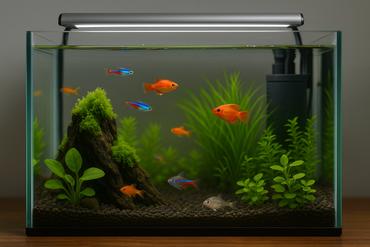
In freshwater tanks, this often means using live plants, natural driftwood, and inert rocks to create environments that mimic rivers, lakes, or forest streams. Planted aquariums help absorb excess nutrients, reduce algae growth, and improve water quality naturally.

Fish species such as tetras, rasboras, dwarf cichlids, and corydoras thrive in these setups, benefiting from cover, grazing surfaces, and stable conditions. Plants like Java fern, Anubias, Vallisneria, and Amazon swords are popular because they are hardy and require minimal intervention.

Saltwater aquariums embrace similar principles through thoughtful live rock placement and open swimming areas. Minimalist reef designs improve water flow and reduce detritus buildup, supporting coral health while using fewer resources.

A common beginner mistake is overcrowding tanks with décor. Green aquascaping favors intentional layouts that allow fish to behave naturally while simplifying maintenance.

  • Using live plants to improve water quality
  • Choosing natural, long-lasting décor materials
  • Designing layouts that prioritize fish behavior

Compatibility, Stocking, and Long-Term Care

Sustainability in aquariums extends beyond equipment and décor — it also involves thoughtful stocking and compatibility decisions. Overstocked tanks require more filtration, more water changes, and more corrective interventions, all of which increase environmental impact.

Green-minded aquarists focus on fewer fish, chosen carefully for compatibility and adult size. This approach reduces stress, improves health, and makes tanks easier to maintain. Schooling fish are kept in proper group sizes, while territorial species are given adequate space.

Understanding realistic stocking limits is essential. Resources like how many fish your tank can realistically support help hobbyists move beyond outdated rules and toward more sustainable practices.

Compatibility also includes water parameters and behavior. Mixing fish with similar needs reduces the need for constant chemical adjustments. For example, keeping soft-water species together minimizes the need to alter pH artificially.

Long-term care plays a major role as well. Regular maintenance prevents crises that lead to fish loss and wasted resources. Sustainable aquariums rely on consistency rather than reactive fixes.

  • Avoiding overstocking and impulse purchases
  • Matching fish with similar water requirements
  • Planning for adult size and lifespan

Reducing Waste and Common Beginner Pitfalls

Waste reduction is another area where North American aquariums are going green. This includes everything from minimizing disposable supplies to reducing fish losses caused by poor planning.

Reusable filter media, durable equipment, and high-quality test kits reduce the need for frequent replacements. Many aquarists now favor sponge filters and biological media that last for years instead of disposable cartridges.

Overfeeding remains one of the most common beginner mistakes and a major source of waste. Excess food pollutes water, fuels algae, and increases maintenance demands. Feeding smaller amounts not only benefits fish health but also reduces environmental impact.

Another pitfall is chasing perfect numbers with chemical additives. Constant adjustments often lead to instability and wasted products. Green aquariums prioritize stable systems over exact values.

Educational resources play a critical role in avoiding these mistakes. Broad care guides like freshwater aquarium fish care emphasize fundamentals that apply across setups and promote long-term success.

Final Takeaway: A Greener Future for Aquariums

North American aquariums going green represent a knowing maturity of the hobby. By focusing on sustainability, aquarists are creating tanks that are healthier, more stable, and more aligned with the natural ecosystems they admire.

Energy-efficient equipment, captive-bred fish, natural aquascaping, and thoughtful stocking all contribute to aquariums that are easier to maintain and kinder to the environment. These practices don’t limit creativity — they enhance it, encouraging designs that are both beautiful and biologically sound.

Whether you’re just starting out or refining an established system, adopting greener habits benefits your fish, your wallet, and the wider world. Explore more educational resources on RateMyFishTank.com to continue building a responsible, rewarding aquarium that stands the test of time.

How Aquarium Trends Affect the World
The aquarium hobby may seem like a quiet, personal pastime, but the trends that shape how we keep fish ripple far beyond our living rooms.
News: Lionfish Invasion in the Atlantic
The lionfish invasion in the Atlantic is one of the most talked-about marine news stories of the last two decades, and it has important implications not just for scientists and conservationists, but also for aquarium hobbyists.

MOST RECENT ARTICLES

Small But Mighty: A Guide to Keeping the Everglades Pygmy Sunfish (Elassoma evergladei)
SMALL BUT MIGHTY: A GUIDE TO KEEPING THE EVERGLADES PYGMY SUNFISH (ELASSOMA EVERGLADEI)
Deep within the slow-moving blackwater swamps and densely vegetated ditches of the Southeastern United States dwells a tiny titan that has captured the hearts of nano-aquarium enthusiasts worldwide: the Everglades Pygmy Sunfish (Elassoma evergladei).
The Therapeutic Tank: How Fishkeeping Helps Manage ADHD, Anxiety, and Sensory Processing Disorders
THE THERAPEUTIC TANK: HOW FISHKEEPING HELPS MANAGE ADHD, ANXIETY, AND SENSORY PROCESSING DISORDERS
For many aquarium enthusiasts, the hobby begins with the simple desire to bring a piece of the natural world indoors, yet they quickly discover that the rhythmic swaying of aquatic plants and the gentle glide of fish offer much more than aesthetic appeal.
The Zen of Aquascaping: Using Iwagumi Principles for Mindfulness and Stress Relief
THE ZEN OF AQUASCAPING: USING IWAGUMI PRINCIPLES FOR MINDFULNESS AND STRESS RELIEF
In the modern world, the constant noise of digital notifications and the fast-paced demands of daily life often leave us searching for a sanctuary where we can reclaim a sense of peace.

Rate This Tank:

AQUARIUM NEWS AND TRENDS

The Science Behind Behavior: Fish Jumping Out of Tanks
Discovering that a fish has jumped out of the aquarium is one of the most frustrating and heartbreaking moments for aquarium hobbyists.
The Best 5–10 Gallon Nano Tank Setups (2025): Stocking Plans & Care Schedules
The landscape of the aquarium hobby has shifted dramatically in 2025, moving away from the "bigger is always better" philosophy toward the precision and artistry of the nano tank.
Cleaning Your Tank Can Make You Sick
Most aquarium hobbyists view their weekly water change as a therapeutic ritual—a time to reconnect with their aquatic ecosystem and ensure the health of their finned friends.
The Surprising Health Benefits of a Home Aquarium
Most of us start our first aquarium because we are captivated by the shimmering scales of a Betta or the rhythmic pulsing of a reef tank, but rarely do we realize that we are actually installing a powerful wellness tool in our living rooms.
Species Spotlight: New Corydoras Catfish Discovered
The global aquarium community is currently navigating an era of unprecedented discovery that has fundamentally changed how we view one of the most popular groups of freshwater fish.
Self-Poisoning: A Damaging Defense Mechanism
Imagine coming home to find your aquarium water cloudy and every inhabitant gasping for air, despite your water parameters being perfect just hours before.
Smart tank technology is the future of the aquarium hobby
For decades, the aquarium hobby has been defined by a delicate balance of art and science, requiring hobbyists to play the role of chemist, biologist, and engineer.
Species Spotlight: The Axolotl
Often referred to as the "Mexican Walking Fish," the Axolotl (Ambystoma mexicanum) is not a fish at all, but a fascinating species of neotenic salamander that spends its entire life underwater.
Trending: Adding LED Moonlights to the Aquarium
There is something undeniably magical about watching an aquarium transform as the room lights dim and the sun sets.
Trending: Jellyfish in the Home Aquarium
For decades, jellyfish were considered the exclusive domain of public spectacle, reserved for massive, high-tech displays in world-class public aquariums.
North American Aquariums Go Green
Across North America, aquarium hobbyists are rethinking how their tanks impact the environment, embracing greener, more sustainable ways to enjoy fishkeeping without sacrificing beauty or success.
Betta Fish Trending Topics for January 2017
As we dive into January 2017, the world of freshwater aquariums is buzzing with a renewed fascination for one of the hobby’s most iconic inhabitants: the Betta fish.
Trending: Glow in the Dark Fish
Glow in the dark fish have become one of the most talked-about trends in the aquarium world, captivating beginners and seasoned hobbyists alike with their vibrant, fluorescent colors.
The Bright and Colorful Discus Fish: Spring 2017 Aquarium Trends
As we head into the spring of 2017, the freshwater aquarium hobby is witnessing a vibrant resurgence of the undisputed "King of the Aquarium": the Discus fish.
The Oldest Aquarium Fish
Some fish are simply going to live longer than others, but what species have the longest lifespans?
Media Reactors - An Innovative Approach to Aquarium Filtration
Every aquarium hobbyist eventually reaches a crossroads where standard hang-on-back or canister filters no longer seem to provide the pristine water clarity or chemical stability their growing ecosystem requires.
Cramped, Boring Environments Lead to Anger in Fish
When we think of aggressive fish, we often imagine predators with sharp teeth or naturally territorial species like Cichlids defending their nests.
How Has Technology Changed the Aquarium Hobby?
The aquarium hobby has undergone a remarkable transformation over the past few decades.
Aquarium Hobbyists Help Save 30 Species from Extinction
While the aquarium hobby is often viewed as a personal pursuit of beauty and tranquility, it has quietly evolved into one of the most powerful forces for global biodiversity conservation.
Your Aquarium Might Not Be as Peaceful as You Think
An aquarium is often sold as a symbol of calm—a glass box of gently swimming fish that lowers stress and brings nature indoors.
Trending: Colorful Species for the Marine Tank
Color has always been a main component of the marine tank but these species are keeping the bar high.
Wireless Aquarium Lighting Solutions
The transition from traditional fluorescent tubes to high-tech, wireless lighting has fundamentally changed the way we experience the aquarium hobby.
Study Reveals that Fish May Have Individual Personalities
For decades, the scientific community and casual hobbyists alike viewed fish as simple, reflexive creatures driven entirely by instinct and basic survival needs.
Trending: Compact Aquarium Equipment
The rise of the nano tank has completely transformed the aquarium hobby, bringing the serenity of underwater landscapes into small apartments, office desks, and minimalist living spaces.
Aquarium News: Five New Species of Dwarfgobies Discovered
The world of marine biology has just become a little more crowded, and for fans of nano reef tanks, the news couldn't be more exciting.
Shrimp in the Home Aquarium: Spring 2017 Aquarium Trends
As we move into Spring 2017, a quiet revolution is taking place in the world of freshwater aquatics.
New Discovery Key to Keeping Pinnatus Batfish
The Pinnatus Batfish (Platax pinnatus), often called the Fire Face or Red-Finned Batfish, has long been considered the "Holy Grail" of the marine aquarium hobby—stunningly beautiful but notoriously difficult to keep alive.
How Aquarium Trends Affect the World
The aquarium hobby may seem like a quiet, personal pastime, but the trends that shape how we keep fish ripple far beyond our living rooms.
Trending:  Sophisticated Water Quality Monitoring Devices
Trending: Sophisticated Water Quality Monitoring Devices
For decades, successful aquariums have depended on one invisible factor above all else: water quality.
Cichlid Compatibility: February Week 2 Aquarium Trends
As we navigate the second week of February, the aquarium hobby is experiencing a massive surge in Cichlid-focused setups, driven by a winter desire for high-energy, vibrant indoor displays.
Aquascaping the Aquarium: March 2017 Aquarium Trends
As we transition into March 2017, the world of aquascaping is witnessing a fascinating shift toward more organic, "wild" aesthetics.
Aquarium Fish News: Bill Introduced to Limit Aquarium Fish Collecting
The saltwater aquarium industry takes millions of fish from oceans around the world each year.
News: Unique Species to Hit the Market
The aquarium hobby is constantly evolving, and every year brings new and unusual species into the spotlight.
Trending:  Nano Tanks More Popular Than Ever
Trending: Nano Tanks More Popular Than Ever
Nano aquariums are no longer just a niche option for experienced hobbyists—they’ve become one of the fastest-growing trends in the aquarium world.
Newly Discovered Fish Species of 2013
The year 2013 proved to be a landmark era for ichthyology, as researchers and explorers descended into the deepest coral reefs and trekked through remote freshwater basins to unveil creatures previously unknown to science.
Changes in Marine Aquarium Design
Marine aquariums have changed dramatically over the past few decades.
News: Lionfish Invasion in the Atlantic
The lionfish invasion in the Atlantic is one of the most talked-about marine news stories of the last two decades, and it has important implications not just for scientists and conservationists, but also for aquarium hobbyists.
News: Trade Continues Despite Threatened Conservation Status
The global aquarium trade is a multi-billion dollar industry that brings the vibrant colors of remote coral reefs and tropical rivers directly into our living rooms.
Innovations in Marine Disease Treatments
Marine aquariums are one of the most rewarding and challenging hobbies for aquatic enthusiasts, particularly when it comes to keeping fish and corals healthy.
The Top New Coral Species of 2013
The saltwater aquarium hobby is ever-changing -- trends and even species come and go.
Read more articles (40)

READ AQUARIUM ARTICLES