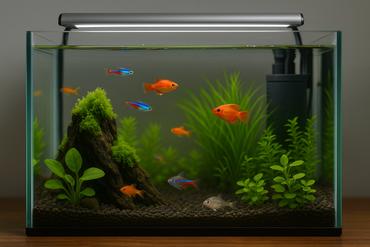
STUDY REVEALS THAT FISH MAY HAVE INDIVIDUAL PERSONALITIES

The Science of Piscine Personality: Boldness vs. Shyness
Recent research in ichthyology has focused on the "bold-shy continuum," a spectrum that measures how individual fish respond to novel stimuli or potential threats. In a landmark study involving various Cichlid species and even common Guppies, researchers found that when raised in identical environments, some individuals consistently took more risks to find food, while others prioritized safety. This "boldness" trait is often linked to higher metabolic rates and faster growth, but it comes with a higher risk of predation in the wild. In the home aquarium, these bold individuals are usually the "glass bangers" that associate their owners with food almost immediately.
On the other end of the spectrum, shy individuals exhibit "freeze" behaviors or seek cover more frequently. This isn't necessarily a sign of a "weak" fish; rather, it is a different survival strategy. In a closed aquarium system, recognizing these traits is essential for reducing stress. For example, a shy Discus may struggle in a tank full of bold, fast-moving Silver Dollars because it lacks the "personality" to compete for floating pellets. Scientists call these consistent behavioral differences "animal personalities," and they suggest that fish have much more cognitive depth than we previously credited them with. Understanding these traits helps us move beyond treating fish as interchangeable units and start treating them as sentient inhabitants.
Furthermore, studies on the Mozambique Tilapia have shown that fish even exhibit "optimism" or "pessimism" based on their past experiences. Fish that were housed in enriched, stable environments were more likely to investigate a new object (optimism), whereas those in unstable or stressful conditions viewed new objects as threats (pessimism). This discovery highlights the importance of maintaining a stable environment. By ensuring your tank is properly set up, you are literally shaping the "outlook" of your fish. Before diving into complex behaviors, it is essential to master the process of cycling a fish tank to ensure their physical environment is as healthy as their psychological one.
Species Famous for Their "Big" Personalities
While all fish exhibit some level of individuality, certain species are renowned among hobbyists for their highly visible and often entertaining temperaments.
Cichlids
Cichlids are perhaps the most famous example. Large Central and South American Cichlids, such as Oscars (Astronotus ocellatus) and Jack Dempseys, are often referred to as "water dogs" because they interact with their owners, recognize specific people, and can even be trained to perform simple tasks. Their personality isn't just a fun quirk; it dictates their territory. An Oscar might decide that a specific piece of driftwood belongs in the left corner of the tank and will persistently move it back every time you try to aquascape, showing a clear sense of agency and "home decor" preference.
Saltwater Fish
In the saltwater world, Blennies and Puffers are the stars of the show. The Lawnmower Blenny is famous for its "grumpy" facial expressions and its habit of perching on rocks to watch the room's activities. Puffers, on the other hand, show high levels of curiosity and problem-solving skills. They will often follow their owner's finger along the glass, not just out of hunger, but out of a genuine interest in their environment. These fish often develop "favored" spots in the tank and can become visibly "pouty" if their favorite cave is moved or if a new tank mate enters their space. For those just starting out, knowing what are good freshwater fish for beginners often involves selecting species that balance these engaging personalities with manageable care requirements.
Betta Fish
Betta fish (Betta splendens) also show remarkable individual variation. While they are often categorized as generally "aggressive," many keepers have found that some Bettas are quite docile and can live in community settings with shrimp or snails, while others are "rogues" that will attack anything that moves. This variability is the hallmark of personality. It serves as a reminder that a "one-size-fits-all" approach to stocking often fails because it doesn't account for the unique temperament of the specific individual you bring home from the store.
How Individual Temperament Affects Compatibility
The discovery of fish personalities has a massive impact on how we think about "compatibility charts." Traditionally, we might say that Angelfish are generally compatible with larger Tetras. However, personality studies prove that you can have a "rogue" Angelfish that is exceptionally aggressive, regardless of the species' general reputation. This is why intermediate hobbyists must move beyond general rules and learn to observe their specific fish. If you have a bold, dominant individual in a community tank, it may claim the entire water column as its own, regardless of whether the species is technically "peaceful."
A common beginner mistake is assuming that a fish's behavior in the pet store tank will be its permanent personality. Often, a fish that appears shy in a crowded, brightly lit store tank will become a dominant "alpha" once it settles into a comfortable home environment. To manage these diverse personalities, you must provide a complex habitat. Breaking up lines of sight with plants and rocks allows shy individuals to find sanctuary, while bold individuals can claim open swimming spaces. By understanding the basics of freshwater fish compatibility, you can create a layout that accommodates both the daring and the demure.
Tips for Managing Fish Personalities
- Observe your fish during feeding to identify who the "bullies" and "wallflowers" are.
- Use floating plants to provide cover for shy top-dwellers like Hatchetfish.
- Rearrange decorations if one fish becomes too territorial to "reset" the boundaries.
- Avoid mixing two "bold" territorial species in a tank that is too small for both.
- Always have a backup plan or a divider if an individual's personality turns predatory.
- Monitor "dither fish" to see if they are effectively encouraging shy fish to come out.
The Impact of Environment on Personality Development
While genetics play a role in personality, the environment in which a fish is raised significantly shapes its behavioral profile. Studies have shown that fish kept in "enriched" environments—those with plants, varying currents, and caves—develop more complex behaviors and are better at navigating stress than fish kept in barren tanks. This is known as behavioral plasticity. A fish in a bare tank may become lethargic or exhibit "stereotypical" behaviors like constant glass surfing, which is often a sign of boredom or a lack of environmental stimulation.
For the hobbyist, this means that your care routine directly influences your fish's personality. Regular water changes and high-quality nutrition ensure that the fish has the energy to interact with its environment. When a fish feels secure, its true personality emerges. For example, a Zebra Danio in a school of ten will show much more bold and playful behavior than a single Danio kept alone. Social structure is a vital component of personality; schooling fish rely on the group's collective boldness to feel safe enough to explore. Without this social safety net, their personality effectively shuts down into a state of permanent fear.
Enrichment doesn't have to be expensive. Rotating the type of food you offer, adding a new piece of driftwood, or even changing the direction of the filter output can provide "mental exercise" for your fish. This is particularly important for intelligent species like Puffers or large Cichlids. A bored fish is a stressed fish, and a stressed fish is much more likely to develop health problems. Investing in the "mental health" of your fish through enrichment is just as important as investing in a high-quality filter.
Care Considerations: Personality as a Health Indicator
One of the most practical applications of recognizing fish personality is in health monitoring. Because personalities are consistent, a sudden change in behavior is often the first symptom of disease—long before physical signs like spots or frayed fins appear. If your normally bold, "greedy" Goldfish suddenly stops coming to the surface for food or hides in a corner, it is a red flag. In this context, personality is a diagnostic tool. A shy fish becoming aggressive or a bold fish becoming lethargic indicates that the fish is experiencing physiological stress.
This is where understanding the dangers of high ammonia, nitrite and nitrate becomes critical. High toxin levels are the primary cause of behavioral "muting." When water quality drops, fish lose their individual quirks as their bodies divert all energy to basic survival and gill function. Maintaining a pristine nitrogen cycle ensures that your fish's brain is functioning at its peak, allowing its unique personality to shine. Practical care involves not just feeding and cleaning, but active observation to "get to know" what is normal for each specific inhabitant of your tank.
Tips for Monitoring Fish Health
- Keep a daily log of behavior to notice subtle shifts in activity levels.
- Don't assume "shyness" is always a personality trait; it could be a symptom of bullying.
- Test water parameters immediately if a bold fish becomes suddenly reclusive.
- Ensure your lighting isn't too bright, as this can force naturally bold fish into hiding.
- Consider the intelligence of your species; larger-brained fish need more mental stimulation.
- Quarantine new fish to observe their personality before adding them to a complex community.
Common Beginner Pitfalls with "Aggressive" Personalities
Newer hobbyists often struggle with "problem" personalities, especially with species like Bettas or certain African Cichlids. A common error is trying to "punish" or "train out" aggression. You cannot change a fish's fundamental personality. If you have a Male Betta that is particularly aggressive, it won't matter how many plants you add; he may simply be a bold-aggressive individual that needs to live alone. Similarly, trying to force a shy species to be more active by removing hiding spots will only lead to a suppressed immune system and premature death.
Another pitfall is the "rescue" mentality. Sometimes, hobbyists see a shy, bullied fish at a store and want to save it. While noble, you must ensure your home tank doesn't have a bold dominant fish that will simply resume the bullying. Personality matching is just as important as matching water parameters. Just as you wouldn't put a high-energy dog in a tiny apartment with a sedentary cat, you shouldn't put a high-strung, bold Tiger Barb in a tank with a slow, contemplative Fancy Guppy. The mismatch in "energy" and personality will lead to constant stress for the more timid individual, often resulting in "mystery deaths" that are actually caused by chronic stress.
Finally, avoid "over-cleaning" the tank in a way that destroys the fish's sense of home. If you move every rock and plant every week, your fish never feels like it has a territory. This constant upheaval can turn a bold fish into a nervous wreck. Territorial fish, especially, need the consistency of their "spots" to feel confident. Aim for a balance where you maintain cleanliness without constantly rewriting the "map" of their world.
Takeaway: Your Fish is an Individual
The revelation that fish have individual personalities changes the entire experience of fishkeeping. It transforms the aquarium from a living painting into a collection of unique individuals, each with their own way of experiencing the world. By recognizing the bold-shy continuum, providing an enriched environment, and using behavioral changes as a health diagnostic, you can provide a much higher level of care for your aquatic pets. This deeper understanding fosters a stronger bond between the keeper and the kept, making every feeding and every water change an opportunity for interaction. To further enhance your hobby, take time to research the specific behavioral traits of your species and observe them daily. The more you put into understanding your fish's personality, the more you will get out of this rewarding hobby. Are you ready to see your tank through new eyes? Explore our species profiles to find the perfect personality for your next aquarium!


MOST RECENT ARTICLES