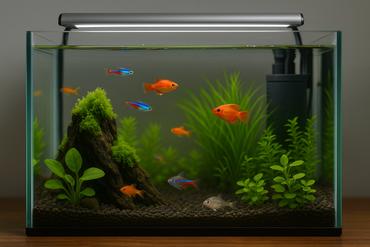
THE BEST 5–10 GALLON NANO TANK SETUPS (2025): STOCKING PLANS & CARE SCHEDULES
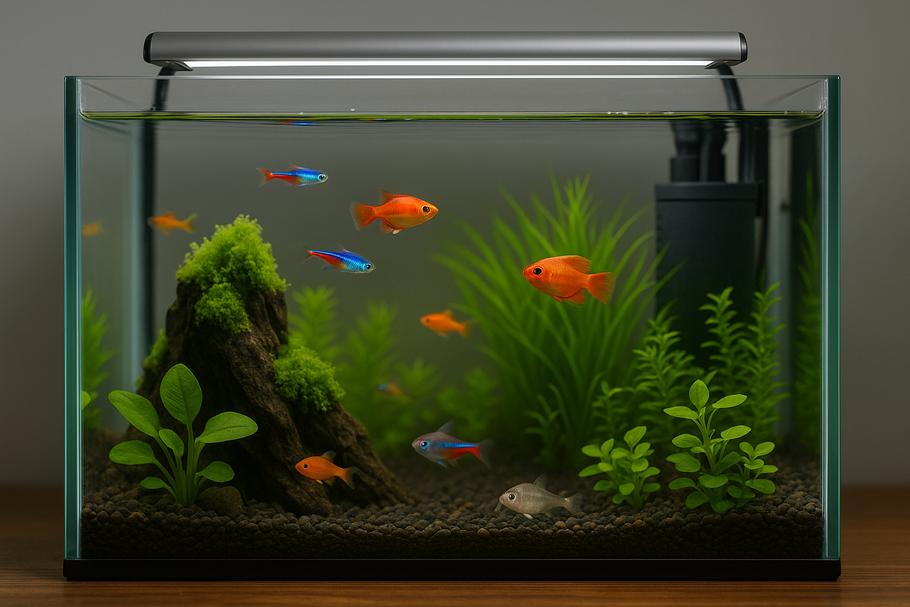
Understanding the Nano Ecosystem: Why Size Matters
To succeed with a 5 or 10-gallon setup, one must first grasp the concept of "water volume stability." In a 100-gallon aquarium, a single dead leaf or a small pinch of excess food is a minor biological event, easily processed by a massive colony of beneficial bacteria and diluted by a large body of water. In a 5-gallon nano tank, that same event is a potential catastrophe. The primary challenge of the nano keeper is managing the rapid fluctuations in water chemistry that occur when the buffer is small.
Nitrogenous waste, specifically ammonia and nitrite, can reach toxic levels in a matter of hours in a small tank. Furthermore, evaporation plays a much larger role here than in larger systems. As water evaporates, the minerals and salts stay behind, meaning the concentration of dissolved solids increases. This can lead to osmotic stress for sensitive inhabitants like freshwater shrimp or soft-water fish. To mitigate these risks, the modern 2025 nano hobbyist uses high-quality equipment, such as auto-top-off (ATO) systems or precision heaters, to ensure the environment remains as static as possible.
Key Considerations
- The Biological Buffer: Smaller tanks have less surface area for beneficial bacteria. Utilizing high-porosity ceramic media in your filter is essential to maximize biological filtration.
- Oxygen Exchange: In small volumes, oxygen can be depleted quickly, especially at higher temperatures. Ensure your filter provides adequate surface agitation.
- The "Golden Rule" of Nano Stocking: Always under-stock. A visually "empty" tank is almost always healthier than one pushed to its biological limit.
Before introducing any livestock, it is imperative to perform a full fishless cycle. Many beginners rush this process, leading to "New Tank Syndrome," where ammonia spikes kill fish within days.
Stocking Plan 1: The High-Concept Betta Sanctuary (5 Gallons)
The 5-gallon tank is the quintessential home for a Betta splendens, but in 2025, we are moving beyond the plastic plants and neon gravel of the past. The "Sanctuary" setup focuses on a blackwater or botanical-style environment that prioritizes the health and longevity of the fish. Bettas are labyrinth breathers, meaning they can breathe air from the surface, but they thrive best in soft, slightly acidic water with low flow.
Stocking List
- 1 Male Betta (Halfmoon, Rosetail, or Plakat varieties).
- 2 Horned Nerite Snails (These stay smaller than standard Nerites and are excellent at cleaning glass).
- Optional: 3-5 Amano Shrimp (only if the Betta has a calm temperament; Amanos are larger and less likely to be eaten than Cherry Shrimp).
The Layout
Focus on a "heavy-planting" strategy. Use epiphytes like Anubias Nana Petite and various Bucephalandra species attached to driftwood. These plants don't require high light or CO2, making them perfect for a low-maintenance 5-gallon. Floating plants like Salvinia Minima or Amazon Frogbit are crucial; they provide a natural canopy that reduces light stress for the Betta and helps suck nitrates out of the water column.
Common Beginner Mistake
Many keepers assume a 5-gallon tank doesn't need a heater because it is kept in a "warm room." However, Bettas are tropical fish that require a stable temperature of 78-80°F. Fluctuations of even a few degrees can weaken their immune system, leading to fin rot or velvet disease. Always use a reliable, preset or adjustable heater designed for nano volumes.
Stocking Plan 2: The 10-Gallon "Jewel Box" Community
A 10-gallon tank is where the hobby truly begins to offer variety. This size allows for "schooling" behavior, which is one of the most mesmerizing sights in the hobby. The goal here is to create a multi-level community where different species occupy different niches of the tank, ensuring no single area is overcrowded.
Stocking List
- The School: 8 Chili Rasboras (Boraras brigittae). These are among the smallest schooling fish in the world, staying under 0.8 inches. Their bright red coloration against green plants is stunning.
- The Bottom-Dwellers: 6 Pygmy Corydoras. Unlike their larger cousins, Pygmy Cories often swim in the mid-water as well as the bottom, adding constant motion.
- The Utility Crew: 10-12 Neocaridina Shrimp (Cherry Shrimp). They act as the "janitors," eating leftover food and biofilm.
Compatibility Considerations
Chili Rasboras are timid. They should not be kept with larger, aggressive fish like Tiger Barbs or even larger Tetras. In a 10-gallon, the focus must remain on "micro-fish." For more information on ensuring your inhabitants get along, see our article on choosing the right community fish.
The Care Factor
With a schooling community, the bioload is higher than in a single-fish setup. This requires a 10-gallon tank to have a filter rated for 20 gallons. Over-filtration is a safety net in the nano hobby. A hang-on-back (HOB) filter with an adjustable flow rate is ideal, as it allows you to customize the current to suit the small Rasboras while providing plenty of room for chemical and biological media.
Stocking Plan 3: The Invertebrate Kingdom (5–10 Gallons)
For the hobbyist who appreciates the "macro" side of the hobby, an invertebrate-only tank is a fascinating alternative. Shrimp and snails have lower biological impacts than fish, allowing you to observe complex social structures and breeding behaviors that you might miss in a community tank. A 10-gallon tank can support a colony of over 100 shrimp if managed correctly.
Stocking List
- 20 Blue Dream or Crystal Red Shrimp.
- 1 Mystery Snail (for vertical movement and color).
- 3 Thai Micro Crabs (elusive, but incredibly interesting for intermediate keepers).
Environmental Needs
Shrimp are extremely sensitive to copper and sudden changes in water parameters. Using a specialized shrimp soil (active substrate) can help maintain a stable, slightly acidic pH. Incorporating Cholla wood and Indian Almond leaves provides "grazing" surfaces where biofilm can grow, which is the primary food source for baby shrimp.
The Care Schedule for Invertebrates
Unlike fish tanks where 30-50% water changes are common, shrimp tanks thrive on smaller, more frequent changes. Changing 10-15% of the water weekly prevents the "molting shock" that can occur when new water parameters differ significantly from the old ones. Always use a water conditioner that detoxifies heavy metals.
Mastering the Care Schedule: A 2025 Protocol
Maintenance in a nano tank isn't just about cleaning; it's about "stewardship." Because the system is small, you must be the "lungs" and "kidneys" of the aquarium. The following schedule is designed to keep a 5–10 gallon tank in "contest condition" year-round.
Daily Maintenance (The Observations)
Spending two minutes a day simply looking at your tank is the best preventative medicine.
- Feeding: Feed only what can be consumed in 60 seconds. In a nano tank, "less is more."
- Temperature Check: Ensure the heater hasn't malfunctioned. In small tanks, a stuck heater can "cook" the fish in an hour.
- Evaporation Top-off: Add a cup of fresh water daily to maintain the water line. This prevents mineral concentration spikes.
Weekly Maintenance (The Reset)
This is your most important time of the week.
- Water Change: Remove 25% of the water. Use a small gravel vacuum to pull detritus out of the top layer of substrate.
- Glass Cleaning: Use a magnetic scraper or an old credit card to remove algae. Don't forget the corners!
- Plant Pruning: In a 10-gallon tank, plants can quickly overgrow and block light to the bottom. Trim stem plants and remove any decaying leaves to prevent ammonia release.
- Testing: Use a liquid test kit (not strips) to check Ammonia, Nitrite, and Nitrate. Target Nitrates should be below 20ppm.
Monthly Maintenance (The Deep Clean)
Once a month, perform a more thorough audit of your equipment.
- Filter Maintenance: Gently swish your filter sponge or ceramic rings in a bucket of old tank water. Never use tap water, as the chlorine will wipe out your beneficial bacteria.
- Pump Inspection: Ensure the impeller of your filter is free of hair and debris. A slow filter leads to stagnant water and low oxygen levels.
- Botanical Refresh: If you use leaf litter (Catappa or Guava leaves), replace those that have become skeletal or transparent.
Advanced Nano Considerations: Plants, Light, and Algae
One of the biggest hurdles for nano-tank beginners is the "Algae Explosion." Because these tanks are often placed on desks or near windows, they are prone to excess light exposure. Furthermore, the nutrients provided by fish waste can quickly fuel algae if there aren't enough live plants to consume them. To maintain a balanced system, consider the "Triangle of Growth": Light, Nutrients (Fertilizer), and CO2.
In most 5-10 gallon setups, a "Low-Tech" approach is best. This means using slow-growing plants that don't require CO2 injection. Java Moss, Cryptocoryne Wendtii, and Java Fern are bulletproof options. If you decide to go "High-Tech" with specialized LED lighting and CO2, your maintenance requirements will double, as the tank will grow much faster and require more frequent nutrient dosing. For more tips on keeping your tank's aesthetics in check, read our guide on controlling algae growth in your aquarium.
Substrate Choice
For a planted nano tank, avoid standard inert gravel. Instead, use an "aquasoil" which is rich in nutrients. This allows you to grow a lush carpet of plants like Monte Carlo or Dwarf Hairgrass, which provides a professional "aquascaped" look even in a small 10-gallon footprint.
Common Pitfalls and How to Avoid Them
Even with the best stocking plan, small mistakes can lead to big problems. Here are the three most common failures in nano-tank keeping:
- Overfeeding: In a 5-gallon tank, two extra pellets of food are enough to cause a visible fungus bloom on the substrate. Use a feeding dish for shrimp and feed fish one pellet at a time.
- Ignoring Hardscape Weight: If you are using heavy stones like Seiryu or Dragon Stone in a 10-gallon tank, ensure you have a thin layer of foam or a plastic "egg crate" under the substrate. This prevents the stone from creating a pressure point on the thin glass bottom of a nano tank.
- The "Impulse Buy": Never buy a fish without checking its adult size. A "cute" 1-inch Pleco at the pet store will eventually grow to 12 inches and produce more waste than a 10-gallon tank can ever process.
The Takeaway: Small Tank, Big Success
Setting up a 5 to 10-gallon nano tank is an exercise in restraint and discipline. By focusing on a "species-appropriate" stocking plan—whether it is the solitary elegance of a Betta, the frantic energy of a Rasbora school, or the intricate world of a shrimp colony—you create a sustainable environment that respects the biological limits of the water volume. Success in 2025 is defined by the health and longevity of your inhabitants, not the quantity of fish you can squeeze into the glass.
Remember that your aquarium is a living system that evolves every day. Stay curious, keep testing your water, and don't be afraid to adjust your care schedule as your plants grow and your colony matures. The nano hobby is rewarding because it brings a piece of the natural world into our most personal spaces. Ready to dive deeper? Check out our other articles on aquascaping and advanced filtration to take your nano tank to the next level. Happy fishkeeping!


MOST RECENT ARTICLES