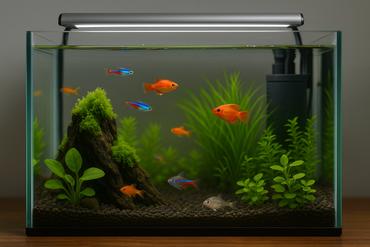
CRAMPED, BORING ENVIRONMENTS LEAD TO ANGER IN FISH

The Psychology of Space: Why Tank Size Dictates Temperament
One of the most common mistakes beginners make is following the outdated one inch of fish per gallon rule. While this rule attempts to address bio-load and filtration capacity, it completely ignores the behavioral needs of the animal. A fish that feels physically restricted is a fish that feels vulnerable. In the wild, most species have the luxury of flight when they feel threatened; in a small tank, that option is removed. When a fish cannot escape a perceived threat or a dominant neighbor, its stress hormones spike, leading to a fight response that looks like unprovoked aggression.
For active swimmers like Giant Danios or various Rainbowfish species, horizontal length is significantly more important than total water volume. If these fish cannot reach their top cruising speed before hitting a glass wall, they become frustrated. This pent-up energy is often redirected toward slower-moving tank mates in the form of chasing or nipping. Similarly, territorial species like the Red Tail Shark require a defined home turf. In a cramped environment, that shark may decide the entire tank is its territory, leaving no safe space for others to exist without being harassed.
The lack of space also impacts the hierarchy of schooling fish. In a properly sized aquarium, a school of Tiger Barbs will establish a pecking order that stays within their own group. However, in a cramped tank, the dominant individuals have nowhere to direct their energy, leading them to lash out at peaceful residents like Gouramis or Guppies. To avoid these issues, it is essential to research the specific swimming habits of your fish. Always opt for a larger "footprint" (length and width) over a "tall" tank when dealing with active or territorial species.
If you are just starting out, understanding the basics of habitat planning is vital. Before you buy your first inhabitants, it is highly recommended to read about proper stocking for beginners to ensure you aren't setting up a battlefield from day one. Proper stocking isn't just about quantity; it is about matching the fish to the physical dimensions of the environment.
The Boredom Factor: Enrichment and Environmental Complexity
A boring environment is one that lacks complexity—no plants, no caves, and no varied topography. To a fish, a bare tank is a dangerous tank. Open water in nature is where predators lurk, so a fish forced to swim in an open, featureless environment is constantly on high alert. This state of hyper-vigilance leads to irritability and defensive aggression. Just as a dog might chew furniture when bored, a fish might pick at the fins of a neighbor simply because there is nothing else to interact with in the environment.
Environmental enrichment is the practice of providing a structured habitat that encourages natural behaviors. When you provide a complex habitat, you encourage foraging, exploring, and healthy territorial boundaries. This mental engagement keeps the fish focused on their environment rather than on bullying their companions. Consider these enrichment strategies:
- Break sightlines using tall plants or large driftwood so fish can escape each other's view.
- Create multiple caves using rock piles to allow bottom-dwellers to have their own "apartments."
- Use floating plants like Amazon Frogbit to provide overhead cover and reduce light-related stress.
- Vary the substrate with a mix of sand and river stones to encourage natural sifting and foraging.
- Provide a moderate current with powerheads to give river-dwelling species a "job" by swimming against the flow.
A well-decorated tank is more than just an aesthetic choice; it is a vital tool for behavioral management. For more detailed strategies on how to layout your tank to minimize conflict, check out our guide on aquascaping for better fish health. By moving a single piece of driftwood or adding a cluster of plants, you can often stop a bullying problem overnight by resetting the territorial boundaries of the tank.
The Physiological Toll: How Stress Becomes Aggression
When a fish is in a cramped or boring environment, its body undergoes a physiological transformation. Chronic stress triggers the release of cortisol, a hormone that, in the short term, helps an animal survive a threat. However, when cortisol levels remain high for weeks or months, it suppresses the immune system and alters brain chemistry. This makes the fish hyper-reactive. A minor bump from a tank mate that would be ignored in a large, enriched tank becomes a trigger for a violent confrontation in a poor environment.
Furthermore, poor environments often suffer from poor water quality. In a cramped tank, waste builds up faster, leading to spikes in ammonia and nitrite. These chemicals cause physical pain, burning the gills and skin of the fish. An animal in pain is an animal that is likely to lash out. It is a vicious cycle: the small tank causes stress, the stress causes aggression, and the cramped conditions lead to poor water quality, which increases the stress further. This is often why "new tank syndrome" is associated with high mortality and high aggression.
To break this cycle, hobbyists must prioritize the biological foundation of the tank. No amount of decor can fix the "anger" caused by chemical burns. Understanding the relationship between waste management and behavior is key. Make sure you are well-versed in the nitrogen cycle to ensure your fish are living in a clean, pain-free environment. When a fish feels physically healthy, its threshold for social frustration is much higher, leading to a more harmonious community.
Compatibility and Care: Choosing the Right Roommates
Successful fish keeping is as much about social engineering as it is about biology. Even in a large, decorated tank, you will see "anger" if you choose incompatible species. Aggression is often a result of a mismatch in energy levels or social requirements. For example, pairing slow-moving, long-finned Angelfish with hyperactive, nippy Serpae Tetras is a recipe for disaster. The Angelfish will become stressed by the constant movement, eventually turning aggressive to defend itself, or becoming a victim of fin rot due to constant nipping.
When planning your stocking, consider the "zones" of the aquarium. A peaceful tank typically has a balance of residents in the top, middle, and bottom layers. If you stock five different species that all prefer the bottom third of the tank, you are creating a "slum" environment where every inch of sand is a contested resource. This is particularly true for Cichlids and some Catfish species. By spreading the population vertically, you reduce the frequency of "unwanted" social interactions, which keeps the peace.
Another care consideration is the "dither fish" strategy. Dither fish are active, schooling species like Zebra Danios that swim in open water. Their presence signals to more nervous or territorial fish that there are no predators nearby. When the dither fish are calm, the rest of the tank relaxes. However, if the tank is too cramped, dither fish cannot perform this role and instead become the primary targets for bullies. Always ensure your "peace-making" species have enough room to school properly without being pinned against the glass.
Advanced Enrichment: Mental Stimulation for Intelligent Species
Some fish are significantly more intelligent than others and require "work" to stay calm. Large Cichlids like Oscars, Puffers, and certain types of Goldfish are known to recognize their owners and can even be trained. In a bare tank, these intelligent species often become depressed or hyper-aggressive. They may start attacking equipment like heaters and filter intakes simply because they are the only things in the tank they can interact with.
For these species, you should consider "rotational enrichment." This involves changing minor aspects of the tank periodically. Moving a rock, adding a new type of floating toy (for species like Oscars), or changing the location of food can stimulate their brains. For foraging species like Loaches or Corydoras, hiding sinking pellets inside a pile of smooth stones allows them to use their natural "snuffling" instincts to find food. This mimics the challenges they would face in the wild and uses up the mental energy that would otherwise be spent on territorial disputes.
It is also important to consider the role of light. A tank that is constantly bright with no dark corners or "shade" from plants can make fish feel exposed and "cranky." Using a timer to provide a consistent day/night cycle allows fish to enter a rest state. Without this rest, fish become sleep-deprived and increasingly aggressive. A well-rested fish is a much more tolerant tank mate. Always provide "dark zones" where a fish can retreat to sleep without being in the direct path of the aquarium lights.
Summary: Creating a Sanctuary for Your Aquatic Pets
Creating a peaceful aquarium is about more than just avoiding "mean" fish; it is about providing an environment that fosters calm behavior. When we ignore the need for space and stimulation, we force our fish into a survival-mode mindset where aggression is their only tool. By transitioning from a cramped, boring setup to a spacious, enriched sanctuary, you will see a dramatic shift in the health and personality of your fish. They will display brighter colors, more interesting natural behaviors, and—most importantly—a significant reduction in inter-species conflict.
Takeaway: Your Action Plan for a Peaceful Community
The key to a harmonious tank lies in the balance between biology and psychology. If you are experiencing aggression in your aquarium, do not immediately assume you have a "bad" fish. Instead, look at the environment through their eyes. A few simple changes can make a world of difference. Start by assessing your current setup with these actionable steps:
- Audit your tank size: Research the minimum "active swimming" requirements for your species and upgrade if necessary.
- Increase visual complexity: Add more plants, driftwood, or rocks to break up the tank into distinct "rooms."
- Check water chemistry: Ensure that ammonia and nitrites are at zero, as physical discomfort always leads to irritability.
- Evaluate social structure: Ensure you have appropriate group sizes for schooling fish to prevent them from targeting other species.
- Observe and adjust: Spend time watching your fish to identify "pinch points" in the decor where fights occur, and rearrange the layout to solve them.
Your aquarium is a tiny slice of the natural world, and as its guardian, it is your responsibility to provide a life that is as rich and stress-free as possible. A happy fish is a peaceful fish. For more inspiration on how to design a stunning and healthy habitat, continue exploring our library of expert guides at RateMyFishTank.com. Whether you are troubleshooting a bully or planning your next big build, we are here to help you succeed in the wonderful world of fish keeping.


MOST RECENT ARTICLES