


Rank Info
This picture looks better than 83.25% of pictures in this category
The Average Score for this picture is: 4.82
This picture has been rated : 109 times.
The Average Score for this category is: 4.18
More Info
Country:
Australia
Description:
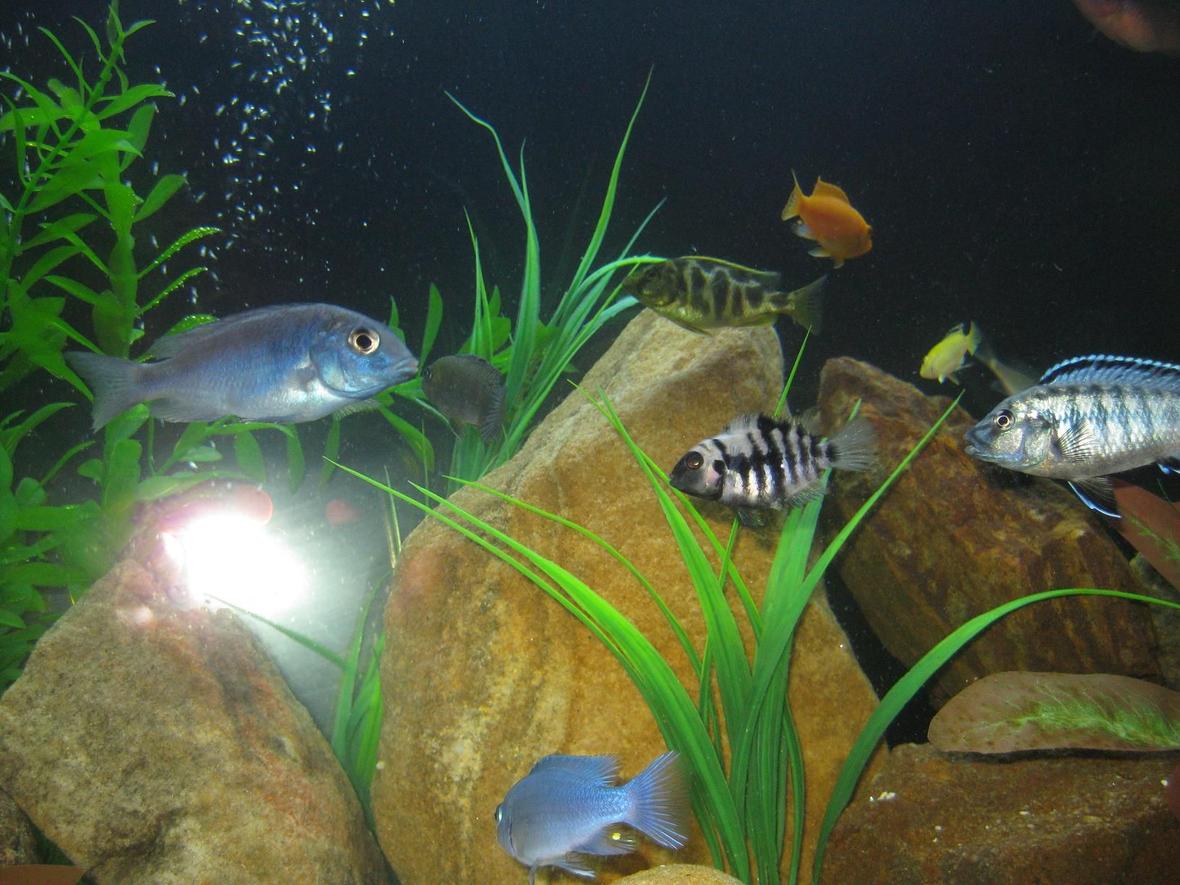
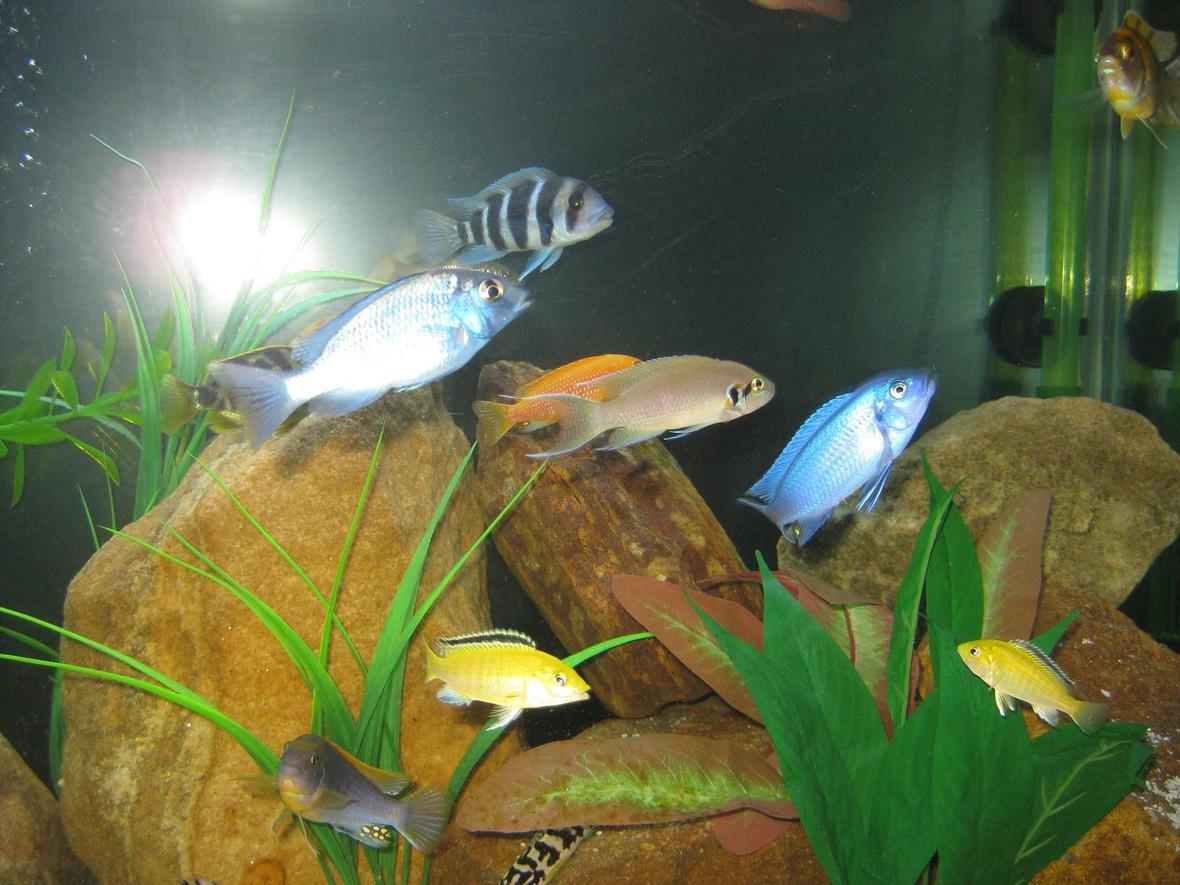
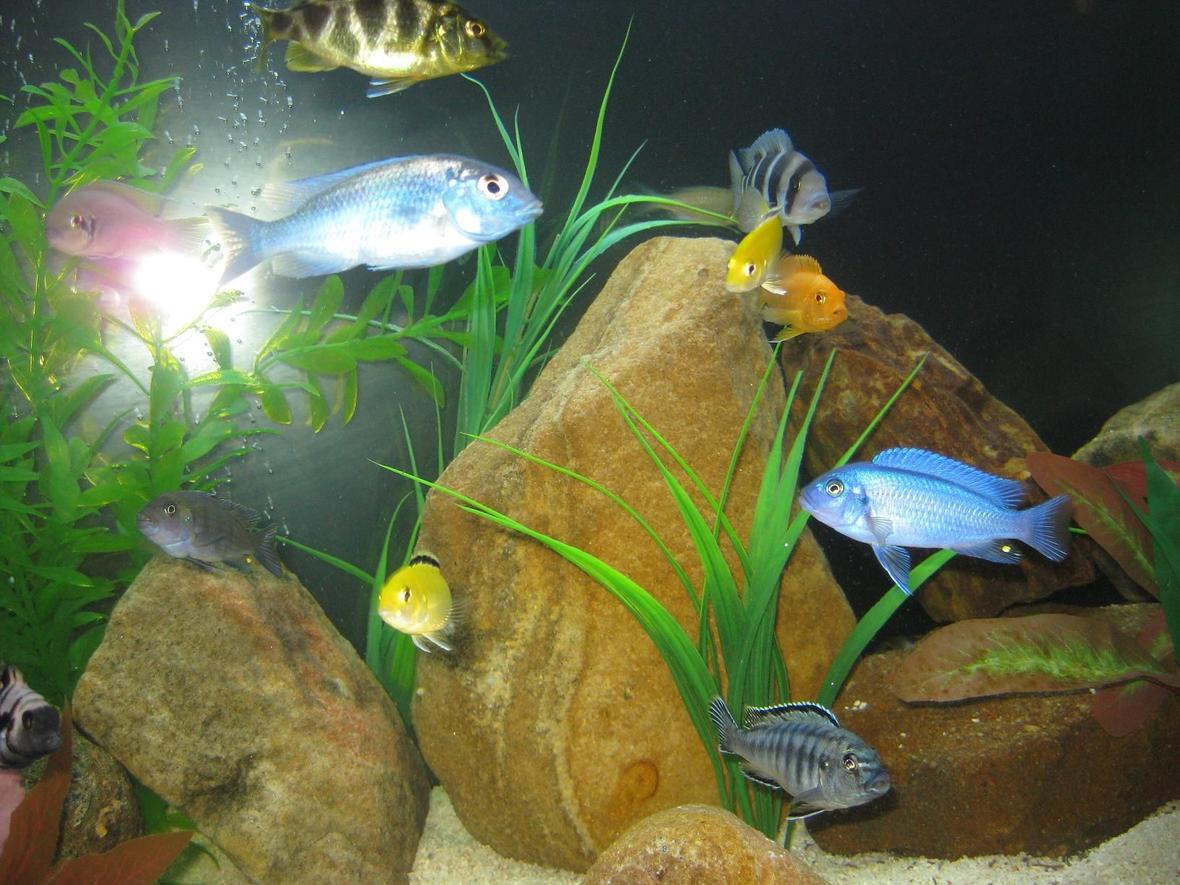
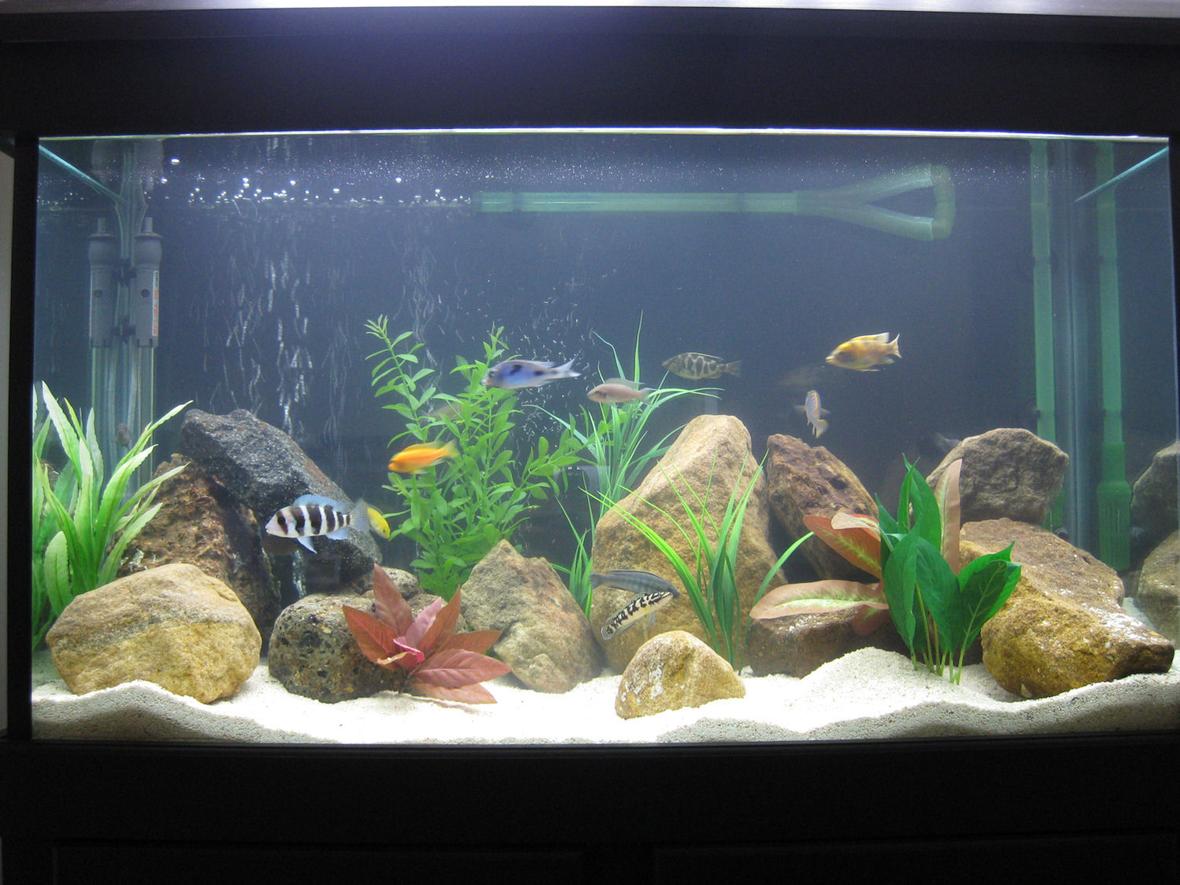
3ft African Cichlid tank.
New tank - only 2 months old.
1500L/h cannister filter, Coral sand, Mixture of rocks - mostly sandstone to raise the ph level.
Looking to buy a better light so that I can have a blue and white tube.
Advice:
Get a ph buffer for your tank, as the correct ph level will bring out the colours in the fish. Although its expensive to buy a lot of chemicals for the tank, its worth it as you will rarely lose a fish if you get the water right.
Fish Kept:
Mostly lake malawi cichlids (electric yellows, electric blue, red zebra, maingano, afra cobue, blue dolphin, cobalt blue, red forrest jewel, red peacock, interruptus,venustus & lombardoi) and have 3 american cichlids (convicts) and 3 lake tanganyika (frontosa, julidochromis gombi & princess cichlid)
Corals/Plants:
In my experience, cichlids destroy real plants, so i only have a few fake plants at this stage.
Tank Size:
45 gallons
MOST RECENT ARTICLES

Nuisance algae is an inevitable challenge in any freshwater aquarium, but few things drain the joy of fishkeeping like an unexpected outbreak.

Every aquarium hobbyist, whether a complete beginner establishing a first desktop display or an experienced aquascaper managing a heavily planted setup, eventually comes face-to-face with an unsightly algae bloom.

Every aquarium keeper eventually battles the dreaded nitrate buildup, relying on endless water changes, gravel vacuuming, and heavy filter maintenance to keep water parameters safe for their fish.
COMMENTS