


Rank Info
This picture looks better than 51.64% of pictures in this category
The Average Score for this picture is: 4.48
This picture has been rated : 44 times.
The Average Score for this category is: 4.76
More Info
State:
Rhode Island
Country:
United States
Description:
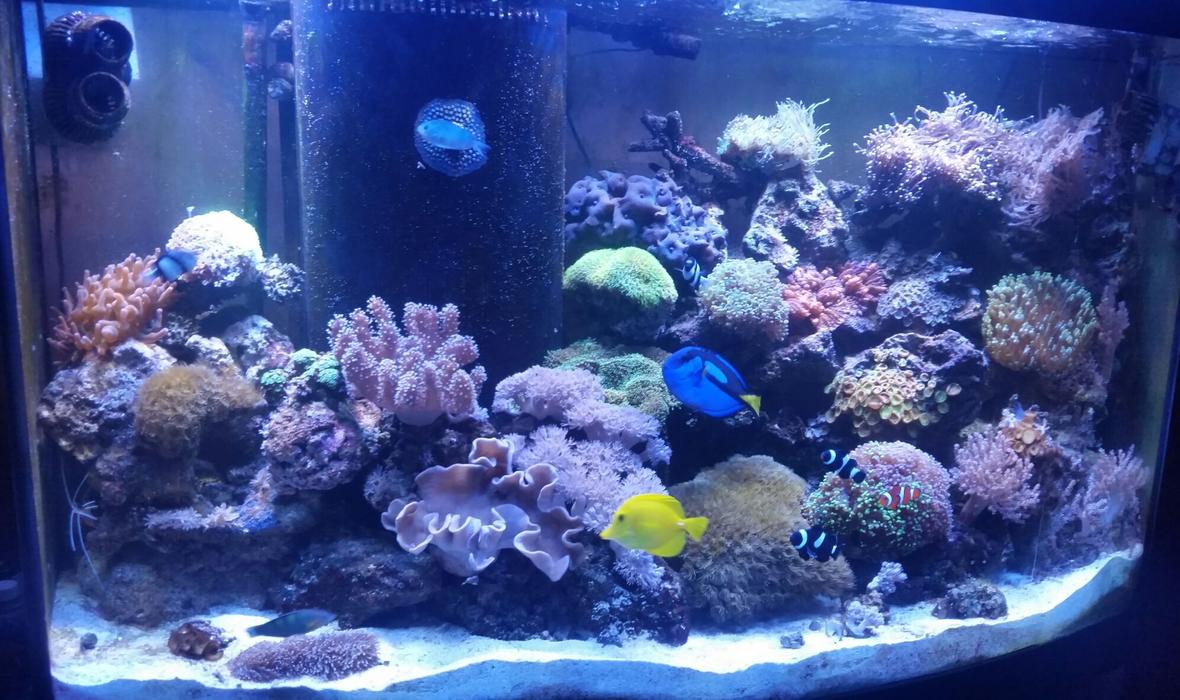
90 gallon bow front oceanic tank with oceanic sump, reef octopus protein skimmer and 3 aqua sol blue LED lights
Advice:
definatly acclimate your new fish slowly the correct way. and take your time. For a reef tank, the best investment you'll make is the lighting.
Fish Kept:
Currently:
-blue hippo tang
-yellow tang
-elibi angelfish
-menanurus wrasse
-Percula clown fish
-2 black and white clown fish
-2 black and white striped damsels
-royal gramma
-yellow watchman goby
Corals/Plants:
Torch coral
Frogspawn
Green star polyps
Yellow polyps
Brown polyps
Green palys
Finger leather
Toadstool
Xenia
Pulsing xenia
Tungue coral
Long tentacles anemometer
Rose bubble tipped anemometer
Blue mushrooms
Green fuzzy mushrooms
Green zoas
Tank Size:
90 gallons
MOST RECENT ARTICLES

Nuisance algae is an inevitable challenge in any freshwater aquarium, but few things drain the joy of fishkeeping like an unexpected outbreak.

Every aquarium hobbyist, whether a complete beginner establishing a first desktop display or an experienced aquascaper managing a heavily planted setup, eventually comes face-to-face with an unsightly algae bloom.

Every aquarium keeper eventually battles the dreaded nitrate buildup, relying on endless water changes, gravel vacuuming, and heavy filter maintenance to keep water parameters safe for their fish.
COMMENTS