
FISH TANK ARTICLES
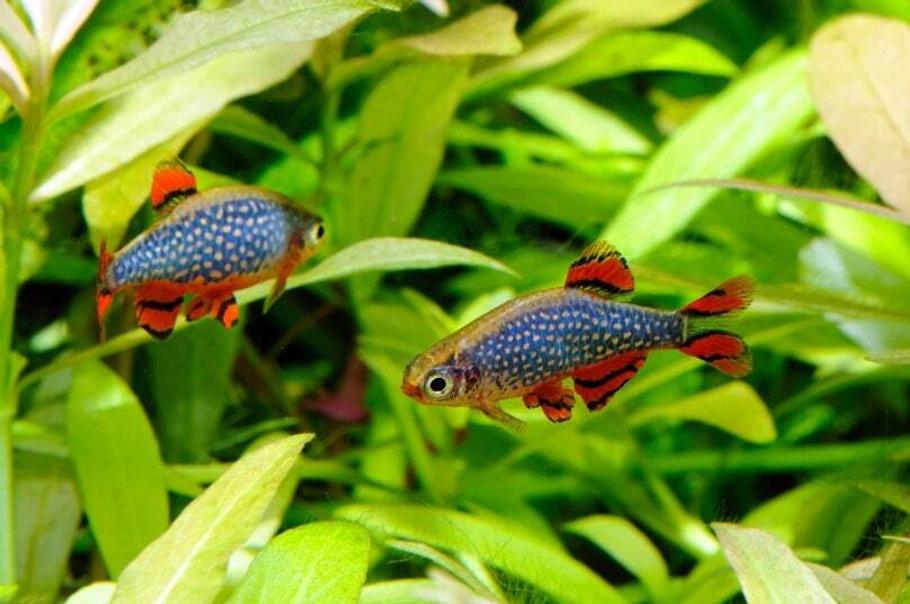
1. Single Betta + Peaceful Tankmates (Beginner Friendly)
Betta splendens remain one of the top choices for 10-gallon tanks. A single betta thrives with gentle tankmates that won’t nip fins or compete heavily for food.
Stocking Plan
- 1 Male Betta
- 8–10 Ember Tetras or Chili Rasboras
- 3–5 Amano Shrimp (optional)
Behavior Notes
- Keep only one male betta per tank.
- Avoid fin-nippers like Serpae tetras and tiger barbs.
- Betta prefers calm surface areas with floating plants.
Best Alternatives
- Female betta (often calmer)
- Endler trio instead of schooling fish
Enhance this setup by adding floating plants. See our substrate-free plant guide for ideas.
2. Nano Schooling Community (Active & Colorful)
If you want movement and color, a nano schooling community is perfect for a 10-gallon tank.
Stocking Plan
- 10–12 Ember Tetras or 12–15 Chili Rasboras
- 6–8 Pygmy Corydoras
Behavior Notes
- Schooling fish need groups of 8+ for confidence.
- Pygmy corys prefer sand and peaceful tankmates.
- A well-planted tank reduces stress and boosts color.
Alternatives
- Lambchop Rasboras
- Green Neon Tetras
3. Pea Puffer Species-Only Tank (Oddball Favorite)
Pea puffers are tiny predators with big personalities—but they are not community fish.
Stocking Plan
- 3 Pea Puffers (1 male, 2 females)
Behavior Notes
- Require heavy planting and line-of-sight breaks.
- Eat snails and worms—won’t thrive on flakes.
- May nip tankmates, even small fast ones.
Alternatives
- Single puffer in a 5 gallon + shrimp in the 10-gallon instead
For more puffer care details, see our pea puffer compatibility guide.
4. Shrimp + Nano Fish Combo (Low Maintenance)
Shrimp tanks are booming in popularity, and a 10-gallon aquarium offers plenty of space...
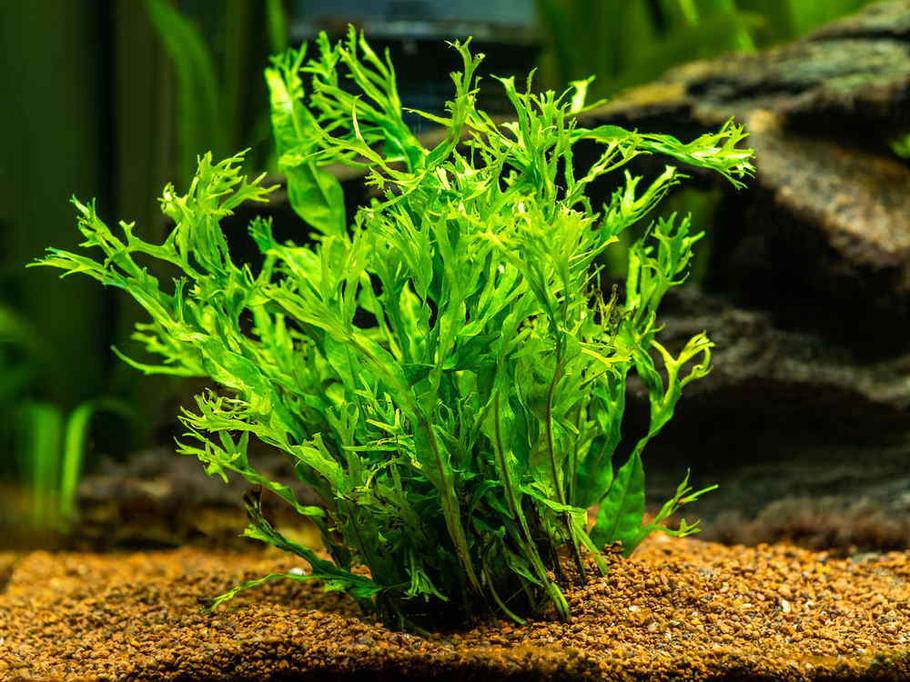
Why Choose Plants That Don’t Need Substrate?
Substrate-free plants are ideal for beginners and low-maintenance tanks because they:
- Grow easily in a variety of setups
- Attach naturally to rocks and driftwood
- Survive in bare-bottom aquariums
- Thrive in low or medium light
- Offer hiding places for shrimp and fry
- Absorb nutrients directly from the water column
They are also excellent for hospital tanks, quarantine tanks, and tanks where you want easy cleaning.
How to Use Non-Substrate Plants
Most of these plants attach themselves to hard surfaces. You can use:
- Super glue gel (aquarium-safe)
- Fishing line or cotton thread
- Plant weights
Never bury the rhizomes of plants like Anubias or Java fern—they will rot if covered by substrate.
12 Aquarium Plants That Don’t Need Substrate
1. Anubias (All Varieties)
- Light: Low to medium
- Growth Rate: Slow
- Placement: Midground or attached to hardscape
Anubias is one of the easiest aquarium plants in the hobby. Its thick rhizome attaches easily to rocks or driftwood, and it tolerates low light and beginner mistakes. Popular varieties include Anubias Nana, Petite, Barteri, and Coffeefolia.
2. Java Fern (Microsorum pteropus)
- Light: Low to medium
- Growth Rate: Medium
- Placement: Midground
A classic non-substrate plant. Java Fern grows best when attached to wood or rocks. It produces new plantlets on its leaves, which can be relocated easily.
3. Java Moss (Taxiphyllum barbieri)
- Light: Low
- Growth Rate: Fast
- Placement: Anywhere
One of the best plants for shrimp tanks and fry tanks. Java moss grows on any surface and forms thick mats that provide shelter and biofilm for invertebrates.
4. Bucephalandra (All...
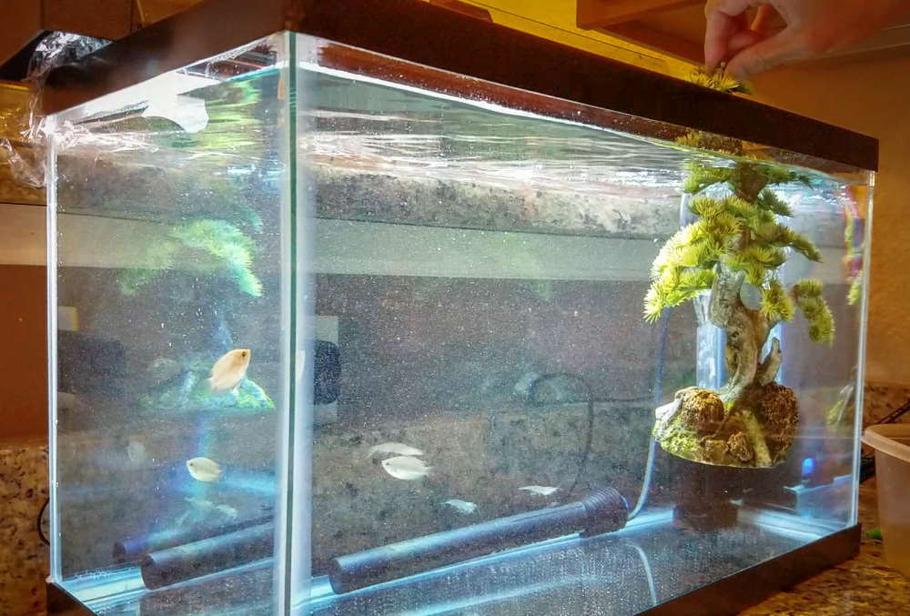
Why Every Aquarist Needs a Hospital Tank
A hospital tank allows you to isolate sick or injured fish in a controlled environment. This prevents disease from spreading and makes treatment far more effective.
Benefits of a Hospital Tank
- Protects your main tank from harsh medications
- Reduces stress by giving the fish a calm, simple space
- Allows accurate dosing of medications
- Prevents disease outbreaks in your display tank
- Saves money by using much less medication
Many new fishkeepers attempt to medicate the entire aquarium—but this often kills beneficial bacteria, harms invertebrates, and risks plants. A hospital tank is safer and cheaper.
Hospital Tank Setup (Beginner-Friendly)
You do not need a complex setup to build an effective hospital tank. Keep it simple, clean, and easy to monitor.
Recommended Tank Size
- 5 gallons — Betta, guppies, small tetras
- 10–20 gallons — Medium fish, multiple small fish
Essential Equipment
- Sponge filter (gentle flow, safe for medications)
- Heater (for tropical fish)
- Lid (sick fish jump more often)
- Air pump (increases oxygen during medication)
Substrate & Decorations
Hospital tanks should be bare-bottom to make cleaning easy.
- No gravel or sand
- No plants (most medications harm them)
- Use only 1–2 hiding spots such as PVC pipes or ceramic caves
Water Parameters
Use water that matches your main tank to reduce stress:
- pH: Match display tank
- GH/KH: Same as display tank
- Temperature: Match or slightly warmer
For help understanding your parameters, see our full freshwater chemistry guide.
When to Use a Hospital Tank
Move fish into a hospital...
Aquarium News and Trends
Cleaning your aquarium is a necessity in order to keep your fish healthy. Recent studies suggest, however, that it could make YOU sick!
A species of Corydoras catfish that was discovered in the 1990s has finally been officially described and named.
Guppies are known, in particular, for jumping out of the tank. But why do they exhibit this behavior?
Modern advances in technology affect every industry - even the aquarium hobby. Read on to learn about the top tech for aquariums in 2019.
The betta fish is and will forever be one of the most popular types of aquarium fish. What are people saying about betta in the new year?
In stressful times, having a home aquarium could be a benefit. Read on to learn about the top 6 health benefits of keeping a fish tank at home.
If you have ever brought a group of corydoras catfish home from the store to find that they all died in transport, this article will be incredibly enlightening.
You have probably seen your fair share of jellyfish in zoo aquariums, but did you know that it is possible to keep these creatures as pets? In this article you will learn the basics about keeping jellyfish as pets in your very own home.
One of the latest trends in aquarium equipment is compact upgrades. When it comes to filtration and lighting especially, these compact options can save you space and money.
The pet trade gets a bad rap for exploiting wild animals but sometimes the opposite is true. Aquarium hobbyists have played a role in preserving 30 species that have since gone extinct in the wild.
Small aquariums are more popular than ever, and for good reason — nano tanks are affordable, space-efficient, and surprisingly full of life. Whether you’re working with a 5-gallon desktop setup or a compact 10-gallon community, these miniature ecosystems offer endless creativity. In this 2025 guide, we’ll explore proven nano tank designs, fish and shrimp combinations that actually work, and simple maintenance routines to keep your tank thriving long-term.
If you are looking for a unique species around which to center your next tank, consider the axolotl.
Discus fish are some of the most brightly colored fish in the animal kingdom. Keep reading to learn about popular trends in discus fish this spring.
With advances in aquarium lighting technology, you now have the option to add specialized nighttime lighting to your aquarium. LED moonlights are perfect for nocturnal species of fish or simply to enhance the nighttime appearance of your tank.
Advances in modern technology have changed the world we live in, but how has it affected the aquarium hobby? Keep reading to find out.
In the second week of February 2017, one of the highest trending topics in aquarium-related social media is in regard to cichlid compatibility. Keep reading to learn more about housing cichlids with catfish and other sepcies as well as some interesting information about how cichlids communicate aggression through their urine.
Some fish are simply going to live longer than others, but what species have the longest lifespans? Keep reading to learn about the oldest fish to have ever lived and to receive tips for maximizing the lifespan of your own aquarium fish.
The saltwater aquarium industry takes millions of fish from oceans around the world each year. A new bill has been introduced to limit aquarium fish collecting.
Gobies are some of the smallest fish in the world and dwarfgobies are the smallest of those. Keep reading to learn about five newly discovered species of dwarfgoby.
A recent paper published by the Conservation Research Group and the IUCN shows that more than 30 threatened species endemic to India are still being regularly exported, despite their conservation status.
Color has always been a main component of the marine tank but these species are keeping the bar high.
If you're looking for a unique way to stock your new tank, give freshwater shrimp a try. Keep reading to learn more about this topic that was trending on social media in May 2017.
When it comes to aquarium filtration there are many options to choose from. One of the newest -- and most efficient -- methods of filtration is the media reactor.
A recent study conducted by a biology professor at Case Western Reserve University reveals that environment size and complexity has a direct impact on aggressive behavior in aquarium fish.
While some species like Oscars are known for exhibiting dog-like behaviors, a recent study shows that many fish are capable of developing individual personalities.
The Pinnatus Batfish is one of the most striking species of saltwater aquarium fish, but notoriously difficult to keep in the home aquarium.
Glow in the dark fish may not be a new trend but new additions to the market have recently been made -- glow in the dark convict cichlids and angelfish.
The new year brings a new wave of unique species to add to your home aquarium.
One of the latest developments in aquarium lighting is wireless control of LED systems. These systems allow you to control the intensity, spectrum and timing of your aquarium lights for optimal customization of your tank.
Testing your aquarium water is a chore that no aquarium hobbyist likes. With new water quality monitoring technology, you can kiss those test strips goodbye!
New species of plants and animals are being discovered every year. In this article you will learn about some of the new fish species discovered in 2013.
Trends in the aquarium trade have an effect on more than just aquarium hobbyists -- they can affect the whole world.
From recycling and organic farming, sustainability and conservation are two hot trending topics. In this article you will read about how North America's aquariums are joining the fight in "going green".
For many aquarium hobbyists, the aquarium is a source of relaxation and serenity. Recent studies suggest, however, that this may not be true for the fish inside.
The art of decorating a home aquarium is called "aquascaping" and it is a trending topic in aquarium social media this month.
Treating marine aquarium diseases is easier than ever with innovations like medicated frozen fish food.
A nano tank is more than just a small fish tank -- it is a compact, self-contained ecosystem. Read more about this recent trend in the aquarium hobby below!
The saltwater aquarium hobby is ever-changing -- trends and even species come and go. In this article you will learn about some of the newest coral species from 2013.
Lionfish are a very popular species in the marine aquarium hobby but they have begun to threaten native populations in the Atlantic as they spread from their native habitat in the Indo-Pacific.
The only thing that doesn't change in the world is the fact that things change. In this article you will read about changes in marine aquarium trends.
General Aquarium Articles
If you’re setting up (or refreshing) a freshwater tank and want fish that are colorful, hardy, and peaceful, you’re in the right place. Below you’ll find a curated list of beginner-friendly species—plus a few intermediate favorites—along with stocking ideas, real-world tips, and practical care guidance so your community thrives from day one.
An essential guide for new aquarium owners looking to start with confidence.
Want something cooler than guppies and tetras in your small aquarium, but not ready for ultra-demanding species? Oddball fish are the answer. These unique, personality-packed species stay small enough for nano tanks and offer unusual colors, behaviors, and body shapes—without being impossible to care for. In this guide, we’ll explore beginner-friendly oddball fish that actually work in small tanks, plus stocking plans, compatibility tips, and practical care advice.
Focuse on fish keeping for pleasure as opposed to keeping fish around as a food source.
Regular water changes are the single most powerful habit in fishkeeping
If you’re setting up a 10 gallon aquarium with live plants, you’re on the path to creating a beautiful and natural aquatic environment.
Aquarium advice has come a long way in the last two decades, yet many outdated “rules” still circulate in forums, pet stores, and beginner guides. These old ideas often cause stress, disease, and imbalanced tanks — the opposite of what modern fishkeeping science recommends. In this guide, we’ll bust the 10 biggest aquarium myths and replace them with evidence-based practices that help your fish thrive in 2025 and beyond.
Technology is transforming the aquarium hobby faster than ever before. What used to require daily manual checks can now be automated with smart sensors, AI-powered controllers, and cloud-based monitoring systems. Whether you keep freshwater or saltwater tanks, smart aquarium technology makes fishkeeping easier, more consistent, and more exciting.
Brackish aquariums bridge the gap between freshwater and saltwater, creating unique ecosystems filled with hardy, fascinating fish. Yet, they remain one of the most misunderstood types of aquariums. If you’ve mastered freshwater setups and want something different—but not as demanding as a reef tank—a brackish aquarium might be perfect for you. This guide covers how to build a reliable brackish setup, maintain stable salinity, and choose the right species for a thriving, low-stress tank.
How to set, manage, and troubleshoot water temperatures in freshwater tanks. In the wild, fish live in waters with stable, predictable temperatures. In your home aquarium, even a small change can cause stress, illness, or worse. Unfortunately, temperature is one of the most overlooked factors by beginner hobbyists.
An automatic fish feeder can be a great tool if you have to go out of town or want to regulate your feeding schedule for fish. In this article you will learn about popular automatic feeders and receive instructions for building your own.
Betta fish are one of the most captivating freshwater species for aquarium enthusiasts. Known for their vivid colors and graceful fins, they’re often seen as the “starter fish” for beginners. But here's the thing: a simple bowl isn’t enough.
Fish may not wag their tails or bark for attention, but they communicate constantly through behavior and appearance. When something’s wrong in your aquarium, stress is often the first sign — and the biggest warning before disease strikes. Fortunately, you can spot and correct fish stress in minutes. This guide walks you through a quick 10-minute checklist to identify and fix common stress triggers before they turn into emergencies.
The complete beginner’s guide to lighting types, timing, and what your fish and plants really need.
If you've ever seen those fluorescent fish at your local pet store and wondered what they are, you'll learn everything you want to know in this article. Read on!
Aquascaping is more than just placing plants and rocks in your aquarium — it’s about creating a living, underwater piece of art. Whether you want a lush jungle, a serene Japanese Iwagumi layout, or a natural riverbed, aquascaping brings creativity, biology, and design together. In this beginner’s guide, we’ll walk through how to start your own aquascape, from choosing materials to maintaining your miniature ecosystem.
Red Cherry Shrimp are one of the most rewarding additions to a freshwater aquarium. Hardy, colorful, and endlessly active, they clean your tank while adding visual charm. Whether you’re building a shrimp-only nano tank or adding them as a cleanup crew in a planted setup, this guide will teach you everything you need to know to keep your shrimp healthy and thriving — from setup and feeding to water care and breeding success.
Why live plants? Simple: they help maintain water quality, offer shelter and enrichment for fish, and create a lush, natural look. But not all fish are ideal tank mates for plants—or for each other. Let’s explore the best fish for this small yet vibrant aquatic world.
Aquariums are beautiful living displays — but they can also be energy-intensive if not set up thoughtfully. As more hobbyists look for ways to reduce their environmental footprint, eco-friendly fishkeeping is becoming increasingly popular. The good news? Creating a sustainable aquarium doesn’t mean sacrificing aesthetics or fish health. With smart equipment choices, responsible stocking, and efficient maintenance habits, you can build a thriving tank that’s easier on the planet and your wallet.
Every aquarist faces algae at some point. A little green film might look natural, but unchecked algae growth can cloud your water, smother plants, and stress your fish. Instead of reaching for harsh chemicals or quick fixes, the best long-term solution is balance. In this guide, we’ll rank nine natural methods that actually work — from the easiest first steps to advanced strategies used by experienced aquascapers.
Driftwood is one of the most popular natural decorations for freshwater aquariums. It adds a beautiful, organic look to your tank, provides shelter for fish, and even helps create a more stable environment. But for beginners, driftwood can be intimidating — especially with concerns about tannins, pH changes, and how to prepare it correctly. In this guide, we’ll cover everything you need to know to safely use driftwood in your aquarium.
When you see signs of stress in your fish, you can then take steps to identify the source of that stress and then to resolve it before it becomes a major issue. Keep reading to learn about what causes distress in aquarium fish, the signs of stress, and the proper ways to deal with it.
Keeping your aquarium clean doesn't have to be a chore with these simple aquarium cleaning "hacks".
Understanding water chemistry is one of the biggest hurdles for beginner aquarists. Terms like pH, hardness, ammonia, and nitrates can feel overwhelming, but you don’t need a science degree to keep your fish healthy. In this guide, we’ll break down the essentials of aquarium water chemistry in plain language and give you practical steps to maintain safe water conditions in your tank.
Healthy plants transform an aquarium—soaking up nutrients, stabilizing water quality, and making fish feel at home. Light and nutrients are essential, but carbon dioxide (CO2) is the engine that turns them into growth. If you’ve tried stronger lights and fertilizers yet still battle algae or weak plants, a CO2 plan may be the missing piece. This guide covers why CO2 matters, the options (DIY and pressurized), how to dose safely, and how to keep your fish comfortable while your plants thrive.
One of the most important skills every aquarist should develop is the ability to recognize early signs of fish disease. Catching problems before they become severe can mean the difference between losing a tankful of fish and quickly restoring balance. In this guide, we’ll cover common early warning signs, specific diseases to watch for, and practical steps you can take to diagnose and treat issues before they spread.
Learn about how aquarium fish medications work and what diseases they may be used for.
Keeping the peace in a tank full of aggressive fish can be tricky but smart aquascaping can help to diffuse the tension.
CO₂ injection is one of the most talked-about topics in planted aquariums. Some hobbyists swear it’s essential for lush aquascapes, while others grow thriving tanks without it. The truth? You can succeed with or without CO₂ — as long as you choose the right path for your goals, plants, and budget. This guide explains three proven approaches to growing healthy plants: no-CO₂ (low tech), liquid carbon systems, and full pressurized CO₂ injection.
Why buy Aquarium Supplies online? Where to Get Aquarium Supplies Online?
Technology isn’t just for reef tanks anymore. Freshwater hobbyists are now discovering how smart devices can simplify maintenance, optimize plant growth, and prevent tank disasters. In this 2025 guide, we’ll show you how to build a smart planted tank setup on a budget — using affordable automation for lighting, CO₂, and safety, without overcomplicating your hobby.
A power outage may only be a minor inconvenience for you but, for your aquarium fish, it can be deadly.
Keeping a 10-gallon planted aquarium is a great way to enter the aquarium hobby
Benefits, Types, and How to Use It Safely in Your Aquarium
Stop chasing your fish around the tank with a net and learn the right and wrong way to catch aquarium fish!
There is nothing more beautiful than a thriving saltwater tank, but these tanks can be expensive to set up and maintain. Keep reading to learn how to save money on a saltwater aquarium setup.
Starting a new tank can be time-consuming, especially if you have to choose all of your own equipment. To make the process easier, consider an all-in-one aquarium.
Keeping your tank clean is about more than just aesthetics - it also affects your fish. Keep reading to learn how to spring clean your aquarium.
Benefits of Fish Keeping. What to consider when stocking your aquarium.
Learn three common problems every aquarist can avoid.
Not all aquarium fish food is created equal. Take the time to learn about the quality of the product you are feeding your fish to see whether it might be time to make a change.
The nitrogen cycle is essential for keeping your tank healthy but it can also be very stressful for your fish!
Freshwater Aquarium Articles
Cichlids are some of the most beautiful fish in the world, but they can also be the most aggressive. Keep reading to learn about the best and worst cichlids for your community tank.
There are many different types of aquarium algae and not all algae eaters will eat every type. Keep reading to learn how to choose the right algae eater based on the type of algae you have.
Cichlids are one of the largest families of freshwater fishes and they are prone to developing several aquarium fish diseases. Read more to learn about what those diseases are and how to treat them.
Many tetras are known for their small size and peaceful nature, but there are some larger tetras that can be a good choice for the community tank.
Oscars are a type of cichlid and they are a very amusing species of freshwater fish to keep in the home aquarium. If you plan to cultivate this species, take the time to learn the ideal tank setup.
Learn the basics of aeration and how to properly aerate your aquarium.
An overview of keeping fish in a fish bowl. A brief history. Pros and cons.
When cultivating an aquarium, you are likely to run into a variety of freshwater aquarium fish diseases and conditions including dropsy. Learn how to treat and prevent these diseases so you can better protect your fish.
An unfiltered tank is a unique challenge - you will learn the basics for how to get started in this article.
Popular as prizes at carnivals and state fairs, goldfish are known for their orange-gold coloration, but they actually come in many colors and patterns. Read more to learn about the 15 most popular types of goldfish.
Gouramis are some of the best community fish around because they are peaceful, hardy, and lovely to boot. Keep reading to learn more about breeding these wonderful fish.
Breeding freshwater aquarium fish can be a rewarding but challenging experience. Read these tips to increase your chances of raising cichlid fry to maturity.
Breeding aquarium fish can be tricky, but with the right tank setup and preparation it can be done. Read on to learn about the top 5 tetras for breeding and how to do it right.
If you are looking for a challenge, consider cultivating an Amazon biotope tank.
Most of the gobies kept in the home aquarium are saltwater fish but there are still a few freshwater gobies that make excellent additions to the home tank.
Are you looking for an easy way to help control algae in your tank? Algae-eating species of fish are a great addition to the freshwater tank and can help keep unwanted algae under control.
Silver dollar fish are a great addition to the community tank and breeding them can be a fun challenge.
Angelfish are one of the most popular species of freshwater aquarium fish. If you plan to keep these fish, take the time to learn about what species can be kept with them.
Discus fish are one of the most colorful species of freshwater aquarium fish and they can be a joy to breed.
Having adequate filtration is the key to maintaining a healthy freshwater aquarium. But what do you do when your filter isn't working properly? Read more to find out.
There may come a time during your career as an aquarium hobbyist that you need to divide your tank. When this day comes, you may want to consider building your own tank divider.
Jewel Cichlids are a group of brightly colored cichlids from Africa. These fish can be very colorful but they are often difficult to keep in the home tank due to their aggression.
Catfish are an extremely diverse group of fishes and many of them fare well in the home aquarium. Keep reading to learn about the most popular catfish for freshwater tanks.
Learn how to succesfully breed mouth brooding African Cichlids.
Learn how about pH and how to properly maintain it in a freshwater aquarium.
Cultivating a thriving planted tank can be a challenge -- this article will help you diagnose the most common problems.
Angelfish are a species of freshwater cichlid and they are one of the most popular species of tropical aquarium fish.
Learn about the different types of filters for your freshwater aquarium.
If you are looking for the perfect fish to add to your community tank, consider corydoras catfish.
You may not realize that your fish can suffer from constipation. Though this condition may not sound serious, it could actually have devastating consequences for your fish.
Looking for an addition to your freshwater cleanup crew? These hardy, eye-catching snails are the perfect algae-eating solution.
Cichlids are not for everyone, however, and certain species can be quite challenging to keep. If you are a beginner, you might want to consider one of the top five species discussed below.
Learn about the causes of cichlid aggression and methods for reducing it.
Breeding freshwater angelfish can be a rewarding experience but raising the eggs to maturity may be a challenge.
Guppies are one of the most popular freshwater fish in the aquarium hobby—and for good reason. They’re colorful, hardy, active, and fascinating to watch, making them an ideal choice for beginners and a long-time favorite among experienced aquarists. In this guide, you’ll learn everything you need to know about keeping guppies healthy, vibrant, and thriving in your home aquarium.
Bala sharks are a very popular species of aquarium fish. Read more to learn how to breed them yourself.
Whether you are new to the aquarium hobby or not, there are a few things you should know about freshwater fish compatibility. If you do not understand the basics, you may have trouble maintaining a healthy community tank environment.
Starting a freshwater aquarium? Discover the 10 best beginner-friendly fish, practical stocking advice, compatibility rules, and care tips to build a peaceful, low-stress community tank.
Advantages and disadvantages to a Wall Mounted Fish Tank. Installation. Accessories.
Though they may look harmless, one aquarium snail can quickly turn into dozens or even hundreds. If you are dealing with an aquarium snail infestation in your tank, try out some of these tips and begin taking the recommended precautions to prevent future infestations
Before you go out and buy a freshwater tank, think about these questions so you are fully prepared.
Cultivating a freshwater planted tank is hard work and the last thing you want is to have all of that hard work destroyed by adding the wrong fish to your tank. To avoid this problem, do your research to determine which species to avoid when stocking a planted tank.
The red bellied pacu is a unique and beautiful aquarium fish. If you hope to add these fish to your tank, take the time to learn how to properly care for them.
Learn how to properly acclimate your fish to your aquarium using the drip method.
If plan to keep bottom feeders or algae eaters in your tank you may need to supplement their diet with algae wafers.
Freshwater shrimp make an excellent addition to your cleanup crew - keep reading to learn more about the top 5 species!
Also known as oto cats, otocinclus catfish are some of the smallest aquarium fish out there and also some of the best algae eaters. Read on to learn more about them!
Types of decorations. Tips on decorating your tank. Online sources
Everyone knows that guppies are some of the most colorful freshwater fish while also being some of the easiest to care for. But what other colorful fish can you keep in a show tank with guppies? Keep reading to find out.
What is "cycling" your fish tank? Why is it important? Instructions for how to do-it.
Aquarium lighting systems come in all shapes and sizes - learn how to choose the right system for the tank size you have.
To raise baby fish successfully you will need to use the right food. Infusoria are the perfect size for newly hatched fry and they are easy to culture at home.
The type of food you choose to feed your aquarium fish will have a major impact on their health. Learn the basics of live foods to discover how they can benefit your freshwater aquarium fish.
The plecostomus is one of the most popular species of algae eater for the freshwater tank. To ensure that your pleco is properly cared for, learn everything you can about this species.
Adding wood and rocks to your aquarium can enhance its appearance and make it a better environment for your fish -- learn how in this article.
Choosing the right lighting system for your freshwater tank is a very important decision. If you make the wrong choice your tank may not look its best and your live plants may fail to thrive.
An overview of tropical fish tanks, what they are, and the pros/cons of keeping one.
Learn about and how to recreate the natural environments of African and South American Cichlids
Discover five common myths about the beautiful betta freshwater fish.
Take your skills to the next level by starting a biotope tank. A biotope tank is the perfect way to achieve a natural aquarium environment.
Also known as the mystery snail, apple snails are a popular addition to the freshwater tank. Read on to learn more about common species and their care.
Unexpected behavioral changes are often a symptom of disease in aquarium fish. Learn about the most common changes and what to do about them.
Dealing with aquarium fish disease is a fact of life in the aquarium hobby. Take the time to learn about the shimmies, or livebearer disease, to protect your fish.
Learn how to prepare your aquarium for your upcoming on vacation.
Discus fish are a joy to keep in the home aquarium and a discus community tank is even better!
The dwarf gourami is a small but brightly colored freshwater fish that makes an excellent addition to the community tank.
If you are interested in cultivating a peaceful tank full of multiple species, don't choose these fish.
Adding a school of colorful fish to your tank can take it from drab to fab -- read on to learn more about schooling species.
Some freshwater fish will eat their way through a planted tank in a matter of hours. If you want to cultivate a planted tank that also houses fish, consider some of these top six species.
Your tank filter is perhaps the most important piece of equipment you have, so be sure to keep it clean as part of your routine maintenance schedule.
How to test your aquarium's water, and what to look for.
The way you decorate your tank makes a big difference in its appearance. Not only do you need to think about the decor you use inside your tank, you should also consider the tank background.
Betta fish are some of the most colorful and vibrant freshwater aquarium fish around. Keep reading to learn about common betta diseases and how to handle them.
The best part of keeping a freshwater aquarium is watching your tank inhabitants thrive and grow. Read more to learn how to enhance and maintain healthy coloration in your fish.
Maintaining a thriving 10-gallon tank can be a challenge but it will help if you are careful about how you stock it.
Pea Puffers may be tiny, but they have huge personalities. Also known as Dwarf Puffers or Pygmy Puffers, these 1-inch freshwater predators are curious, intelligent, and endlessly entertaining. However, they’re also misunderstood — especially when it comes to tank size, feeding, and compatibility. This guide walks you through everything you need to know about Pea Puffer care and offers stocking plans that truly work in real-world aquariums.
Cultivating a thriving planted tank can be quite a challenge and if you do not follow the proper procedure, you may not be successful.
No matter how careful you are, your fish are likely to get sick at some point during your time as an aquarium hobbyist. Having a hospital tank running is a great way to prevent an illness from becoming a crisis in your freshwater tank.
The name "puffer fish" conjures an image of a balloon-like animal but these fish are so much more than their comical appearance. Keep reading to learn what makes puffer fish unique and how to care for them.
When it comes to snails in the freshwater aquarium, not all of them are bad. Read more to learn the benefits of aquarium snails as well as what types to keep and what to avoid.
Looking for a unique species to add to your tank? Consider the archerfish, a fish with the ability to shoot bugs off of branches with a stream of water.
One of the most attractive ways you can decorate an aquarium involves a combination of driftwood and live plants.
Live-bearing species of fish like guppies and swordtails are notorious for breeding in the community tank. If you want to breed these fish on purpose, however, there are a few tips you might want to know.
Crayfish can make a unique addition to your freshwater aquarium.
Sponge filters are a great option for hospital and fry tanks but they can also be used as a source of supplemental filtration for community tanks.
Keeping large species of freshwater fish in a community tank can be challenging but, with proper planning, you can be successful.
Algae is a fact of life in the freshwater tank. When it begins to cover your tank walls there are right and wrong way to deal with it.
In this article you will find information about keeping goldfish as pets and how to prepare for your own goldfish tank.
Find out which fish will rapidly outgrow your tank, and the smaller alternatives that are available.
Live plants can completely transform the look of your aquarium. Keep reading to learn some simple tricks for rooting and anchoring live plants as well as some tips for pruning and propagation.
If you want a thriving, brightly colored aquarium then consider picking your freshwater fish by color.
Nothing makes an aquarium stand out like a large shoal of colorful fish. In this article you will receive tips for cultivating shoaling species in the freshwater tank.
The Arowana is a very large but graceful fish that makes a very interesting freshwater tank inhabitant.
Have you ever considered adding a cichlid or two to your freshwater tank? If so, you would be wise to learn the basics about this diverse group of fishes before you decide to keep one.
We've all seen it - fish die unexpectedly after a water change. But what is the reason and how do you prevent it from happening?
The blind cave tetra is unique among freshwater aquarium fish. Learn all about its care and keeping in this informative article.
The betta fish is an incredibly popular species that has a reputation for being aggressive. In this article you will learn whether or not you can keep other fish with your betta.
Learn how to succesfully breed freshwater fish.
In order to keep your tank clean and healthy for your fish, you will need to perform some basic daily and weekly maintenance tasks.
Learn about the differing points of view and guidelines on using carbon in your aquarium.
Selecting a lighting system for your aquarium can be a difficult task. If you know some of these basic aquarium lighting terms, however, you will be able to make a more informed decision.
An overview of the different styles of planted aquariums. Different types of plants you could use. Popular plants.
Barbs are incredibly popular among freshwater aquarium hobbyists and there are a number of species to choose from. Read more to decide which species is right for you!
You may be aware that there are over 30 species of betta fish in existence but did you know that these species can be divided by their breeding habits? There are two types of betta fish -- bubble-nesters and mouth-brooders.
Before you even begin to set up your freshwater fish tank you need to decide where to put it. Where you place your tank will play a significant role in how much time you spend cleaning your tank and it may also impact your water quality.
Learn about the factors you should consider when choosing a substrate for your freshwater aquarium.
If you participate in the aquarium hobby for long enough, there may come a time when it becomes necessary to upgrade to a larger tank. Read more to learn about what factors contribute to the need for an upgrade as well as the proper procedures for doing so.
Learn about new methods for cycling your freshwater aquarium without fish.
The wolf cichlid is a large, aggressive species but makes a perfect option for a show tank. Read on to learn more about these big, beautiful fish.
During the summer months, it may become more of a challenge to keep your aquarium temperature stable. Keep reading to learn more about tips for protecting your tank against high summer temperatures.
If you like the idea of a planted tank but aren't ready to take on the extra work load, start off small with some aquatic mosses.
Learn about how to properly choose and condition the water you use in your freshwater aquarium.
Learn about common fish illnesses and how to effectively treat them.
There are many different species of barbs but some of them are better than others for the larger home aquarium.
Cleaning your tank is one of the most important parts of home aquarium maintenance. Using a gravel vacuum will make cleaning your tank infinitely easier.
If you want to select a high-quality commercial food for your aquarium fish you should understand how to interpret a fish food label.
Cultivating a freshwater aquarium can be an enjoyable experience but there are also a number of safety concerns to be aware of when keeping a fish tank.
Installing the proper aquarium lighting system is essential in maintaining a thriving tank environment. This article will help you find the right balance in terms of watts, lumens and intensity.
Learn how to select the right quantity and combination of fish for your freshwater aquarium.
The key to keeping your aquarium fish healthy is to offer them a well-balanced diet that meets their nutritional needs.
Algae growth is an incredibly common problem with freshwater tanks. Read more to learn why it happens and how to control it.
Proper filtration is the key to keeping your freshwater aquarium healthy. When it comes to filtration there are a variety of types of media to choose from so learn the basics before you make a decision.
If you're looking for some low-maintenance fish to add to your freshwater tank, consider some livebearers. Keep reading to learn more about them.
What makes a freshwater fish a good candidate for beginners? In this article you will learn how to choose your first freshwater fish and receive some advice on good species for the beginner.
As a beginner in the aquarium hobby you are likely to have many questions. Familiarize yourself with these FAQs before you begin and you will have a greater chance of success in cultivating your own freshwater tank.
The key to finding the perfect lighting for your freshwater aquarium is to understand the basics of the lighting spectrum. Read more to find out how spectrum is measured and what type is best for your tank.
If you want to have a thriving freshwater tank, you need to start by selecting the right tank.
Cloudy tank water is a common problem in the freshwater aquarium. If you learn the causes of this condition you will be able to treat it quickly when it happens.
The food you feed your freshwater fish will determine their health and vitality.
Maintaining a heavily planted tank may require more than special substrate -- you may also need to supplement your tank's supply of carbon dioxide.
The key to keeping your aquarium fish happy and healthy is to maintain high water quality. Unless you test your tank water on a regular basis, however, you won't know whether your water quality is high or not.
Keeping the temperature in your tank is extremely important for the health of your fish but it can be a challenge during the hot summer months.
Moving can be a stressful process but moving your fish tank doesn't need to add to that stress. With proper planning, moving your fish tank can be relatively hassle-free.
Some species of freshwater fish are simply more aggressive than others. These freshwater "bullies" can be challenging to keep in a community tank but, if you learn the basics about them and their temperament it can be done.
Articles on dozens of different freshwater fish and appropriate care.
Articles on different freshwater plants and appropriate care.
Saltwater Aquarium Articles
Keeping anemones in a reef tank can be a challenge if you are not fully prepared. Read more to learn what is required to successfully keep anemones.
Fungal spores are present in all aquariums but, if you are not careful, they can become a problem in the saltwater tank.
There are several different types of saltwater aquariums to choose from and each has its benefits and drawbacks. Before you make your choice, learn the basics about each type.
Learn how to properly select and establish a clean-up crew in a saltwater or reef aquarium.
Tangs are not just some of the most brightly colored species of tropical saltwater fish - they are also great additions to the reef tank.
Cultivating a reef tank is a unique challenge, not only because caring for corals is tricky but because it can be difficult to find reef-safe fish. Keep reading to learn about reef-safe species of butterflyfish.
If you are looking for a unique invertebrate to add to your saltwater tank, consider the sea urchin. Before you do, however, it is wise to learn a little bit about these creatures.
With more than 2,000 different species of coral out there, how do you choose the right option for your tank? Keep reading to learn about the most colorful species of coral for your reef tank.
There are some odd=looking animals out there but these ten saltwater fish are among the strangest.
When it comes to maintaining a healthy saltwater tank, water quality is extremely important. Hard water can have a negative effect on water quality in the saltwater tank.
An overview of the reef aquarium along with a short history. Online reef references.
The blue sponge makes a great addition to the marine tank. Read more to learn how to care for this species.
While snails are often viewed as a nuisance in the freshwater tank, they can serve a valuable purpose in the saltwater aquarium.
Feeding saltwater aquarium fish can be tricky, especially when your fish refuse to eat.
Starting your first saltwater aquarium can feel overwhelming, but choosing the right fish makes all the difference. Some species stay hardy, peaceful, and easy to maintain even if you’re still mastering water chemistry and tank husbandry. This guide highlights the best beginner saltwater fish for 2025, offering practical tips, common pitfalls, and reliable species recommendations to help new reefkeepers get started confidently.
Mandarinfish are a small, colorful species of saltwater aquarium fish. Read more to learn how to care for and breed these fish in the home aquarium.
Live rock is the foundation for any thriving saltwater tank and it is the base for saltwater aquarium decor. Rather than spending a fortune purchasing natural live rock, consider customizing your tank by creating your own live rock.
No matter how hard you try, you cannot completely protect your fish from falling ill. You can, however, educate yourself on some of the most common saltwater fish diseases so you know how to deal with them.
The pH level in your saltwater tank is incredibly important for the health and vitality of your tank. If the pH falls too low or spikes too high, your fish could become stressed and fall ill -- they may even die as a result.
Marine shrimp can be a useful addition to the saltwater tank - just be sure to pick the right species.
The Goby family is one of the largest families of marine fishes, having over 2,000 unique species. These small fish are a great addition to the marine tank and they can be a pleasure to cultivate.
Stocking a reef tank can be a challenge because there are so many different types of coral to choose from. Before you start your reef tank, familiarize yourself with the different types of coral.
Water quality is extremely important in maintaining a saltwater tank. If you let the ammonia, nitrite or nitrate levels in your tank get too high, it could have a negative impact on your fish.
A UV sterilizer is a valuable piece of equipment to add to your reef tank or fish-only saltwater aquarium. Read more to learn about their benefits.
Learn how to select the right quantity and combination of fish for your saltwater aquarium.
Clownfish are one of the most recognizable types of saltwater aquarium fish. If you are looking for a colorful species to add to your tank, consider the clownfish.
Parasites can quickly become a major problem in the saltwater aquarium if you do not address the issue immediately. One method of treating saltwater parasites you may not be familiar with is freshwater.
What makes a saltwater fish a good candidate for beginners? Setting up your first saltwater aquarium is an exciting step, but stocking it wisely is key to long-term success. The saltwater hobby has a reputation for being tricky, but with today’s availability of captive-bred species and better care knowledge, beginners can enjoy thriving marine tanks. This guide highlights the best saltwater fish for beginners—species that are hardy, peaceful, and rewarding to keep—along with compatibility and care tips to ensure your first reef or fish-only tank starts strong.
If you are looking for a unique inhabitant to add to your saltwater tank, consider the seahorse.
One of the most important things you must to do ensure the health of your marine tank is to achieve and maintain the ideal temperature.
Hermit crabs do more than just add decoration to the saltwater tank -- they can also help to keep your tank clean.
Tips on cycling your fishtank.
Keeping corals in a saltwater aquarium can be challenging but these low-light species are perfect for beginners.
Sea cucumbers are found throughout the ocean but they are a popular addition to saltwater reef tanks.
The lionfish is a beautiful but deadly fish that makes a unique addition to the saltwater aquarium.
Foam build-up is a common problem in the saltwater tank. Read more to learn what to do about it.
Moray eels can be a challenge to keep in the home aquarium but they are well worth it.
Saltwater angelfish are some of the most colorful saltwater fish available. If you want to keep these fish at home, read more to learn their requirements.
Learn how to keep your saltwater aquarium from overheating.
Learn about aiptasia in the reef aquarium and how to get rid of it.
Marine Ich is a common disease affecting saltwater aquarium fish and, unless you know how to deal with it, it can spread quickly throughout your tank.
Cultivating a nano reef tank can be an exciting challenge. In order to improve your chances of success, take the time to learn about some common myths and problems regarding these tanks.
Many aquarium hobbyists assume that algae in the aquarium can only be bad. There are, however, a variety of benefits that marine algae provides for the saltwater tank.
A brief introduction to saltwater aquariums. Different categories. Pros and cons.
Maintaining proper water quality in your tank is essential but many aquarium hobbyists overlook one important aspect - pH. Keep reading to learn more about the importance of pH in a marine tank.
A brackish aquarium is an exciting challenge for the aquarium hobbyist. Read more to learn the types of fish and plants that are recommended for brackish tanks.
The type of filtration system you choose for your saltwater aquarium is incredibly important. Learn the basics here.
Dealing with pests is an inescapable part of cultivating a marine tank. If you want to handle a problem with bristle worms effectively, take the time to learn the basics about them.
In this article you will receive an overview of what mantis shrimp are, how they can impact your saltwater aquarium, and how to remove them properly.
Learn what "not" to do when starting out with your saltwater fish or reef tank.
Learn the arguments for choosing to set-up either a freshwater or saltwater aquarium.
When the sun sets and the moon rises, the reef doesn't go silent - a whole new group of inhabitants comes out to play. Keep reading to learn more about nocturnal marine life and how to cultivate a nocturnal aquarium at home.
Maintaining a stable water temperature in your saltwater tank is important for the health and well-being of your fish. Read more to learn how to combat common problems with heating in saltwater tanks.
Cultivating a nano tank can be an exciting challenge but unless you choose the right fish for your tank, you may be in trouble.
There is nothing as heart-breaking as losing a fish but it can be even more devastating when the fish simply disappears. Read more to learn why fish might disappear from the tank and what you can do about it.
In the event that your fish become ill it is important that you take action to begin a treatment regimen as soon as possible. Having some of these medications on hand will ensure that you are able to do so.
Cultivating a thriving reef tank can be a challenge with all of the requirements you must meet. You may be surprised to know that one of the most important requirements is not salinity or lighting - it is water flow.
Learn about commonly available reef-safe fish and invertebrates that are good candidates for your reef aquarium.
Creating an aquascape. Deciding on livestock for your tank.
If you are thinking about buying some new fish for your saltwater tank, think about purchasing them online! Not only does buying online offer you a wider selection of species but it also reduces the stress your fish experience by having them shipped directly to your home.
Building a beautiful saltwater tank landscape out of rock is a challenge but with some helpful tips you can make it work.
Whether you are looking for a new challenge as a saltwater aquarium enthusiast or you are trying your hand at a reef tank for the first time, a nano reef is a great way to go. Do not be deceived by the small size of these tanks -- they can still be incredibly rewarding to cultivate.
Maintaining a reef tank can be a challenge but as long as you keep up with your routine maintenance tasks, you should have no problem.
The key to maintaining a healthy saltwater aquarium is to strike the right balance in the salinity of your tank water.
Cultivating a saltwater aquarium is a hobby full of exciting challenges, but sometimes those challenges can get the better of you. Keep reading to learn about the top ten mistakes made by novice saltwater aquarists so you can avoid making them yourself.
What you feed your fish will determine whether or not their reach their full potential. If you want to see your fish thrive, take the time to ensure their proper nutrition.
Learn how to properly cure live rock before placing it in your tank.
If you have ever considered starting a reef tank, read this setup guide to make sure you start your reef tank off right.
Kind of lights you need. Type of heating equipment to use.
When it comes to maintaining a thriving reef tank the type of lighting system you choose is incredibly important.
If you are new to the aquarium hobby you may not be familiar with the term "sump". An aquarium sump is simply a storage container that can be used to house aquarium equipment and as an overflow box for extra tank water.
Learn about protein skimming, why it's important, and which aquarists should use it.
Setting up and maintaining a marine tank can be a challenging experience and preparing your saltwater correctly is one of the most important tasks.
When purchasing saltwater aquarium fish, you need to think about whether the fish are tank-raised or captive-bred.
Have you ever been dazzled by the bright colors and bold patterns of a school of saltwater fish? If so, you might be interested to learn the reasoning behind the bright colors of saltwater fish.
There are many accessories and handy devices which can make your life as an aquarium hobbyist easier. This article will teach you the basics about what is available and what these devices do.
What to Consider before Starting. Designing Your Salt-Water System.
Brine shrimp are an excellent source of protein for aquarium fish and they are very easy to raise at home.
Cultivating a reef tank is an exciting but challenging task - learn more about choosing the right size for your reef tank.
In order to keep your saltwater aquarium fish healthy you need to understand and meet their basic nutritional needs.
If you want to keep a healthy and thriving saltwater tank, you need to start with high-quality water. Reverse osmosis is a great way to prepare the water for your marine tank.
Cultivating a thriving saltwater tank can be a challenge but it is also incredibly rewarding. Keep reading to learn about common saltwater tank problems and how to fix them.
If you want to keep your saltwater tank healthy, you need to consider the ideal level of water flow. Installing a wavemaker in your tank will help you strike the right balance.
Stocking the saltwater aquarium can be an exciting challenge, especially when you have so many options to choose from. Before you purchase any fish, take the time to learn about the benefits of tank-bred versus wild-caught saltwater fish.
Learn about saltwater animals that beginners (and sometimes experts) should avoid keeping.
Tips for maintaining a saltwater fish tank.
There is nothing quite so heartbreaking as losing one of your fish to disease. To avoid experiencing this yourself, and to ensure a healthy and happy saltwater tank environment, learn a few tips on how to prevent saltwater aquarium fish diseases.
If you want to keep your saltwater or reef tank healthy, you need to learn the basics of feeding corals. Without the proper nutrients, your corals will slowly die.
Maintaining proper calcium levels is an important part of keeping your marine tank healthy. To make this process easier, think about using kalkwasser in your tank.
What you feed your saltwater aquarium fish will play a major role in determining their health and vitality.
Tangs are a group of fish that make excellent additions to the saltwater tank. These fish come in a variety of bright colors and are very hardy and a joy to keep.
If you are looking for a new challenge as an aquarium hobbyist, try cultivating a brackish tank. Not only will it be a challenge, but it will also be an enjoyable learning experience!
Feeding your fish a proper diet is the key to keeping them healthy. Many saltwater fish require live foods as part of a staple diet.
Creating an ecosystem. Running the tank system.
Articles on dozens of saltwater fish and appropriate care.
Miscellaneous Aquarium Articles
If your fish is suffering, you may want to consider euthanasia as an option to humanely end his pain.
Tips to make changing the water easier.
Different kinds of screensavers, top aquarium screensavers available today.
Learn how well stacked rocks can add personality and a natural look to your aquarium.
Discuss the role that aquarium stands have on the fish keeping hobby.
Why people use refugiums with their aquariums? Different types of refugium - and more.
History of Fish Tank Materials. Pros and cons for glass tanks.
Pro and con arguments for using acrylic tanks, common sizes, etc.
Understanding the nitrogen cycle and its importance to a healthy tank.
This article delves into the pros and cons of custom built aquariums - and more.
Product Reviews (Freshwater)
Canister filters are one of the most popular choices in aquarium filtration. In this article you will read about some of the most popular models on the market.
Read the review of the Visi-Therm heater by Marineland.
Read a product review on the Marineland Emperor 400 Power Filter. Learn its pros and cons.
The lighting you choose for your small tank will make a big difference.
Product Review (Saltwater)
Learn about the JBJ Nano Cube and see if it is right for your ideal reef set-up.
MOST RECENT ARTICLES


