


Rank Info
This picture looks better than 31.73% of pictures in this category
The Average Score for this picture is: 4.71
This picture has been rated : 357 times.
The Average Score for this category is: 4.72
More Info
Country:
Canada
Description:
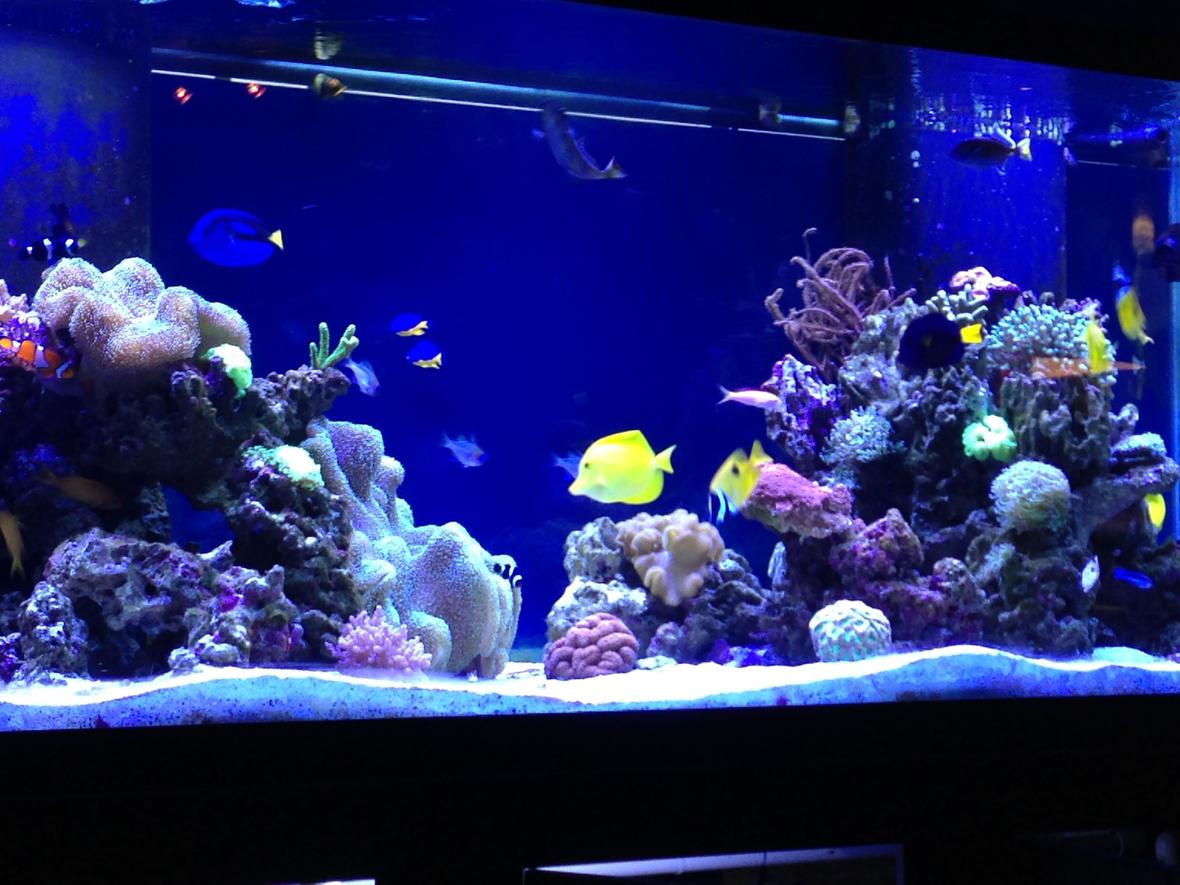
210 gallon display tank,70 gallon sump, Large Hydor recirculating skimmer, vertex 2.0 phosban reactor, carbon reactor, tunze wavebox, 3 led light pods 200 watts each, jbj auto top off, 2 x rio 2500 rtn pumps, custom raised stand (raised 6"), rodi unit, coralife 36 watt UV sterilizer, all hardplumbed
Advice:
consistant water changes, test for nitrates, phosphates (buy a phosban reactor!) after algae problem we bought a 24" vertex 2.0 liquifiing reactor, used phosguard for 2 weeks, then rowaphos, problem solved!
Fish Kept:
Yellow Tang - Hawaii, Purple Tang, Flame Angelfish, Coral Beauty Angelfish, Kaudern's Cardinal, Ocellaris Clownfish, Blue Tang, One Spot Foxface, Blue Throat Triggerfish, Fiji Blue Devil Damselfish, Lyretail Anthias, Cleaner Wrasse, Tassle Filefish
Corals/Plants:
mix of lps & sps
Tank Size:
210 gallons
Quote:
git er done
About Yourself:
reefing for 10 years, started with a 29 gallon, went through all sizes, sold the rest, one 210 now, its a husband & wife hobby. We both work in collision repair, this is stress relief. Most of the time.
MOST RECENT ARTICLES

Nuisance algae is an inevitable challenge in any freshwater aquarium, but few things drain the joy of fishkeeping like an unexpected outbreak.

Every aquarium hobbyist, whether a complete beginner establishing a first desktop display or an experienced aquascaper managing a heavily planted setup, eventually comes face-to-face with an unsightly algae bloom.

Every aquarium keeper eventually battles the dreaded nitrate buildup, relying on endless water changes, gravel vacuuming, and heavy filter maintenance to keep water parameters safe for their fish.
COMMENTS