STOCKING FRESH WATER FISH TANKS

Updated
Learn how to select the right quantity and combination of fish for your freshwater aquarium.
When an artificial habitat is created for freshwater fish, one should not assume that the ability of these fish to survive in densely populated areas is limitless and that they will peacefully coexist with others regardless of species. To create and maintain a healthy, safe and harmonious fresh water aquarium, it is important to get the stocking levels and the type of fish to stock, just right. The worst thing you can do is just go to the pet store and buy the first few species of fish that catch your eye – not only may these fish not get along, but they could also have very different needs for water quality.
If you want to be successful in maintaining a healthy and thriving freshwater tank, it all starts with choosing the right fish. Certain species of fish are simply not meant to be kept together and trying to change that will only cause you headaches. In this article you will learn the basics about stocking a freshwater tank including tips for choosing the right number of fish and the right species. By the time you finish this article you will feel fully prepared to stock your freshwater aquarium.
How many fish?
The amount of fish you can stock will depend on the capacity of your tank and the adult sizes of the fish you want to introduce. One of the easiest ways to get an idea of how many fish your tank can accommodate is by using a Rule of Thumb of 1 inch of fish per gallon. This means that if your tank has a capacity of 80 gallons, you will theoretically be able to accommodate 80" of fish.
From a practical perspective, you will never add the full 80" of fish to your 80 gallon tank. Larger bodied species, such as goldfish, displace more water and produce more waste than a smaller bodied species such as zebra fish. Also, an 80 gallon tank will hold less than 80 gallons because the ornaments, gravel, equipment and plants you will be adding to the tank, will reduce the water volume.
When you perform your rule of thumb calculation, base it on the adult size of the fish. If you intend buying mature fish, measure the fish from its head to the base of its tail. If you prefer babies or juveniles, ask the pet store how big the fish will get. Fortunately, most pet stores have labels on their tanks nowadays, which offer all sorts of useful information, including adult size, habitat and temperament, to prospective buyers.
As is the case with all rules of thumb, this one too is an estimate. If yours is an odd shaped tank, it would serve you well to use a surface area calculation instead. Remember, each tank is different so two tanks of the same size may not necessarily accommodate the same number of fish. You also need to consider the type of filtration you have in your tank, the type of fish you stock and how often you clean the tank. Your best bet is to stock a few fish at a time to see how your tank reacts – if it reacts well, you can add a few more.
Avoid Stocking Too Quickly
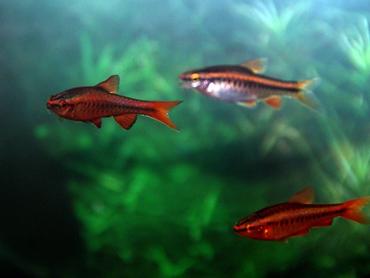
Resist fully stocking your tank in a single go, even if your tank has completed its nitrogen cycle and the beneficial bacteria in the aquarium are established. Only add a maximum of two fish per week. The tank's ecosystem will need to adjust to the increased waste produced by the new inhabitants. Consider starting off with hardy species such as Zebra Danios or White Clouds, and then moving on to Cherry or Tiger Barbs.
At a practical level, make a list of the fish you wish to add and write the adult size of each next to each one of these fish. This will become an important list, which you will probably end up referring to often in planning which fish to stock where, so keep it in a safe place! Fewer fish are always better than too many. Overcrowding can lead to a host of unnecessary problems. In an overpopulated tank, fish can turn hostile and aggressive towards each other. They can also have a tendency to overeat if competition for food is perceived. Overeating leads to an increase in waste that could become too much for even an efficient filter to process.
A polluted environment causes damage to the fish's gills and as a result, impairs its ability to breathe. This type of damage is irreversible. Illness and disease inevitably follows and may well result in death. The last thing you want to do is to spend time and money stocking your freshwater tank to suit your desires, only to have your fish die off too soon. Careful research and planning can help you to avoid this fate.
Stock Your Aquarium's Space Evenly
When choosing fish for your aquarium, select fish that occupy different levels in the tank. By doing that, you will ensure that the fish won't need to compete for space. The reward is a visually appealing aquarium, evenly filled with all sorts of different fish.
- Top Level Fish: Fish that live at the top level of the aquarium will add interest to an otherwise undecorated, bare space in the tank. Top dwelling fish generally have upturned mouths, designed for feeding at the water's surface. Some species of top dwelling fish, such as Hatchetfish and Betta, are strong jumpers. If your tank contains jumpers, replace the lid immediately after feeding and maintenance.
- Middle Level Fish: The middle level of the aquarium could be the most striking. Stock this level with a mixture of schooling fish and larger colorful fish, such as different varieties of Angels, Rainbows, Gouramis and Goldfish.
- Bottom Dwelling Fish: Bottom dwellers, like Cory and Catfish, have down-turned mouths, enabling them to feed on those morsels of food that fall to the bottom of the tank. Bottom level fish help keep the substrate clean as they scour the bottom for food. Offer fast-sinking foods at feeding times to ensure that these fish get their fair share.

Fish Compatibility
The diverse characters and temperaments of fish result in some species getting along well with certain types of fish and not at all with others. You need to do some research on the compatibility of fish at the various levels before stocking your aquarium. Luckily, many aquarium stores have started to label their fish as “community,” “semi-aggressive” or “aggressive” species. Community fish are those which tend to be very peaceful and can get along with other species – schooling fish make up many of the community species, so keep this in mind so you purchase enough fish of one species. Semi-aggressive fish are those which might grow a little bigger and could become aggressive in certain situations. Typically, problems only arise if there isn’t enough space in the tank or if there are two males of the same species. Aggressive species of fish often must be housed in species-specific tanks because they are only likely to get along with certain fish.
These two links have extensive compatibility charts on the different fish, which will come in very useful when making your decision:
Plant life
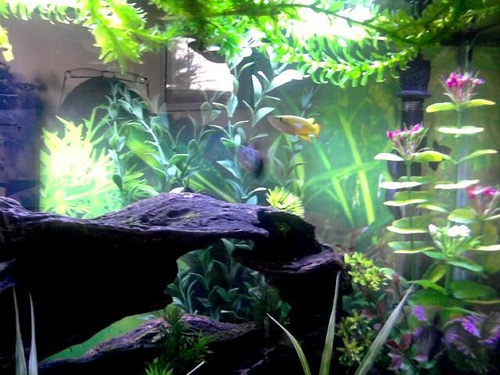
Besides checking the compatibility between different species of fish, you also need to look into how the different fish will react to the accessories and the plants you want to add to the aquarium. Your aquarium plants could be nibbled away in no time at all if you put them in a tank containing Silver Dollars or worse still, you could find them completely uprooted by your Goldfish or Oscars. The solution is choosing plants to suit your fish or opt for artificial ones instead. In deciding what type of fish you want to keep in your tank, look into the natural environment from which they come – this should give you a clue as to what type of plants would be good in the tank with them.
The ornaments in a fish tank are not solely for aesthetic purposes, it also offers shelter and safety to the fish. When you choose ornaments, make the fish's requirements your primary selection criteria and then only the aesthetics. Fortunately the wide selection of ornaments on the market means that both you and the fish can be accommodated with ease. There are many options to choose from when it comes to aquarium decorations – you can easily create a natural décor scheme or go with something a little wilder. The choice is yours but do something that will benefit your fish.
Conclusion
A successful freshwater aquarium is a properly planned aquarium. Consider the time you spend calculating, resolving compatibility issues and researching an investment – it might take you a little extra time to figure out how you are going to stock your tank, but it will definitely be worth it. Think about this – if you don’t have a plan for stocking your tank, you could end up losing all of your fish. Not only is that money wasted, but time as well because, surely, you will want to plan the next time. Planning saves you money and effort in the long term, and ensures the lasting enjoyment you initially set out to achieve.
comments powered by Disqus

Angelfish are a species of freshwater cichlid and they are one of the most popular species of tropical aquarium fish.

When it comes to snails in the freshwater aquarium, not all of them are bad.
MOST RECENT ARTICLES

During the summer months, it may become more of a challenge to keep your aquarium temperature stable.

There are many different species of barbs but some of them are better than others for the larger home aquarium.

Cultivating a thriving saltwater tank can be a challenge but it is also incredibly rewarding.